12 Count Septic Tank Treatment – Year Supply: Product Overview
Remembering monthly septic maintenance is easy to postpone, especially when the system appears to be working normally. This septic tank treatment turns that task into a 12-month routine: one pre-portioned packet each month instead of another bottle or tub to measure. Listed at $9.99, with an original price also shown as $9.99, it is inexpensive enough to consider as a maintenance aid, although the product description does not prove that it will extend pumping intervals or prevent every septic problem.
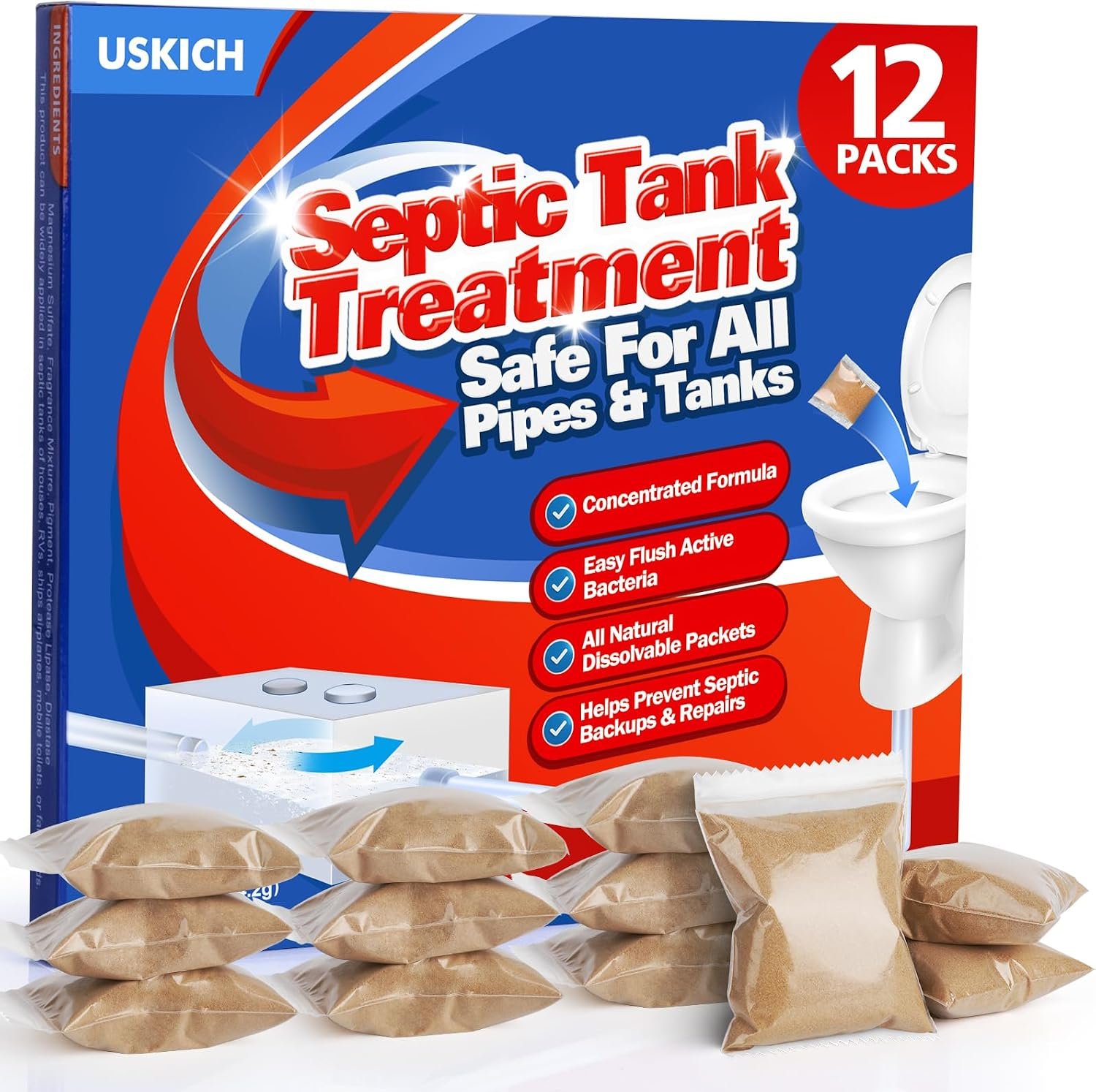
The package contains packets, intended to provide one year of use for septic tanks holding approximately 1,000 to 1,500 gallons. The stated application is simple: drop one packet into a downstairs toilet and flush until it has been carried away. At the time of review, the listing displayed “Only left in stock – order soon,” which describes current availability rather than a performance benefit or a guarantee that stock will change.
The listing presents this septic tank treatment as suitable for household septic tanks, commercial sewage tanks, boats, RVs, black-water systems, cesspools, and both aerobic and anaerobic systems. That broad wording is useful, but specialized systems can have their own additive rules. The central question is therefore practical: does the low annual price and simple dosing routine make this septic tank treatment a sensible supplement, rather than a replacement for pumping, inspection, filter cleaning, or repairs?
This image is property of Amazon.com.

How This Septic Tank Treatment Is Supposed to Work
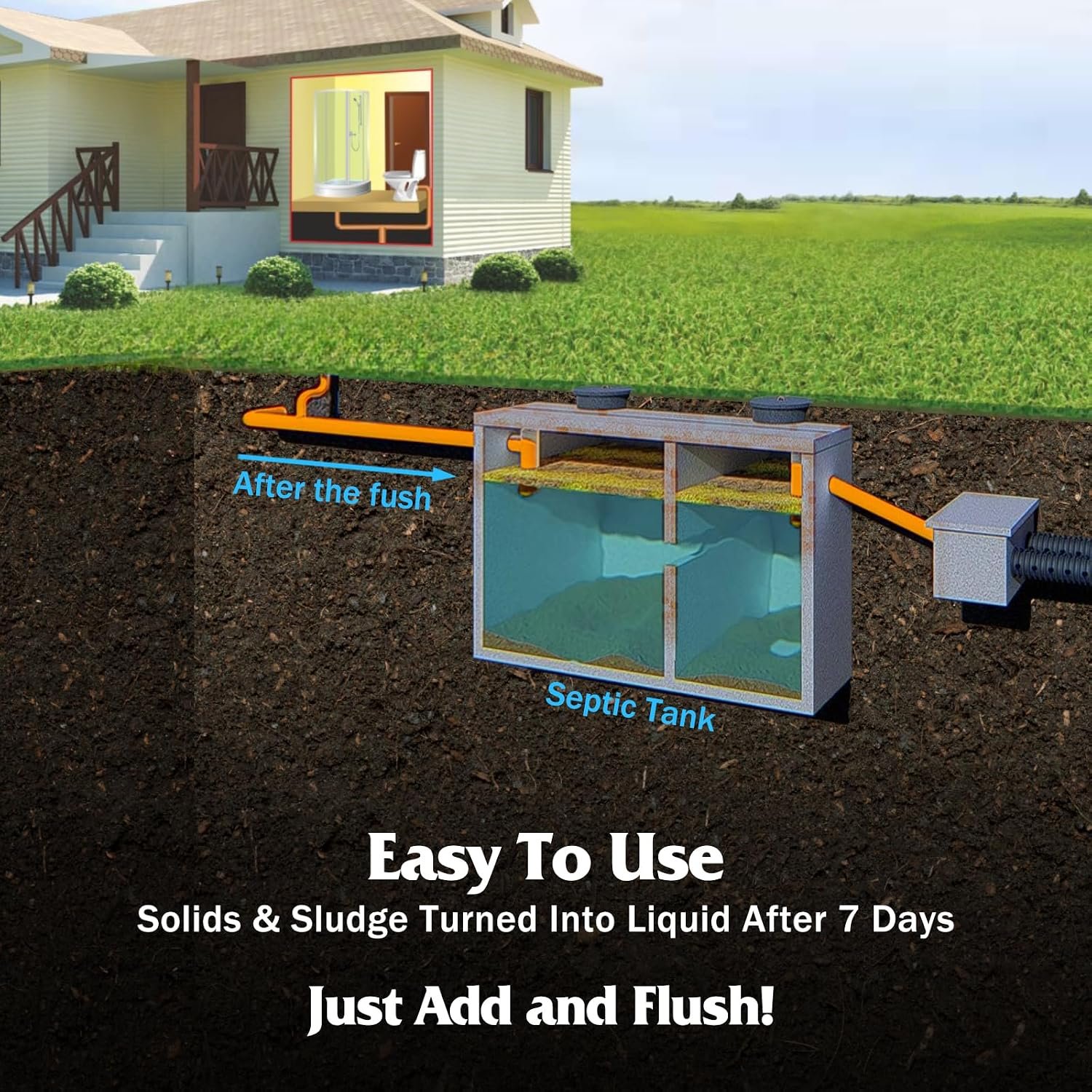
According to the listing, each packet contains billions of active bacterial cultures and enzymes intended to break down grease, paper, and other organic waste. The proposed mechanism is biological decomposition: bacteria and enzymes act on organic material rather than relying on a harsh chemical reaction. In theory, that may help limit some organic buildup in the tank or connected waste lines, but the description does not establish how quickly the claimed breakdown occurs.
That distinction matters when you compare this septic tank treatment with a corrosive drain cleaner. A biological product is designed to support decomposition, while an aggressive drain opener is intended to dissolve or dislodge a blockage quickly. Neither approach should be treated as a substitute for diagnosing a blocked pipe, damaged tank, failed pump, or overloaded drain field. Packets also cannot trap solids, so they do not perform the job of an effluent filter or replace filter removal and cleaning.
The seller connects the claimed activity with organic buildup, slow drainage, and unpleasant odors caused by waste adhering to sewer pipelines. Results can vary with tank size, water use, waste composition, existing deposits, bacterial balance, and the condition of the system before treatment begins. This septic tank treatment is not supported in the supplied listing by laboratory results, a measured breakdown rate, independent certification, or a guaranteed reduction in pumping frequency.
Think of the product as a low-cost biological maintenance experiment for a functioning system. It may be reasonable to observe changes over a normal treatment cycle, but a septic tank treatment cannot correct a physical obstruction, tree-root intrusion, mineral scale, collapsed line, or drain-field failure.
Key Features and Specifications
The strongest practical feature is the pre-portioned format. Twelve packets map directly to monthly applications, so the pack is intended to last a year when used according to the listing. For a household that dislikes measuring liquid additives, this septic tank treatment removes one small source of uncertainty: you use one packet rather than estimating a dose from a larger container.
The stated capacity guidance is 1,000 to 1,500 gallons per packet, with each packet intended to last one month. That range should be treated as a compatibility check, not as proof that every tank in that range will respond identically. A septic tank treatment that does not match your system’s capacity or treatment design may be a poor fit even if the packet is easy to use.
The listing describes the ingredients as safe, non-corrosive, and free of chemical additives, but it does not provide a complete ingredient list or independent safety documentation in the supplied product data. It also claims odor control and compatibility with home plumbing, black-water systems, cesspools, aerobic and anaerobic systems, boats, RVs, household tanks, and commercial sewage tanks. For a specialized installation, check the equipment manual or service provider before adding anything.
Application requires no measuring: place one packet in the downstairs toilet bowl and flush until it has been swept away. Odor improvement is plausible when organic residue contributes to smells, but a persistent odor can also come from a dry plumbing trap, ventilation fault, leak, or septic defect.
| Specification | Listing information |
|---|---|
| Pack size | 12 packets |
| Intended dose | One packet monthly |
| Stated tank capacity | Approximately 1,000–1,500 gallons |
| Claimed applications | Household, commercial, boat, RV, black-water, cesspool, aerobic, and anaerobic systems |
| Listed price | $9.99; original price $9.99 |
| Availability | Only left in stock – order soon |
Using the Monthly Pack Correctly
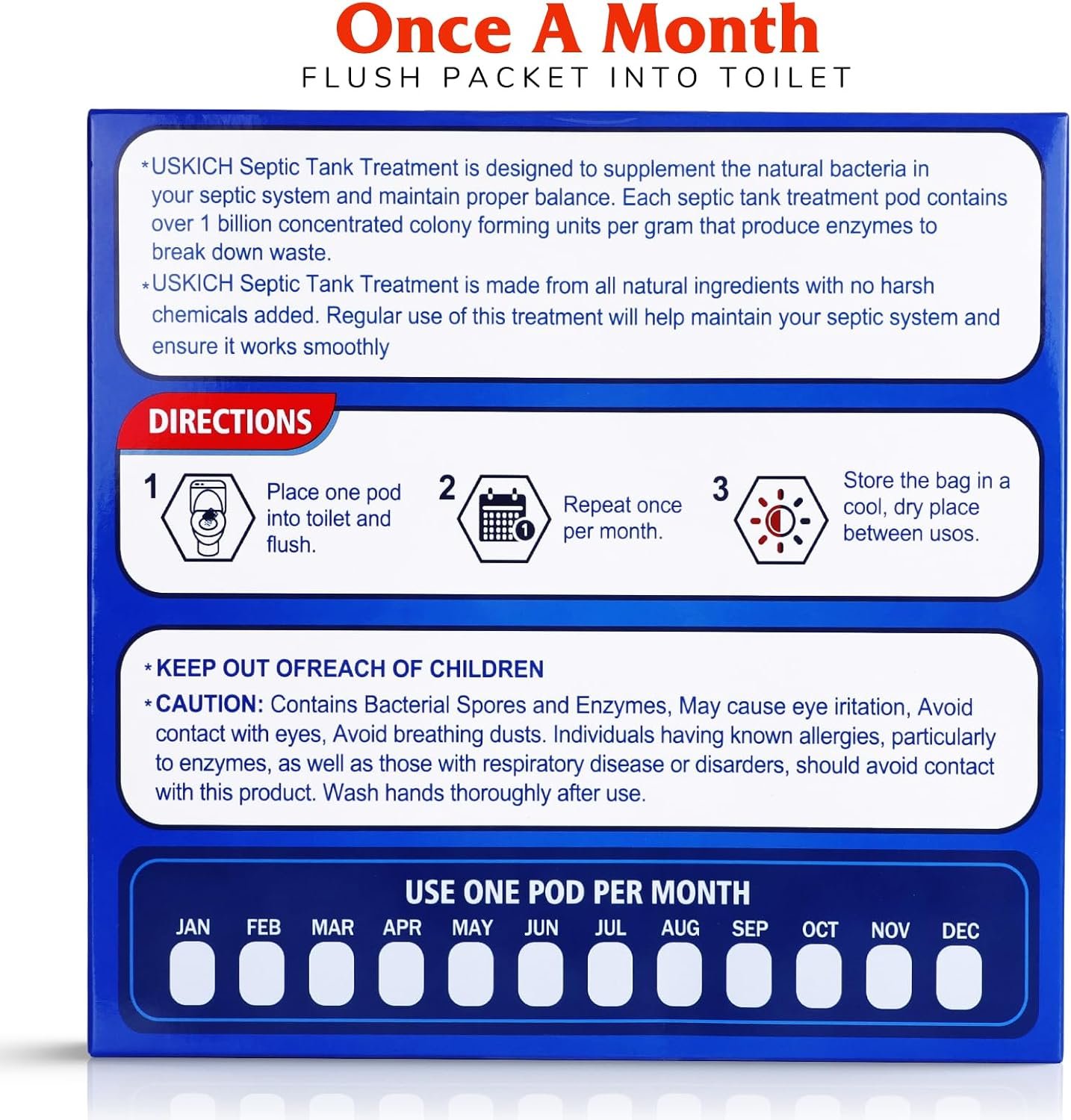
The application sequence is straightforward, but consistency matters more than taking an oversized dose. Before starting this septic tank treatment, confirm that your tank is roughly within the stated capacity range and identify whether you have a standard household, aerobic, anaerobic, RV, boat, shared, or commercial system.
- Choose the downstairs toilet connected to the appropriate waste system.
- Place one packet in the toilet bowl.
- Flush until the packet has been swept away.
- Record the date and set a reminder for the next monthly application.
The listing specifies one packet per month, so flushing several packets together does not follow the stated plan. Store the unused packets dry and in their original packaging. Although the listing describes the ingredients as safe and non-corrosive, avoid contact with the eyes, mouth, food, and hands whenever possible, and follow any handling directions printed on the actual package.
Do not use this septic tank treatment as a response to an active backup, sewage overflow, blocked line, or strong unexplained odor. Those symptoms need diagnosis and may require pumping, line clearing, inspection, or repair. Adding another packet could delay attention to a problem that biological action cannot solve.
Good septic habits remain more valuable than any additive. Conserve water during heavy-use periods, flush only suitable toilet paper and waste, and keep grease, wipes, harsh chemicals, and non-flushable materials out of the plumbing. A monthly treatment may support a routine, but it cannot compensate for poor waste disposal or hydraulic overloading.
This image is property of Amazon.com.

Odor Control, Buildup, and What the Claims Mean in Practice
The listing makes two main outcome claims, and they should be judged separately. First, the bacteria and enzymes are said to break down organic waste such as grease, paper, and other residues. Second, the product is said to reduce unpleasant bathroom or sewer odors by acting on organic waste attached to sewer pipelines. This septic tank treatment may therefore be most relevant when routine organic residue contributes to mild odors, not when a system has a structural failure.
Enzyme activity should not be confused with physical removal. The supplied information does not show that the packets remove hardened deposits, mineral scale, tree roots, collapsed pipes, or solid blockages. A reasonable improvement would be fewer routine odors or less concern about gradual organic accumulation over time, rather than an immediate cure for a failing drain field or a backed-up line.
Customer comments, when available, should be read as observations rather than technical proof. A buyer who reports a fresher-smelling bathroom is describing a real experience, but that report does not measure sludge depth, effluent quality, drain-field performance, or pumping frequency. With this septic tank treatment, the most useful evidence would describe the system type, tank capacity, starting problem, dosing consistency, and time to any noticeable change.
Stop treating symptoms as an additive problem if smells worsen or you notice gurgling drains, sewage surfacing, unusually wet drain-field areas, or repeated backups. Arrange an inspection instead. Biological treatment can sit alongside professional maintenance, while pumping intervals and inspections should be based on household use, tank condition, local guidance, and the advice of a qualified septic provider.
What Customers Are Saying
The supplied product information does not include an Amazon star rating or review count, so a responsible review cannot report a numerical score or claim that a large buyer sample supports long-term performance. That absence limits confidence. It also means specific patterns such as improved odor after one packet, several months, or a full 12-month cycle should not be presented as verified unless they appear in the live customer comments.
For this septic tank treatment, the most useful positive reports would concern the practical experience: whether the packet flushes easily, whether the monthly packaging is convenient, whether the low annual cost feels worthwhile, and whether mild odors changed after repeated use. Those are helpful observations, but they remain subjective. A customer noticing a fresher bathroom cannot confirm that solids are breaking down faster or that the drain field is operating better.
Potential criticisms deserve equal attention. Shoppers should look for comments about unclear ingredients, inconsistent odor results, damaged or damp packets, difficulty judging effectiveness, or buyers who expected a fast fix for a backup. A review that says the product “worked” without identifying the tank size, system type, dosing schedule, or original concern provides less decision-making value than a detailed account with those facts.
The evidence quality for this septic tank treatment is currently limited by the missing rating and review-count data in the supplied listing information. If you inspect the live page, prioritize detailed reviews over one-line praise, and look for consistent experiences across several months. Until that evidence is visible, the product’s low price and simple format are easier to verify than its biological results.
Is This Septic Tank Treatment Right for Your System?
The best-fit buyer is a homeowner with a functioning septic system and a tank in the stated 1,000- to 1,500-gallon range who wants an inexpensive monthly reminder. This septic tank treatment also may appeal to someone who does not want to measure liquid additives or purchase separate doses throughout the year. The packet format makes the routine clear, provided the system is compatible and the buyer understands that maintenance support is not repair coverage.
RV and boat owners may see value in the claimed black-water compatibility, but specialized installations deserve extra caution. Equipment manufacturers, marinas, RV manuals, and septic professionals may restrict additives or specify products for particular holding-tank materials and treatment systems. Broad compatibility wording should not override those instructions.
Use this decision process before beginning:
- Verify the system type and approximate capacity.
- Review the package ingredient information rather than relying only on the short online description.
- Ask your septic professional whether an additive is appropriate, especially after pumping, installation, repair, or a system conversion.
- Decide whether a monthly packet fits your existing maintenance record and budget.
Be cautious if the tank size is unknown, pumping is overdue, a backup is active, the drain field may be damaged, odors are severe, or the system requires a specifically approved treatment. No septic tank treatment can substitute for pumping, inspections, proper waste disposal, or repairs when the fault is mechanical or structural.
This image is property of Amazon.com.

Value at $9.99 Compared With Alternatives
At the listed price, the simple pack-price calculation is $9.99 ÷ = approximately $0.83 per monthly packet. That excludes taxes and delivery charges, and it assumes you use all packets as directed. The value proposition is mainly convenience: you receive a year’s worth of pre-portioned applications without measuring a liquid treatment each month.
Rid-X Septic Treatment and Roebic K-37-Q Septic Tank Treatment are recognizable alternatives, but the supplied comparison data does not provide their current pack quantities, dosing directions, tank-size guidance, prices, star ratings, or review counts. It would therefore be misleading to declare either one better on price, ingredient transparency, or customer evidence. Compare each live listing on those specific points rather than relying on brand familiarity.
| Product | Treatment quantity | Dosing schedule | Tank-size guidance | Claimed use cases | Current price and rating evidence |
|---|---|---|---|---|---|
| 12 Count Septic Tank Treatment – Year Supply | 12 packets | One packet monthly | Approximately 1,000–1,500 gallons | Household, commercial, boat, RV, black-water, cesspool, aerobic, anaerobic | $9.99; rating and review count not supplied |
| Rid-X Septic Treatment | Verify current listing | Verify current listing | Verify current listing | Verify current listing | Price and customer evidence vary by listing |
| Roebic K-37-Q Septic Tank Treatment | Verify current listing | Verify current listing | Verify current listing | Verify current listing | Price and customer evidence vary by listing |
The cheapest purchase is not automatically the best value if you need a different capacity range, clearer ingredients, a longer review history, or professional approval. The listing’s “Only left in stock” message is worth noticing when planning a purchase, but it is not a reason to ignore system fit or rush a decision.
How It Fits Into a Responsible Septic-Maintenance Routine
In 2026, a monthly additive can be one small part of a septic-care routine, but responsible ownership still centers on water-use management, careful flushing habits, inspections, and pumping based on the system’s needs. This septic tank treatment does not replace those measures. Its broad claimed compatibility is useful context, not proof that every installation will benefit from it.
Build a simple record around the treatment. Mark the monthly dose date, note unusual odors or drainage changes, and keep a separate record of pumping and inspection visits. Avoid grease, wipes, harsh chemicals, and other non-flushable materials; protect the drain field from vehicles and heavy structures; and arrange professional service when warning signs appear.
An effluent filter is a separate physical device installed in the septic outlet or related tank assembly. It helps limit solids moving toward the drain field and requires inspection and cleaning according to the system’s needs. This septic tank treatment is a dissolvable biological packet, so it does not trap solids and cannot perform the filter’s physical function.
Ask a septic professional whether additives are appropriate after installation, pumping, repairs, or conversion between aerobic and anaerobic treatment. Local regulations, equipment manuals, warranty terms, and service-provider instructions should take priority over a general product claim.
The buying assessment is fairly clear: the main strengths are low cost, pre-portioned monthly use, and broad claimed compatibility. Confidence in long-term performance remains lower because the supplied listing data does not include a rating, review count, laboratory evidence, or a guaranteed maintenance outcome. For a functioning, compatible system, the price makes trying it relatively inexpensive; for a troubled system, diagnosis comes first.
Pros and Cons
This image is property of Amazon.com.
Pros
- Very low listed annual price of $9.99, or approximately $0.83 per packet before taxes and delivery.
- Pre-portioned 12-pack supports a straightforward monthly maintenance routine.
- No-measuring application requires flushing one packet through a downstairs toilet.
- Listing claims non-corrosive ingredients and compatibility with several household and specialized system types.
- One package is designed to cover monthly applications when used as directed.
Cons
- The supplied listing data does not include a star rating or review count, limiting confidence in customer evidence.
- No full ingredient list, laboratory test results, independent certification, or measured breakdown rate is provided.
- The stated 1,000- to 1,500-gallon range may not fit every septic tank or specialized installation.
- Biological packets cannot replace pumping, effluent-filter cleaning, inspections, or repairs.
- Odor and buildup claims may be difficult for buyers to measure, and persistent symptoms require professional diagnosis.
Final Verdict
Key Takeaways
- The 12-packet format provides a simple one-packet-per-month routine for tanks listed at approximately 1,000 to 1,500 gallons.
- At $9.99, the pack works out to about $0.83 per scheduled monthly application before taxes or delivery charges.
- The listing claims bacterial and enzyme action, odor control, and broad system compatibility, but it supplies no laboratory results, independent certification, rating, or review count in the provided data.
- The packets cannot replace pumping, inspections, effluent-filter cleaning, proper waste disposal, or repairs for backups and structural problems.
- This is most suitable as an inexpensive supplement for a functioning, compatible system—not as a fix for active septic symptoms.
Frequently Asked Questions
Is an effluent filter necessary for a septic system?
Many septic systems use an effluent filter to help keep solids from reaching the drain field, but the exact requirement depends on the tank design, local rules, and installation. Ask a qualified septic professional whether your system has one and how it should be maintained.
What is the best effluent filter for a septic tank?
The best filter is the correctly sized, compatible model specified for your tank and outlet assembly. Capacity, access, mesh or opening design, replacement availability, and local professional advice matter more than choosing a universal product by name.
What is an effluent filter on a septic tank?
An effluent filter is a physical component fitted near the septic-tank outlet. It helps stop larger solids from leaving the tank and entering the drain field, but it must be inspected and cleaned as required.
How often do you need to clean an effluent filter?
Cleaning frequency depends on household use, tank condition, filter design, and the amount of solids retained. Have it checked during routine septic service and clean it sooner if drainage slows or a professional identifies rising solids.