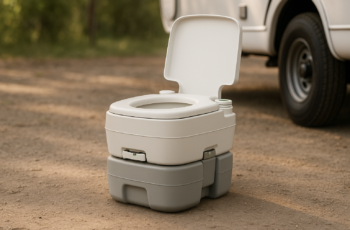
Product overview: Is the Sun-Mar GTG an off-grid composting toilet worth considering?
Finding a waterless toilet for a compact room is difficult when you need something more practical than a basic portable potty but don’t have sewer, septic, or reliable flush-water access. The Sun-Mar GTG self-contained Urine Diverting Compost Toilet is presented as an off-grid composting toilet for tiny homes, cottages, boats, garages, cabins, RVs, barns, and similar spaces.
The current listed price is $599, reduced from $639, a $40 difference. The listing also says only unit is available, although price and stock can change, so you should treat those figures as a snapshot rather than a guarantee. For shoppers, the appeal is straightforward: a waterless unit with a liquid/solid separator, advertised low-maintenance operation, and setup that takes minutes.
Based on the supplied specifications alone, this off-grid composting toilet looks most suitable when avoiding plumbing work and saving floor space are your main priorities. It is less easy to assess if you need a precisely documented capacity, electrical specification, ventilation plan, or waste-disposal process, because those details are not included here.
The rest of this review examines the off-grid composting toilet’s dimensions, setup, daily routine, maintenance expectations, unavailable customer-review evidence, competing models, and long-term value. The early conclusion is conditional: the concept fits remote and compact installations, but you should confirm the technical details before treating the sale price as proof of a complete solution.

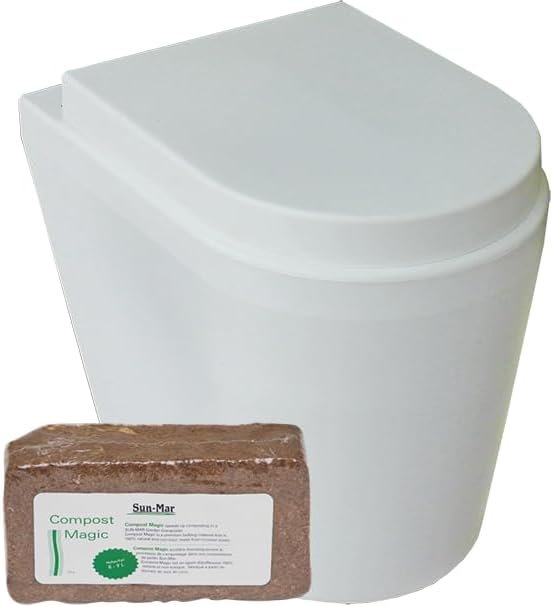
Sun-Mar GTG self-contained Urine Diverting Compost Toilet – Waterless, Low-Maintenance Toilet for Tiny Homes, Cabins, Boats, Barns, RVs and more…
$639.00 $599
Only left in stock – order soon.
Sun-Mar GTG specifications and design
The Sun-Mar GTG uses a self-contained format rather than sending waste through a conventional water-based sewer or septic connection. Its published measurements are compact enough to make it relevant to cabin bathrooms, RV interiors, boats, garages, and tiny-home installations, while the seat position is close to what many adults expect from a residential toilet.
| Specification | Published figure |
|---|---|
| Height | 19.8 inches |
| Width | 15.75 inches |
| Depth | 24 inches |
| Seat height | 18 inches |
This off-grid composting toilet separates liquid and solid waste within the unit. Urine diversion can help keep the solid material drier and may reduce how often it needs handling, but the supplied description does not establish odor performance, composting speed, or container capacity.
When planning an off-grid composting toilet, treat the published measurements as the appliance’s body size only. You still need room for door movement, legroom, lid operation, access to liquid and solid containers, and any ventilation or servicing arrangement; no extra clearance figures are provided.
Several installation-critical facts remain unconfirmed: total weight, liquid and solid capacities, fan or vent requirements, electrical needs, included accessories, warranty, replacement parts, and approved disposal procedures. Those omissions don’t make the design unsuitable, but they prevent a complete installation assessment from the product description alone.
Key features of this waterless composting toilet
The defining advantage of this off-grid composting toilet is that it does not require flush water. That can help where water must be conserved or where connecting to plumbing would involve major construction, although waterless operation does not remove the need for cleaning, liquid management, or lawful solid-waste handling.
The liquid/solid separator is intended to divide the two waste streams inside the self-contained unit. In practical terms, that may make routine handling more predictable than mixing everything together, but the listing does not explain the separator’s construction, container sizes, drainage arrangement, or acceptable consumables.
The manufacturer description advertises low maintenance, minimal maintenance, and no frequent dumping. Those are useful claims, not independently verified performance figures. “No frequent dumping” also needs context: without a stated capacity, user limit, or service interval, you cannot calculate how often emptying will be required in your household.
Setup in minutes is another convenience claim. You should still follow the full manual, level and secure the unit correctly, seal connections where required, arrange airflow, and test container access rather than interpreting fast setup as permission to skip installation checks.
| Confirmed from the listing | Must be checked before purchase |
|---|---|
| Waterless operation | Electricity and external ventilation |
| Liquid/solid separator | Container capacity and liquid routing |
| Advertised quick setup | Mounting, sealing, and included hardware |
| Low-maintenance description | Cleaning products, consumables, and service routine |
A genuinely user-friendly off-grid composting toilet should provide easy access to the separator and containers, straightforward cleaning surfaces, and clear instructions. Ask specifically whether liquid is collected or routed away, how solids are removed, and what happens when conditions such as excess moisture or diarrhea occur.
Installation and everyday use
Install this off-grid composting toilet methodically rather than relying solely on the advertised setup time. First, inspect the room and published appliance size; next, plan user access around the seat position; then position and secure the unit, and finally test the separator and both container-access areas before regular use.
- Confirm the floor can support and secure the unit in its intended location.
- Check door swing, knee room, lid movement, and access for removing containers.
- Identify the proposed ventilation, power, drainage, and mounting arrangements from the manual.
- Test the waste separator and cleaning access before placing the toilet into service.
Location changes the installation risk. An RV or boat may need vibration-resistant securing; an unheated cabin may require a plan for freezing conditions; and a tiny home may need especially careful ventilation and service access. The product description does not state the exact requirements for any of these settings.
Daily use should follow the separator’s design: keep unsuitable materials out of the wrong compartment, monitor the liquid container or outlet, and clean contact surfaces according to the instructions. Toilet paper is a separate planning issue, since some systems permit it in the solid compartment while others require a lined container or another approved method.
For unusual waste conditions, including diarrhea, follow the manufacturer’s procedure and limit liquid contamination of the solid compartment as far as the design allows. Keep suitable cleaning materials, gloves, and containment supplies available. Before installation, also confirm local disposal rules, because a waterless toilet is not automatically exempt from sanitation requirements.
- Access: verify container removal and cleaning reach.
- Ventilation: establish whether an external vent or fan is required.
- Power: confirm whether any electrical connection is needed.
- Drainage: understand how collected liquid is managed.
- Rules: check local requirements for storage and disposal.
That preparation matters more than the phrase off-grid composting toilet on the product title. A simple installation can be convenient, but a poorly planned one can make a compact toilet difficult to service.

Maintenance, odor control, and waste handling
The Sun-Mar GTG’s low-maintenance description should be read as “less involved than some alternatives,” not as maintenance-free. Any off-grid composting toilet still requires routine cleaning, checking that separation is working, managing collected liquid, emptying solids when necessary, and inspecting seals or ventilation components if the manual specifies them.
The supplied information does not promise an odorless experience. In practice, correct separation, suitable airflow, regular cleaning, and avoiding excess moisture are likely to influence results, but you should follow the manufacturer’s directions rather than assume a particular odor-control system is included.
“No frequent dumping” suggests reduced emptying frequency, yet there is no published container capacity, maximum user count, or service interval in the supplied data. That is a major ownership variable. A single occasional user and a busy family will not create the same servicing pattern, even with the same off-grid composting toilet.
You should also distinguish between separating waste and completing a composting process. Solid material may need storage, curing, transport, or disposal under specific instructions; it is not automatically ready to use as compost immediately after leaving the toilet. Confirm the approved procedure before installation.
During the first few weeks, keep a simple operating log. Record the number of users, liquid-management frequency, cleaning needs, odor changes, overflow events, and any separation problems. That evidence will give you a more useful maintenance schedule than the broad phrase “minimal maintenance.”
Locate these documents before committing:
- Liquid and solid capacity information.
- Maximum recommended users and expected emptying intervals.
- Ventilation, fan, and electrical requirements.
- Approved cleaning products and replacement parts.
- Solid-waste storage and disposal guidance.
- Warranty terms and coverage limitations.
Until those documents are available, treat this off-grid composting toilet as a promising appliance with an incomplete maintenance specification rather than a guaranteed low-effort system.
What Customers Are Saying
No star rating, review count, or individual customer excerpts were supplied for this listing at publication time. That means there is no responsible way to claim that buyers praise the separator, report good odor control, or confirm long-term durability. The preliminary assessment of this off-grid composting toilet must therefore rely on the stated product description and measurements, not invented customer sentiment.
| Review theme | Number or proportion | Representative wording | Confidence |
|---|---|---|---|
| Setup and instructions | Not supplied | Live listing should be checked | Not assessable |
| Separator performance | Not supplied | Live listing should be checked | Not assessable |
| Odor and cleaning | Not supplied | Live listing should be checked | Not assessable |
| Container access and leaks | Not supplied | Live listing should be checked | Not assessable |
When the live review section is available, prioritize repeated comments about setup time, separator behavior, odor, cleaning, container access, durability, and suitability for RVs, boats, cabins, and tiny homes. A review describing several weeks or months of use is more valuable for judging service intervals than a first-impression comment posted immediately after delivery.
Look especially for reports of leaks, weak seals, difficult container removal, missing parts, unclear instructions, or servicing that conflicts with the low-maintenance claim. For this off-grid composting toilet, a pattern matters more than one enthusiastic or dissatisfied review.
If the listing still has too few reviews to establish a pattern, say so plainly in your own decision process. The absence of review evidence is not proof of poor quality, but it is a reason to place more weight on the installation manual, warranty, seller responses, and confirmed specifications.
Verified buyers’ long-term accounts should eventually provide the strongest evidence, but none were included in the supplied product data. Until that changes, customer feedback cannot establish whether this off-grid composting toilet delivers its advertised maintenance benefits in real installations.
Sun-Mar GTG compared with competing composting toilets
The Sun-Mar GTG is not automatically better than every off-grid composting toilet; its confirmed strengths are narrower. You know it is listed at $599, has compact published measurements, operates without flush water, separates liquid from solid waste, and is advertised as quick to set up. Several competing products may offer more documented ownership information, but their current specifications and prices should be verified on their live listings.
| Decision factor | Sun-Mar GTG | Alternative comparison |
|---|---|---|
| Intended setting | Tiny homes, cabins, boats, garages, RVs, barns | OGO NOMAD targets portable RV, van, camping, and boat use; Nature’s Head targets self-contained installations |
| Confirmed dimensions | Published measurements supplied | Verify each model’s current footprint and seat position |
| Water use | Waterless | Verify waterless operation and system requirements |
| Waste separation | Liquid/solid separator advertised | Compare separator design and handling procedure |
| Installation questions | Power, venting, mounting, and drainage unconfirmed | Check fan, vent, electrical, and securing requirements |
| Price | $599 listed price | Verify current prices before comparison |
The OGO NOMAD Portable Composting Toilet deserves attention if portability and a mobile installation are central to your use. Compare its published capacity, power or fan requirements, separator design, installation method, and current price against the GTG rather than assuming that “portable” means easier to operate.
The Nature’s Head Self Contained Composting Toilet with Close Quarters Spider Handle Design is another established name to investigate. Its decision factors include manual mixing or handle operation, footprint, capacity, ventilation, included components, and long-term owner feedback; don’t assume any of those details without checking the current listing.
For a more fixed installation, the Separett Villa Urine-Separating Compost Toilet may appeal to cottage, homestead, or schoolie owners who value capacity over the GTG’s compact format. Choose the GTG when compact self-contained separation and lower upfront price lead the decision. Investigate alternatives when higher capacity, powered ventilation, deeper review history, or a different waste-management process matters more.
In short, this off-grid composting toilet wins on the facts currently confirmed, not on unverified superiority across every category.

Who should buy this off-grid composting toilet?
This off-grid composting toilet is a strong candidate for a tiny-home owner, cabin or cottage user, boat owner, RV traveler, or someone creating a bathroom in a barn or garage without convenient sewer access. Its compact format can be particularly attractive where conventional plumbing would consume valuable floor space or require expensive construction.
You should be comfortable with a different toilet routine from a conventional flush model. That means using the separator as intended, checking waste levels, following cleaning instructions, and learning how solids and liquid must be stored or disposed of. If you want a completely hands-off appliance, the self-contained format may not meet your expectations.
It is also less suitable if you cannot provide whatever ventilation, power, drainage, or service access the full manual requires. Families needing a published high-capacity system should pause until the GTG’s container capacity, recommended user count, and emptying schedule are confirmed.
Mobile and seasonal settings add planning demands. Boats and RVs may need secure mounting for movement, while unheated cabins may require protection against freezing. Cleaning, storage, and transport plans matter too, especially when the unit is left unused or moved between locations.
- Confirm local sanitation and disposal rules.
- Verify installation, ventilation, power, and drainage requirements.
- Check the room’s practical access and service arrangement.
- Obtain capacity and user-limit information.
- Compare ownership costs with a chemical portable toilet, septic connection, sewer work, or another off-grid composting toilet.
Buyers who value waterless separation and compact installation are the best match. Buyers seeking a conventional experience or guaranteed high capacity should investigate further before choosing the GTG.
Price, availability, and long-term value
The current listed price for this off-grid composting toilet is $599, compared with an original price of $639, a $40 difference. The listing warns that only unit remains in stock, but availability and pricing can change, so confirm the live page before making a purchase decision.
At $599, you are paying for a self-contained waterless system with urine diversion and a compact form factor. That can be attractive when it avoids plumbing work, but the real cost may include ventilation, power, mounting hardware, liners, cleaning supplies, replacement components, and waste-disposal arrangements. None of those costs should be assumed to be included.
Low maintenance could reduce time and inconvenience, but it cannot be converted into guaranteed savings without confirmed capacity, service intervals, consumables, warranty terms, and replacement-part prices. A cheaper purchase can become less attractive if the installation is complicated or the unit needs frequent servicing.
Use this five-year worksheet before ordering:
| Cost category | Your estimate |
|---|---|
| Purchase price | $599 |
| Installation materials | Record actual quotes |
| Electrical or ventilation work | Confirm requirements first |
| Consumables and cleaning supplies | Estimate annual use |
| Replacement components | Check availability and price |
| Travel, storage, or disposal | Estimate for your location |
Compare that total with plumbing, septic, or sewer alternatives, not just their headline prices. The off-grid composting toilet looks most compelling where water is limited and avoiding construction has real value. Pause before calling it a bargain if the missing technical details could materially change installation or ownership costs.
Buying checklist before ordering
Before ordering this off-grid composting toilet, obtain the complete installation manual and confirm whether the unit needs ventilation, electricity, external drainage, or specific mounting hardware. The product description’s quick-setup wording is useful, but it does not replace those technical instructions.
Ask the seller or manufacturer for the liquid and solid capacities, recommended maximum users, expected emptying intervals, and approved disposal methods. These facts determine whether the toilet suits a weekend cabin, a full-time tiny home, a mobile vehicle, or a higher-use household.
Confirm exactly what arrives in the box. Your checklist should include:
- Liquid and solid containers.
- Separator components.
- Fan and vent parts, if required.
- Seat and lid components.
- Mounting hardware.
- Installation and cleaning instructions.
- Required liners or other consumables.
Then check the warranty length, return conditions, replacement-part availability, and whether installation damage or mobile use is covered. Those policies can matter more than a small purchase-price difference when the toilet is installed in a boat or RV.
Read the newest customer reviews for repeated reports rather than relying on one positive or negative comment. No rating, review count, or buyer excerpts were supplied for this listing in the available product data, so you should update that evidence from the live page before ordering.
Finally, treat the $599 price and limited-stock message as purchasing information, not proof of performance. A careful review of the manual, capacity, service routine, and disposal rules will tell you whether this off-grid composting toilet is genuinely suitable for your installation.
Pros and Cons
Pros
- Waterless operation suits locations without dependable plumbing or flush-water access.
- Compact self-contained design with a published 15.75-inch width and 24-inch depth.
- Urine-diverting separator is intended to simplify waste-stream handling.
- Listed at $599, reduced from $639, with setup advertised as taking minutes.
Cons
- Published information does not confirm capacity, user limits, service intervals, power needs, ventilation requirements, warranty coverage, or disposal procedures.
- No star rating, review count, or individual customer excerpts were supplied, so real-world performance cannot be independently assessed from the provided listing data.
- Additional installation, cleaning, mounting, consumable, and waste-handling costs may reduce the value of the $599 purchase price.
Final Verdict
Key Takeaways
- The Sun-Mar GTG is a compact, waterless self-contained toilet with urine/solid separation and an advertised quick setup.
- Its $599 price is $40 below the listed $639 original price, but stock and pricing can change.
- Capacity, user limits, ventilation, power, disposal, warranty, and replacement-part details remain unconfirmed.
- It is best suited to buyers comfortable with waste separation and routine servicing in plumbing-limited locations.
- Verify the full manual and live listing before ordering, then compare total five-year ownership costs with alternatives.
Frequently Asked Questions
What are the drawbacks of a composting toilet?
The main drawbacks are that a composting toilet still requires cleaning, liquid management, solid-waste handling, and correct ventilation or installation. Capacity, odor performance, disposal rules, and maintenance frequency can also vary considerably between models, so you should verify those details before buying.
What is the best off-grid composting toilet?
The best off-grid composting toilet depends on your space, capacity needs, ventilation options, power access, mobility, and waste-handling preferences. The Sun-Mar GTG is worth considering when compact dimensions, waterless operation, and urine diversion matter most, but you should compare its missing technical details with established alternatives before deciding.
What if you have diarrhea in a composting toilet?
Follow the manufacturer’s instructions for diarrhea and try to prevent excess liquid from entering the solid-waste compartment. Keep suitable cleaning and containment supplies available, and confirm whether the unit requires a particular cleaning method or temporary servicing procedure.
What do you do with toilet paper when using a composting toilet?
Toilet-paper handling varies by model and installation. Confirm whether paper may go into the solid compartment, needs a separate lined container, or must be handled through another approved disposal system.