Portable Toilet Bags for Camping: Product Overview
Disposing of waste responsibly becomes difficult when you are camping, hiking, boating, travelling by car, or using a portable potty away from public facilities. These portable toilet bags address the liner part of that problem, giving you a disposable barrier between waste and a suitable container. They are not, however, a complete sanitation system, so your buying decision depends first on whether you already have a compatible support.
The listing describes a 50-bag pack supplied on two rolls, with bags per roll. The listed price is EUR12.94, and the product was shown as In Stock when checked for this review. That makes the pack convenient for several short trips, but price and availability can change, so the live listing remains the final reference.
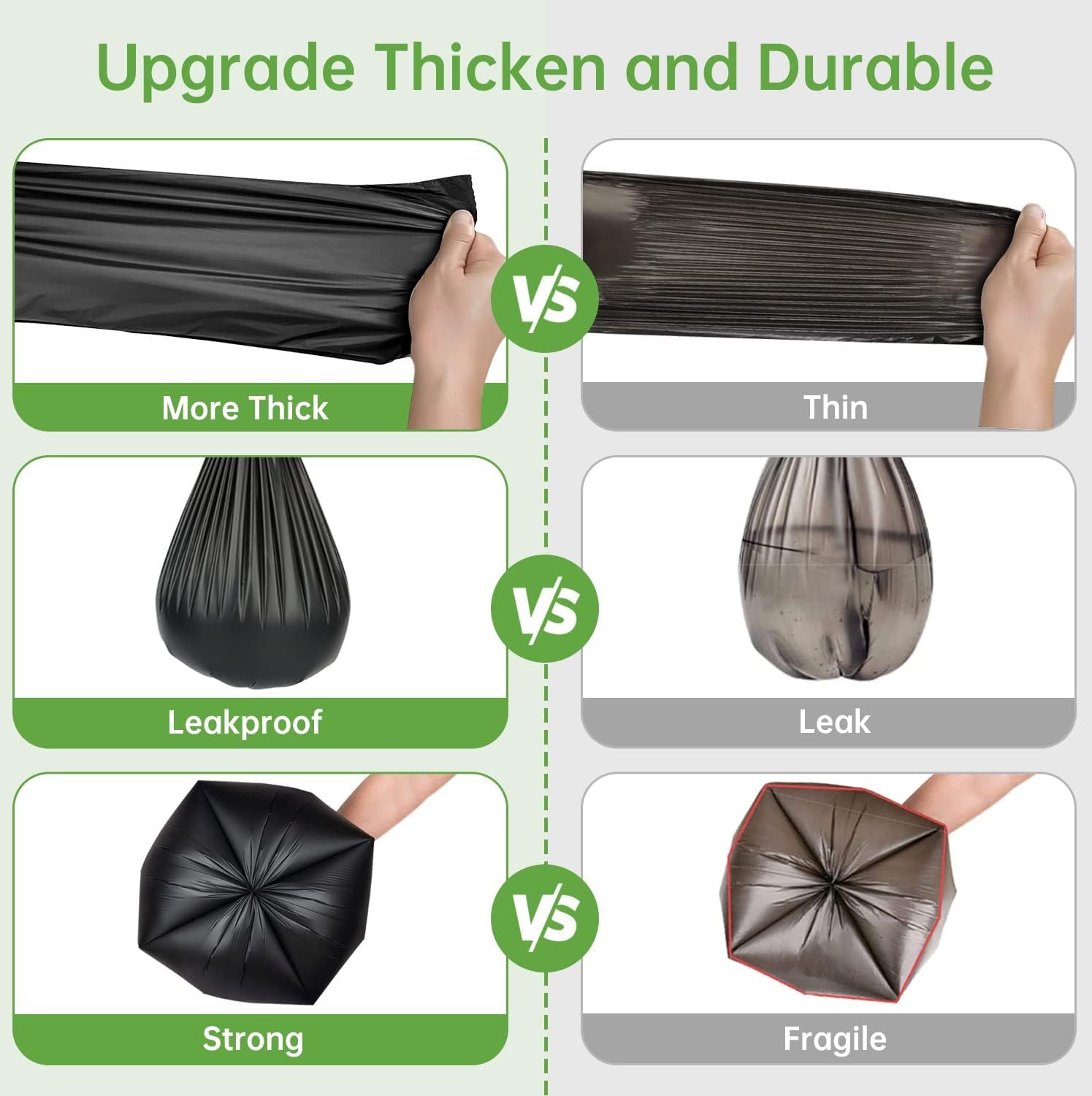
These portable toilet bags are replacement liners for a bucket toilet, framed toilet seat, boat toilet, or similar setup. They don’t provide seat height, stability, privacy, or a rigid waste tank. The advertised features include natural corn-starch material, an 8-gallon/30-litre capacity, an opaque black finish, claimed 1.3 Mil thickness, a stated 11–15 lb load capacity, and an estimated 45–120-day breakdown period in soil.
Those points are manufacturer specifications, not independent guarantees. In particular, compostability, leak resistance, and decomposition time can vary with moisture, temperature, soil conditions, waste contents, handling, and local disposal rules. Think of these portable toilet bags as a potentially useful consumable, rather than proof that every disposal method is environmentally acceptable.
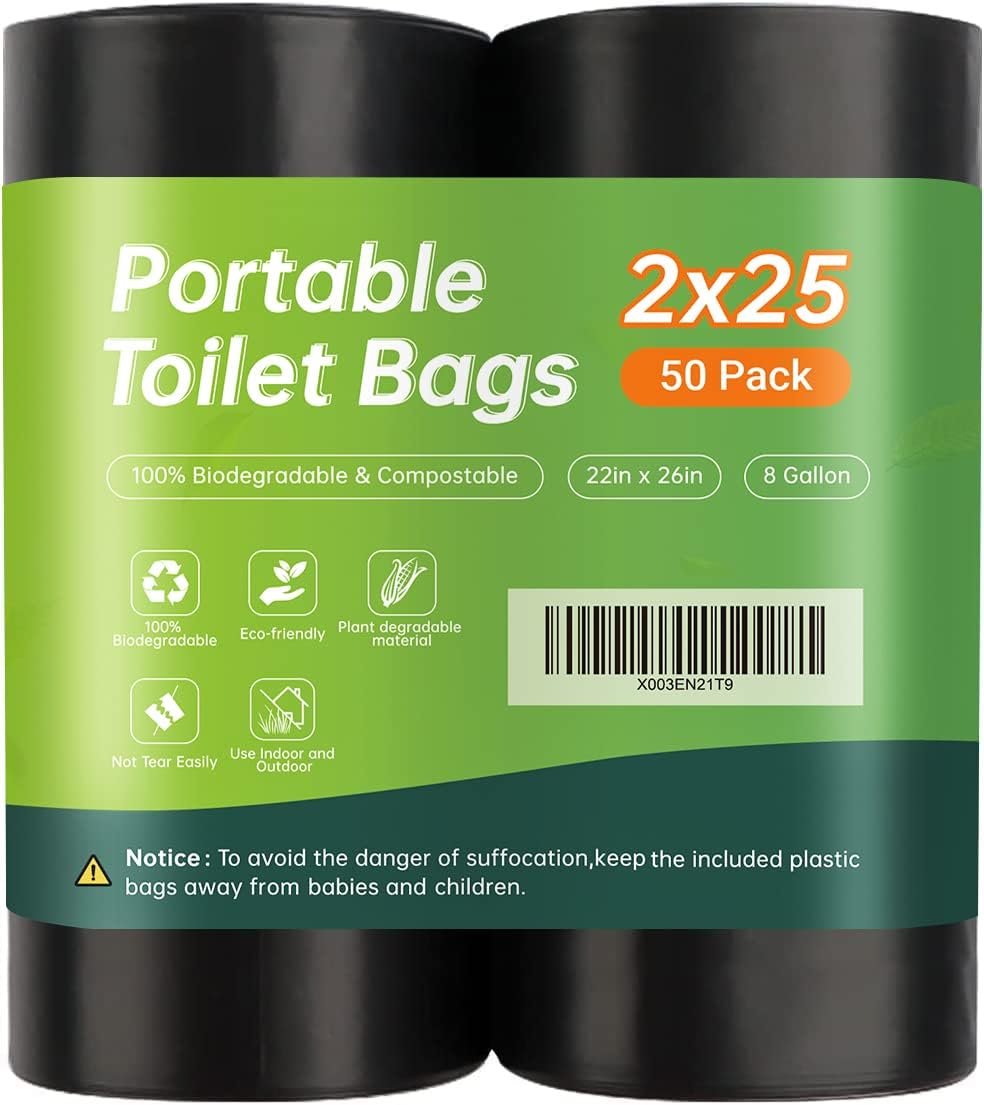
This image is property of Amazon.com.

50 portable toilet bags for camping, Gallon 1.3 Mil Thickened Compostable Toilet Replacement Bags for Portable Potty, trash Bags for Outdoor Hiking Boating Car Travel
EUR12.94
In Stock
Key Specifications and What They Mean in Use
The core measurements tell you what this pack is designed to do, but they don’t replace a compatibility check. Here is the supplied specification in compact form:
| Specification | Listed detail |
|---|---|
| Total quantity | 50 bags |
| Packaging | 2 rolls, bags per roll |
| Capacity | 8 gallons / litres |
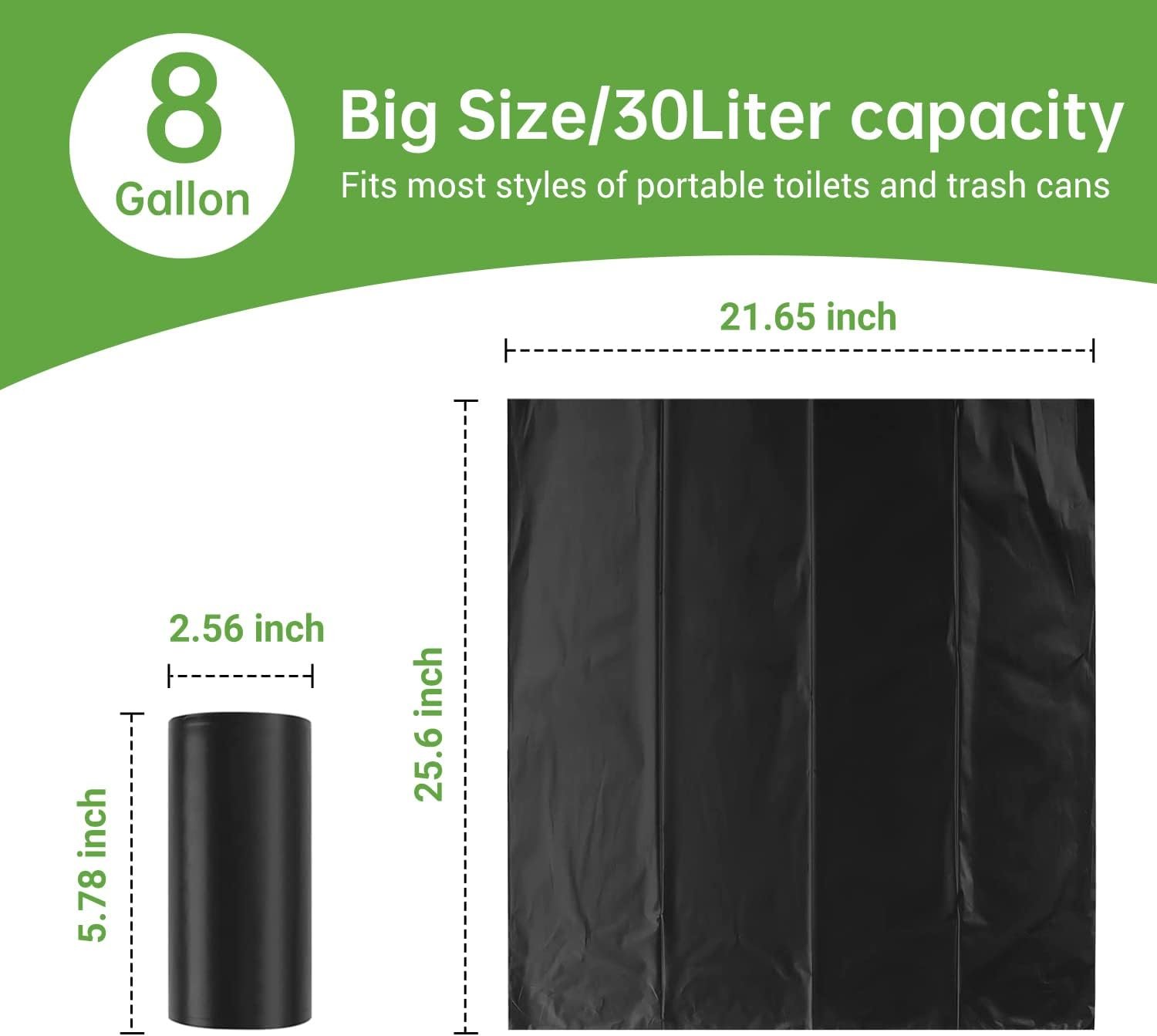
| Expanded size | 21.6 x 25.6 inches |
| Stated thickness | 1.3 Mil |
| Stated load range | 11–15 lb |
At litres, these portable toilet bags are aimed at portable toilets and emergency use, not unrestricted household rubbish collection. Waste volume, liquid content, and the shape of the supporting container all affect how much you can safely use. A liner that appears roomy when empty may become difficult to close once the container is partly full.
The expanded 21.6 x 25.6-inch format should provide useful material over many bucket-style and seat-on-frame openings, leaving an edge to fold over and secure. That is an intended fit advantage, not a universal-fit promise. The rim shape, bucket depth, hinges, clamps, and seat design still determine whether the liner stays in place.
The stated 1.3 Mil describes claimed material thickness; it is not a formal strength certification or independent puncture test. Sharp objects, overfilling, rough handling, and an unsuitable support can still cause damage. At EUR12.94, the arithmetic is approximately EUR0.26 per bag, excluding delivery costs and discounts. Treat that as a snapshot because listing prices can move.
For practical use, consider the specification a starting point: confirm that the liner reaches securely around your container, keep waste within a conservative level, and never interpret the bag’s load statement as permission to place body weight on it.
Portable Toilet Bags for Camping: Material, Capacity, and Leak Protection
The strongest environmental claim here is the listed natural corn-starch construction. These portable toilet bags are marketed as compostable and the description says they may disappear in soil in roughly 45–120 days, eventually returning as H₂O and CO₂ when composted. That wording should be read carefully: “compostable” on a product listing does not automatically mean suitable for home composting, municipal composting, or burial wherever you happen to camp.
Before disposal, check the rules for the specific campsite, park, boat marina, trail area, or waste facility. Some locations prohibit burying human waste or any bag, regardless of its material. If the local system requires general rubbish, use the required container rather than assuming the soil-breakdown claim overrides local regulation.
Capacity is useful for short camping trips, emergency car use, and occasional portable-potty use. The practical amount available from these portable toilet bags depends on the bucket frame, container depth, and whether the contents are mainly liquid, solid, paper, or absorbent material. Close the liner while it remains manageable instead of trying to exploit every last litre.
The stated 11–15 lb load claim is best understood as a limit for the bag’s contents under the maker’s tested conditions. Your body weight must be carried by the toilet seat, bucket, or frame. If the support flexes, the rim is narrow, or the liner is pulled sideways, the real-world risk of tearing can rise even when the waste itself is below the claimed limit.
The opaque black finish is a practical privacy benefit during removal and transport. However, no odour-absorbing gel, deodorising treatment, airtight seal, or fragrance is listed. These portable toilet bags may contain waste, but you should not assume they control smell; prompt closure, suitable absorbent material, and lawful disposal are more realistic parts of odour management.
This image is property of Amazon.com.

Fit, Setup, and Day-to-Day Handling
Correct installation matters more than simply choosing a thick-looking liner. To set up these portable toilet bags, follow this sequence:
- Unfold one liner completely, separating the opening and base before placing it.
- Put it inside the bucket or toilet frame and press the base down into the container.
- Fold the top edge over the rim so the liner cannot slide inward during use.
- Secure the edge with the toilet’s retaining ring, seat, clips, or another suitable feature before anyone uses it.
For a bucket toilet, look for a continuous rim that can hold the folded edge without allowing it to drop into the bucket. For a seat-on-frame design, check that the liner does not interfere with hinges, clamps, retaining rings, or the seat closing properly. A successful dry test before departure is more useful than discovering a slipping liner at a campsite.
These portable toilet bags can be paired with toilet paper or absorbent material if that is appropriate for your chosen disposal method. Don’t add sticks, sharp packaging, broken tent hardware, or other pointed items; even a thick liner can be punctured by concentrated pressure. Keep the container stable and let the toilet structure, not the bag, carry the user.
When removing the liner, tie or close the opening while keeping the bag upright. Inspect the outside for seepage before carrying it, then place it in the disposal container required by local rules. If the exterior is wet or contaminated, use an outer carrier rather than placing the liner loose inside a vehicle or boat.
Store unused rolls dry, away from prolonged heat and direct sunlight. For travel, put spare portable toilet bags in a sealed outer pouch so moisture, fuel, food, and dirt don’t compromise the rolls before use.
What Customers Are Saying
The supplied product information does not include a displayed star rating, review count, or the text of individual buyer reviews. Therefore, it would be misleading to say that customer reviews establish a consensus about fit, separation, leaks, smell, or durability. No reliable frequency can be assigned to complaints about sticking together, short rolls, weak seams, unpleasant odour, or difficult tying from the evidence provided.
For these portable toilet bags, that missing review evidence is itself a limitation for a careful purchase. The listing makes claims about thickness, capacity, leak resistance, load, and soil breakdown, but a product description is not the same as verified buyer testing. You should treat the advertised performance as a claim to check in your own use, not as a result confirmed by a known number of purchasers.
Reports involving ordinary use would answer different questions from tests involving heavy loading, wet ground, long storage, rough transport, or a full container. Those conditions place different stresses on a liner and its seams. Likewise, a buyer who disposes of a bag in general rubbish has demonstrated one disposal practice, not disproved or confirmed the 45–120-day breakdown estimate.
Before a trip, use this short evidence-minded checklist for the portable toilet bags:
- Confirm that one liner sits securely on your toilet rim.
- Separate and unfold one bag at home rather than waiting until arrival.
- Test one liner with a modest amount of water or absorbent material, without treating that as a certified leak test.
- Plan exactly where used liners can legally go before you leave.
Once independent review figures or verified buyer comments are available, reassess those points, especially seam reliability, odour containment, and whether the rolls separate cleanly. Until then, the sensible approach is cautious trial use and carrying a spare.
This image is property of Amazon.com.

How These Portable Toilet Bags Compare With Alternatives
These portable toilet bags occupy a different category from the PAHTTO Bucket Toilet Seat. PAHTTO is a toilet-seat component intended for 5-gallon buckets; it supplies the seating interface, not a 50-liner consumable pack. The product reviewed here supplies disposable liners but requires a compatible bucket, frame, or toilet, so comparing one as a direct replacement for the other would be unfair.
The Kohree Portable RV Toilet, Large Camping Toilet Porta Potty, 5.8 Gallon, is another different proposition. It is described as a complete portable toilet with a detachable waste tank, giving you a purpose-built structure and contained waste system. These portable toilet bags are the lower-cost consumable choice for someone who already owns the support hardware and wants to simplify cleanup or keep an emergency supply in a vehicle.
A complete toilet is usually the better direction when you use one frequently, need built-in waste containment, want greater structure, or don’t already have a suitable bucket or frame. It also changes the cleaning routine: a reusable tank or container may cost more initially but can reduce ongoing liner purchases.
The liners make more sense for occasional camping, boating, van travel, road trips, and backup use during an outage. A 50-count pack can extend the cleanliness of an existing toilet without adding another rigid item to your storage space. However, the alternatives differ in included components, capacities, cleaning requirements, upfront price, and support design.
Don’t infer a performance win from the lower consumable price alone. Compare the complete setup you need, then ask whether the support, disposal method, and expected frequency make disposable portable toilet bags practical for your situation.
Who Should Buy These Camping Toilet Bags?
The best match is someone who already owns a compatible portable toilet and needs a substantial liner supply. Campers, boat owners, van-life travellers, road-trip drivers, and hikers preparing for emergencies all have plausible use cases. A household could also keep the pack as a compact backup for urgent situations or an outage, provided it has a stable support ready.
Fifty portable toilet bags suit repeated short trips better than a tiny emergency multipack. Your actual duration will depend on whether you replace a liner after every use, how many people share the toilet, and whether the arrangement is used only for emergencies. Estimate honestly rather than assuming the headline count equals separate days of use.
Adults and children can use a setup lined with these portable toilet bags only when the supporting toilet or bucket is appropriate for their size and stable enough for the user. The liners themselves provide none of the features that make a toilet safe or comfortable: there is no seat height, back support, privacy enclosure, structural frame, or weight-bearing platform in the pack.
Look elsewhere if you need a complete toilet, certified municipal-composting compatibility, built-in odour treatment, or a larger heavy-duty liner with independently documented load testing. The product’s environmental description is conditional, and the supplied evidence does not confirm independent performance under demanding conditions.
Use this buying sequence:
- Identify the exact bucket, frame, boat toilet, or potty you will use.
- Check that its rim and depth can hold a liner securely without obstructing the seat.
- Estimate one bag per planned use and add a modest emergency reserve.
- Confirm the disposal rules for every location on your route.
- Compare the pack cost with complete toilet kits and ordinary replacement liners.
That process tells you whether portable toilet bags solve your actual problem or merely add supplies without the hardware needed to use them.
This image is property of Amazon.com.
Value Assessment at EUR12.94
At the listed EUR12.94, the pack costs approximately EUR0.26 per liner before delivery charges or discounts. Its value comes from quantity and convenience, not from included toilet hardware. If you already have a stable support system, keeping two rolls available for camping, driving, boating, or emergencies can be more practical than buying a small pack for every outing.
The corn-starch material, opaque finish, stated 1.3 Mil thickness, and 30-litre capacity give the portable toilet bags a useful feature mix for shoppers specifically seeking compostable replacement liners. Those features still need context: the thickness is a stated specification rather than certification, and the breakdown claim depends on conditions and lawful disposal. You are paying for a claimed material choice and disposable convenience, not independently proven environmental performance.
Disposable liners reduce direct cleaning after use, which can be valuable when you are away from water. Frequent users may eventually spend more than they would on a washable waste container or a complete toilet with a reusable tank, particularly if each use consumes one liner. A simple cost comparison should include how often you travel, storage space, cleaning tolerance, and disposal fees or requirements.
Before ordering, verify the live EUR12.94 price, In Stock status, delivery charges, return terms, and whether the final package still contains two rolls of bags. Listings can change, and the displayed offer may not remain identical.
For a practical value test, multiply planned uses by one liner per use, add a small reserve for mistakes or unexpected delays, and compare that number with 50. This tells you whether the pack is appropriately sized rather than judging value from the headline quantity alone. If your plan needs only a few liners, a smaller pack may reduce waste; if you travel repeatedly, the per-bag arithmetic is more attractive.
Final Buying Guidance
50 portable toilet bags for camping are worth considering when you already have a compatible toilet or bucket and value a large pack, opaque handling, and the maker’s stated corn-starch material more than built-in odour treatment. The product is a replacement bag, not a standalone potty, so it cannot provide the seat, stability, or containment system needed by itself.
The environmental claim needs the clearest qualification. The stated 45–120-day soil breakdown period depends on soil, moisture, temperature, local regulations, and suitable composting conditions; it should not be treated as permission to bury a used liner wherever you camp or boat. Follow the disposal system required by the specific site.
Use the supporting structure at all times and keep the contents within the stated 11–15 lb bag-load claim. Do not ask the liner to carry a person, and plan legal disposal before departure. Those precautions matter more than the attractive quantity because a disposable liner cannot compensate for an unstable or incompatible toilet.
The listed price is EUR12.94 and the pack was shown as In Stock for this review; check the live listing because pricing and availability can change. For the best-fit shopper, these portable toilet bags offer a reasonably priced supply for occasional trips, vehicle emergencies, and existing portable toilets. Skip them if you need a complete potty, independently verified heavy-duty testing, guaranteed composting acceptance, or dependable odour control.
In short, buy the pack for its role as a convenient consumable, not as a complete sanitation answer. If that distinction matches your setup, the 50-count format is the most compelling reason to consider these portable toilet bags.

This image is property of Amazon.com.
Pros and Cons
Pros
- 50 liners supplied on two rolls for repeated trips and emergency use.
- Opaque black corn-starch material offers privacy and is marketed as compostable.
- 8-gallon/30-litre capacity and 1.3 Mil stated thickness suit many portable-potty applications.
- Listed price of EUR12.94 works out at approximately EUR0.26 per bag.
- Designed for camping, hiking, boating, van travel, car emergencies, and similar situations.
Cons
- They require a separate bucket, toilet frame, or compatible toilet system.
- The 45–120-day soil breakdown claim is not the same as certified home or municipal composting.
- No odour-control gel, deodorising treatment, or seal is listed.
- The stated 11–15 lb load range is not independent strength certification.
- Customer rating and review-count figures were not supplied, so buyer consensus cannot be confirmed.
Final Verdict
Key Takeaways
- The pack contains liners on two rolls and costs approximately EUR0.26 per bag at the listed EUR12.94 price.
- These are replacement liners only; a compatible bucket, toilet frame, boat toilet, or similar support is required.
- The 30-litre capacity, opaque finish, and stated 1.3 Mil thickness suit many portable-potty uses, but the bag should never carry a person’s weight.
- Corn-starch and 45–120-day soil-breakdown claims depend on conditions and local disposal rules.
- The product is best for existing portable-toilet owners and occasional trips, not shoppers seeking a complete toilet or certified odour and composting performance.
Frequently Asked Questions
Do these bags include a portable toilet?
No. These are replacement liners, not a complete toilet. You need a compatible bucket, toilet frame, boat toilet, or similar support with a secure rim.
Are these bags genuinely compostable?
The listing describes them as made from natural corn starch and says they can disappear in soil in approximately 45–120 days. That claim does not automatically mean they are suitable for home composting or burial at every campsite. Follow local disposal rules.
How much waste can each bag hold?
The stated capacity is gallons or litres, but practical capacity depends on the container, the depth of the bucket, and the amount and type of waste added. Avoid filling any liner to the absolute maximum.
Can an adult sit directly on the bag?
The listing states an 11–15 lb load range, but the bag should not support a person. Your weight must be carried by the bucket or toilet frame, while the liner only contains waste.
How many bags are included?
The pack contains bags on two rolls, with bags per roll. At the listed EUR12.94 price, that works out at about EUR0.26 per liner before delivery charges or discounts.