Nature's Head® Self Contained Composting Toilet with Foot-Spider Handle: Product Overview
Can a $1035 self-contained composting toilet make sense when conventional plumbing is impossible? For a cabin, RV, boat, homestead, or other water-limited space, the answer can be yes—but only if you treat installation and upkeep as part of the purchase. The Nature’s Head composting toilet is aimed at buyers who want a dedicated system rather than a basic camping potty.
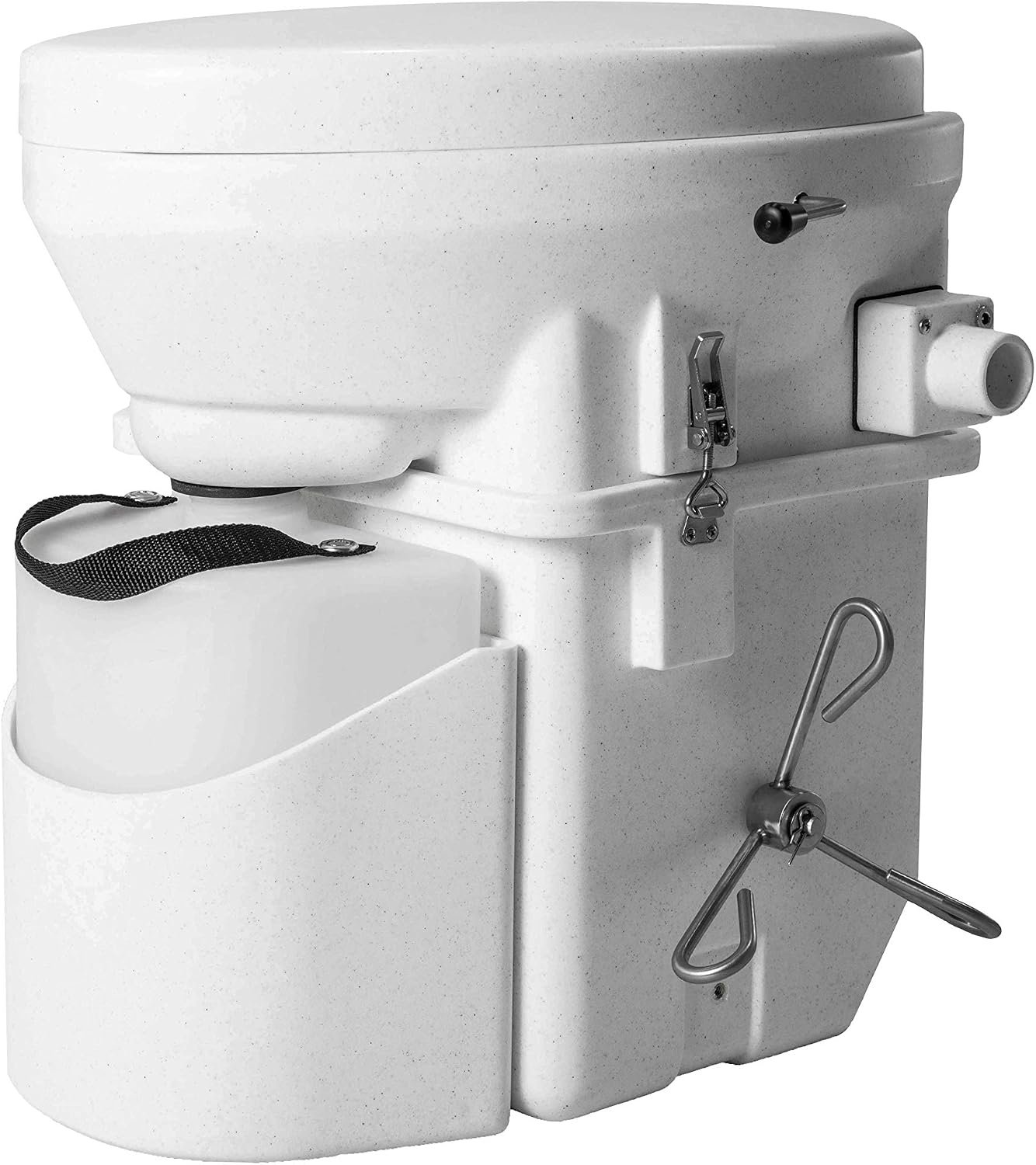
The listing identifies the product exactly as Nature’s Head® Self Contained Composting Toilet with Foot-Spider Handle. It categorizes the item as a toilet seat item and gives its shape as Foot-Spider, so the handle configuration is central to identifying this particular listing. The manufacturer is listed as Nature’s Head Inc., while Nature’s Head® is the stated trademark.
At the supplied price of $1035, the Nature’s Head composting toilet sits firmly in the premium category. Only units are shown as left in stock, although you should confirm the live listing before making a purchase decision rather than treating that inventory display as permanent.
The attraction is the self-contained format: you are considering a dedicated waterless-style sanitation arrangement instead of a fixture connected to a conventional sewer or septic line. That changes the questions you need to ask. This review therefore focuses on setup expectations, daily use, maintenance, odor management, customer evidence, alternatives, and long-term value.
Preliminary assessment? The Nature’s Head composting toilet is most suitable for someone prioritizing off-grid sanitation and willing to pay for a purpose-built system. If you only need an inexpensive temporary toilet, the price is harder to justify.

Nature's Head® Self Contained Composting Toilet with Foot-Spider Handle
$1035
Only left in stock – order soon.
Key Features of the Nature's Head Composting Toilet
The core confirmed feature is a self-contained composting-toilet format. In practical terms, that means placement and operation need to be planned around the unit itself rather than assumed to work like a household flush toilet. The listing does not supply capacity, dimensions, fan performance, power requirements, or installation hardware, so the Nature’s Head composting toilet should not be purchased on assumptions about those points.
The defining configuration is the Foot-Spider handle. Handle placement matters in a compact bathroom because the operating side may sit beside a wall, cabinet, shower, bed platform, or other obstruction. A few inches of usable movement can determine whether you can operate, clean, or service the unit comfortably.
The listing names Nature’s Head Inc. as manufacturer and Nature’s Head® as trademark. That helps distinguish this model from similarly named urine-separating products and portable toilets, but it does not confirm that every Nature’s Head variant has the same layout or supplied equipment.
Before ordering the Nature’s Head composting toilet, check the live listing and manufacturer documentation for:
- Seat height, footprint, and the exact Foot-Spider handle orientation.
- Waste capacity, ventilation route, electrical needs, and mounting method.
- Included accessories, composting medium, cleaning instructions, replacement parts, and warranty terms.
Use a short buying checklist: verify the installation kit, map the ventilation route, confirm the power connection if one is required, identify the correct composting medium, read the cleaning instructions, and understand the disposal process. Those checks separate confirmed product facts from specifications still missing from the supplied listing.
How the Foot-Spider Design Affects Everyday Use
The Foot-Spider handle is not just a naming detail; it is a layout decision. Before installation, ask whether you can reach the handle from the intended sitting position, move your legs and body comfortably, and operate the mechanism without shifting the toilet. In a narrow RV washroom or boat head, that answer may be different from the answer in a cabin bathroom.
Use this placement sequence:
- Mark the available floor area with tape, including the space needed to sit and stand.
- Identify the handle’s operating side and place a temporary marker where your hand or foot will need to move.
- Map any ventilation and power route required by the official instructions.
- Check that the seat, service points, and cleaning access remain usable once nearby fixtures are in place.
- Test the movement before securing the unit permanently.
Pay particular attention when the toilet will sit beside a wall, cabinet, shower, bed platform, or storage unit. A handle that is technically reachable may still be awkward if you must twist, kneel, or remove another fixture first. Service access deserves the same attention as everyday operation.
Cleaning and servicing should follow the manufacturer’s procedure, not a generic composting-toilet routine. The supplied product data does not specify how this exact Foot-Spider model must be cleaned or emptied, so distinguish clearly between official instructions and general practices. Also, do not assume the Foot-Spider version is identical to Nature’s Head Close Quarters or Spider Handle variants; compare the live photographs, documentation, and configuration details before buying.
Nature's Head Composting Toilet Setup and Maintenance Expectations
A self-contained system is not a zero-maintenance replacement for a flush toilet. The Nature’s Head composting toilet still needs an appropriate setup routine and regular user attention, particularly around ventilation, liquid handling, cleaning, and access for emptying.
Before installation, confirm five decisions: how ventilation will be routed, whether an electrical supply is applicable, how the unit will be secured, which composting medium is approved, and where liquid waste and solid waste will go. The supplied listing does not answer those questions, and guessing can create avoidable problems later.
Prepare in this order:
- Read the included instructions and compare them with the current manufacturer documentation.
- Measure the proposed location and check access through doors, corridors, and service areas.
- Gather the required tools, mounting materials, approved medium, cleaning supplies, and any ventilation or electrical components.
- Test access to operating and service points before final securing.
- Run a dry-use check so each user understands the operating sequence before relying on the toilet.
Toilet paper, moisture balance, cleaning products, and waste removal all need product-specific confirmation. Do not assume that paper, disinfectants, additives, or liquid-handling methods suitable for another composting toilet are suitable here. The Nature’s Head composting toilet can only perform as intended when you follow its stated operating limits.
Incorrect setup or unsuitable chemicals may undermine odor control and composting performance. Keep the official manual available, record the recommended maintenance routine, and decide in advance how you will handle service during cold weather, extended occupancy, or periods of heavy use.

What Customers Are Saying About the Nature's Head Composting Toilet
The supplied product data does not include the live listing’s star rating, total review count, or review-date range. That means a responsible review cannot claim that the Nature’s Head composting toilet is rated a particular number out of five, nor can it present unverified installation or odor experiences as customer consensus.
Before publication or purchase, inspect the current customer-review panel and confirm that comments refer to the Foot-Spider model rather than a Close Quarters or another Spider Handle configuration. Sort through the review dates and look for repeated, detailed experiences involving RV, boat, cabin, homestead, or other off-grid installations.
Give the most weight to reviews describing repeated use rather than first impressions. Useful long-term comments will mention maintenance intervals, seasonal conditions, ventilation arrangements, moisture, emptying, durability, and whether the system remained practical for the number of users. Short praise such as “works well” is less informative than a review explaining how the buyer installed and maintained the unit.
Organize the evidence around these themes:
- Installation difficulty and access to the Foot-Spider handle.
- Odor control, liquid separation, and moisture management.
- Comfort, cleaning, emptying, and durability over time.
- Suitability for RVs, boats, cabins, homesteads, and seasonal use.
You may find disagreement: one owner could describe setup as straightforward while another reports ventilation, moisture, cleaning, or space constraints. That does not automatically make either account unreliable. It may show how strongly results depend on installation and room layout.
When checking the listing, record the current rating, review total, and earliest and latest dates, then compare recent comments with older ownership reports. Repeated patterns supported by several model-specific reviews matter more than an isolated complaint or an enthusiastic first-week impression.
Nature's Head Composting Toilet Compared With Amazon Alternatives
At $1035, the Nature’s Head composting toilet deserves comparison with more portable and differently designed systems. The OGO NOMAD Portable Composting Toilet is positioned as a portable option for settings such as RVs, vans, camping, and boats; the Separett Villa uses a urine-separating approach; and the Cuddy Composting Toilet is another smaller-format name associated with RV, van, boat, tiny-home, and off-grid use.
| Product | Intended setting | System format | Confirmed listing details | Likely buyer fit | Still verify |
|---|---|---|---|---|---|
| Nature’s Head® Foot-Spider | Permanent off-grid spaces | Self-contained composting toilet | $1035; Foot-Spider shape; Nature’s Head Inc. | Regular-use cabin, RV, boat, or homestead installation | Dimensions, capacity, ventilation, power, accessories, warranty |
| OGO NOMAD | RV, van, camping, boat | Portable composting format | Named alternative in the supplied comparison data | Buyers prioritizing portability | Current price, capacity, power, ventilation, and included parts |
| Separett Villa | Homestead, schoolie, cottage | Urine-separating compost toilet | Named alternative with a different design approach | Those comfortable with its separation method | Current capacity, power, ventilation, installation, and price |
| Cuddy Composting Toilet | RVs, vans, boats, tiny homes | Smaller-format composting option | Named alternative in the supplied comparison data | Shoppers with tighter spaces | Current specifications, performance, ownership cost, and accessories |
The Nature’s Head composting toilet may justify its premium when you need a dedicated system for regular, long-term use and have a confirmed installation plan. A portable alternative may be more practical when you move frequently, need temporary sanitation, or cannot commit to a fixed ventilation and service arrangement.
Do not choose by product name alone. Check each current listing for price, footprint, capacity, power connection, ventilation, mounting, waste handling, warranty, and included components. For this purchase, the most useful alternative is the one that matches your room and maintenance plan—not necessarily the one with the lowest ticket price.
Who Should Buy the Nature's Head® Self Contained Composting Toilet?
The strongest buyer for the Nature’s Head composting toilet is someone building or upgrading an off-grid bathroom who wants a dedicated self-contained format and can accommodate its installation requirements. It may suit a cabin, homestead, RV, boat, tiny home, emergency sanitation area, or property where conventional plumbing and water use are impractical.
You are more likely to be satisfied if the toilet will receive regular use and you have already planned ventilation, power where applicable, service access, and waste handling. The purchase makes less sense if your priority is a cheap portable toilet for occasional camping or a fixture that requires no cleaning, monitoring, or emptying.
Use this five-question suitability test before ordering:
- Where exactly will the unit be installed, and does the Foot-Spider handle work with that layout?
- How many people will use it, and how frequently?
- How will ventilation and power be handled?
- How will liquid and solid waste be managed and disposed of?
- Is the $1035 purchase price still within budget after accessories and installation materials?
The Nature’s Head composting toilet is a considered infrastructure purchase, not an impulse camping accessory. If you cannot answer the questions above, pause and obtain the current manual and listing details first. If the handle position, service access, or waste plan is uncertain, compare a different configuration or a more portable model.

Is the Nature's Head Composting Toilet Worth $1035 in 2026?
In 2026, the Nature’s Head composting toilet is worth $1035 only when its specialized format solves a real plumbing or water-use problem. The price buys consideration of a dedicated self-contained system with the Foot-Spider configuration, but the supplied data does not establish that accessories, installation materials, or every operating component are included.
Separate the purchase price from total ownership cost. Check for ventilation components, electrical work if required, securing or mounting materials, approved composting medium, replacement parts, cleaning supplies, and your planned disposal arrangements. Conventional plumbing or septic work may be impractical or expensive in an off-grid setting, so avoiding those requirements can change the value calculation—but you should compare actual project costs rather than assume savings.
The Nature’s Head composting toilet becomes more compelling when it will serve as a long-term bathroom fixture in a cabin, homestead, RV, or boat. A basic portable toilet may offer better short-term value for occasional camping, emergency backup, or a temporary project where fixed installation and recurring maintenance are difficult to justify.
Use this decision framework:
- Buy at $1035 if the installation route, handle position, maintenance access, and waste plan are confirmed and the toilet will see regular use.
- Compare alternatives first if space, power, ventilation, service access, or waste handling remains uncertain.
- Wait if you cannot verify the included components, warranty, current specifications, or operating instructions.
The listing shows only left in stock, but confirm the live price, stock status, warranty, and accessories before placing an order. Overall, the Nature’s Head® Self Contained Composting Toilet with Foot-Spider Handle is worth considering for committed off-grid users, not automatically the best choice for every camping or portable-toilet buyer.
Pros and Cons
Pros
- Dedicated self-contained format for off-grid homes, cabins, RVs, boats, tiny homes, and other water-limited spaces.
- The Foot-Spider configuration gives you a clearly identified handle arrangement to plan around before installation.
- Nature’s Head Inc. is identified as the manufacturer, and Nature’s Head® is identified as the trademark.
- A waterless-oriented design may be more practical than conventional plumbing where sewer, septic, or frequent water use is difficult.
Cons
- The $1035 purchase price is high for a toilet intended only for occasional or temporary use.
- The supplied listing does not confirm key installation details such as dimensions, capacity, ventilation requirements, power needs, included accessories, or warranty.
- A self-contained composting system still requires regular attention to separation, moisture, cleaning, service access, and waste disposal.
- The Foot-Spider handle may not suit every compact-room layout, particularly where a wall, cabinet, shower, or bed platform limits movement.
- The available product information does not include a rating, review count, or verified-buyer feedback specific to this listing.
Final Verdict
Key Takeaways
- The $1035 price is easiest to justify for regular, long-term off-grid use rather than occasional camping.
- The Foot-Spider handle must fit your room layout, movement pattern, and service access.
- Confirm dimensions, capacity, ventilation, power, accessories, warranty, and waste procedures because they are not supplied in the product data.
- Customer rating and review-count information was not provided, so verify the live listing and model-specific buyer feedback.
- Compare portable and urine-separating alternatives when installation or maintenance requirements remain uncertain.
Frequently Asked Questions
What are the drawbacks of a composting toilet?
Common drawbacks include the higher purchase cost, required ventilation and service planning, ongoing separation and cleaning tasks, and the need to manage liquid and solid waste. It is not a maintenance-free substitute for a flush toilet, and suitability depends on the room layout and installation plan.
What is the best off-grid composting toilet?
The best off-grid composting toilet depends on your space, number of users, power access, ventilation route, maintenance tolerance, and budget. This Nature’s Head model is worth considering for a permanent, dedicated installation, while a portable unit may suit occasional camping or emergency use better.
What if you have diarrhea in a composting toilet?
Follow the product manual if diarrhea occurs, since excess liquid can affect separation and moisture balance. Use the recommended cleaning and waste-handling procedure, and avoid adding chemicals or materials that the manufacturer does not approve.
What do you do with toilet paper when using a composting toilet?
Check the manufacturer’s instructions before deciding how to handle toilet paper. The correct approach can depend on the unit’s waste-management design, moisture limits, cleaning guidance, and disposal method, so don’t assume standard flush-toilet habits apply.