OdorHog Vent Stack Pipe Filter Overview
Outdoor septic or sewer odor escaping from a roof vent can make your yard, patio, or nearby windows unpleasant, even when your indoor drains smell normal. The OdorHog vent filter is designed for that specific problem: it fits into a plastic plumbing vent and treats air before it exits outdoors. It is not presented as a cure for indoor plumbing odors, blocked pipes, or septic-system faults.
The product is the OdorHog Vent Stack Pipe Filter, PVC Inline Model, sized for a 2.0-inch vent pipe. It is listed at $80.95 and shown as In Stock. The central buying question is straightforward: do you have a confirmed outdoor vent odor, a compatible measured pipe, and enough attic access to install and maintain an inline filter?
Made in the USA, the unit uses an ABS plastic housing and an activated-carbon filter bag. Those specifications make the OdorHog vent filter a specialized attic-installed option rather than a general household odor absorber. The product description supplies a design and intended-use claim, but it does not provide a guaranteed odor-removal percentage or universal service interval.
For a purchase, compatibility and the source of the smell matter more than the housing’s appearance. Before ordering, consider the vent size, installation location, future replacement-bag cost, and how easily you can reach the unit for inspection. On that basis, the OdorHog vent filter is worth considering when your problem is genuinely an outdoor roof-vent odor and the existing pipe matches the manufacturer’s sizing information.
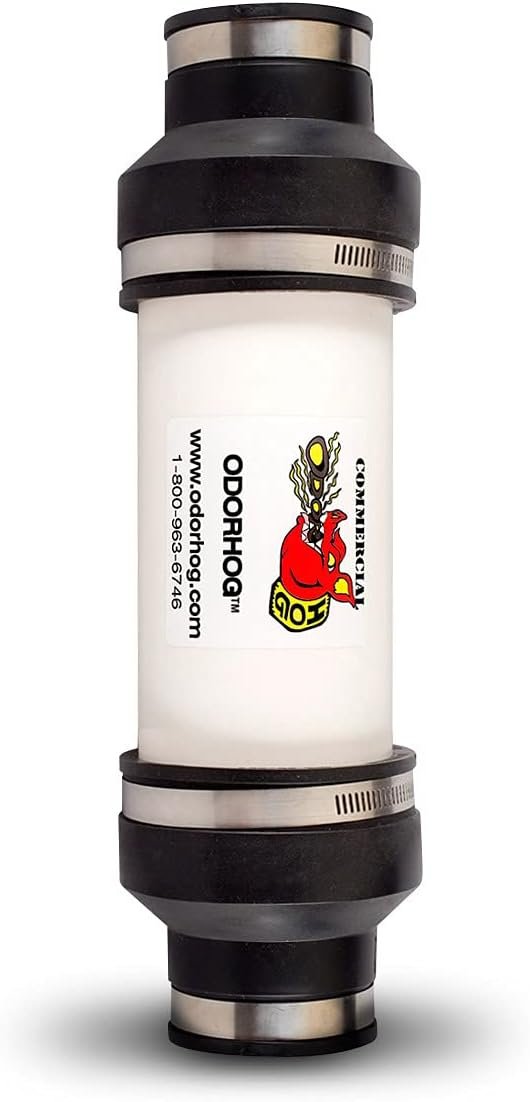
This image is property of Amazon.com.

What the OdorHog Vent Filter Is Designed to Do
The OdorHog vent filter is an inline device installed in a plastic vent stack, normally in the attic rather than above the roof. As air moves through the plumbing vent system, the commercial-grade activated carbon in the supplied bag is intended to capture odor compounds before they disperse outside. This arrangement keeps the filter away from direct exposure to freezing outdoor temperatures.
That stated use is narrower than many septic-search results suggest. The OdorHog vent filter addresses unpleasant outdoor septic and sewer odors associated with roof vents; it does not repair a blocked vent, a failing septic system, a dry trap, or an indoor drain problem. If sewage is backing up, drains are slow, or a strong smell is present inside the home, odor treatment should not replace diagnosis by a qualified plumber or septic professional.
A common source of confusion is the term “septic filter.” An effluent filter, such as the tank components often identified as EF-4 or EF-6, sits inside or at the outlet of a septic tank and helps keep solids from entering the drainfield or pump system. This product is different: it is an odor-control filter in the vent pipe, not an effluent filter and not a substitute for septic-tank maintenance.
Use the OdorHog vent filter only after identifying where the odor is strongest. Check outdoors near the vent termination, compare that smell with indoor areas, and investigate other plumbing symptoms separately. Persistent or unusually strong gas odors deserve professional attention because a filter can mask a symptom while leaving the underlying fault unresolved.
Key Features and Construction Details
The main compatibility specifications are the ABS plastic housing, inline application in a PVC plumbing vent, and the 2.0-inch pipe size. The unit is intended for attic installation, so the physical route of your existing vent and the space around it are more decisive than a simple nominal pipe label. A 2.0-inch designation should not be treated as interchangeable with every vent-stack connection.
The OdorHog vent filter includes a ready-to-use commercial-grade activated carbon filter bag. Its reusable housing and mesh replacement-bag concept distinguish it from a disposable product in which the whole filter is discarded. That may reduce waste and give you a more serviceable installation, although the long-term cost still depends on the price and availability of replacement bags.
The manufacturer states that the carbon lasts “years, not months.” Treat that as a stated longevity claim rather than a guaranteed service interval. Carbon performance can depend on odor concentration, airflow, moisture, plumbing condition, and how much time the system spends venting; inspect the unit and respond to returning odor instead of relying on a calendar promise.
Attic placement may suit homes in extreme cold because the filter is not mounted outside where freezing temperatures directly affect it. The trade-off is accessibility. Before buying the OdorHog vent filter, confirm the pipe route, available clearance, connection method, and a practical way to remove or inspect the mesh bag. The product description refers buyers to a sizing graph, so use that information rather than guessing from appearance.
Installation, Fit, and Ongoing Maintenance
Plan the installation before opening the package. First identify which vent serves the area associated with the outdoor smell. Next measure the existing pipe itself, locate an accessible attic section, compare the measurement with the manufacturer’s sizing graph, and review the installation video supplied on the product page. Only then should you decide whether the connection can be made without obstructing airflow or placing stress on the vent.
The OdorHog vent filter benefits from an indoor attic position during winter, but an attic can be cramped, insulated, or difficult to revisit. Leave enough working access for inspection and future bag service. After installation, check that the pipe connections are secure, the airflow path is open, and the housing is supported without altering the vent’s intended route.
Maintenance is condition-based rather than tied to a supplied replacement timetable. Inspect the ABS housing and mesh bag, watch for a return of outdoor odor, and replace or refresh the carbon bag according to its condition and the manufacturer’s guidance. Recheck connections after plumbing or attic work, particularly if the vent stack has been moved or disturbed.
If the OdorHog vent filter does not help, use a simple troubleshooting order: confirm the smell is outdoors, verify that you treated the correct vent, check the installation direction and sealing, and look for other plumbing symptoms. If the odor remains or appears indoors, stop treating the filter as the answer and contact a plumbing or septic professional.
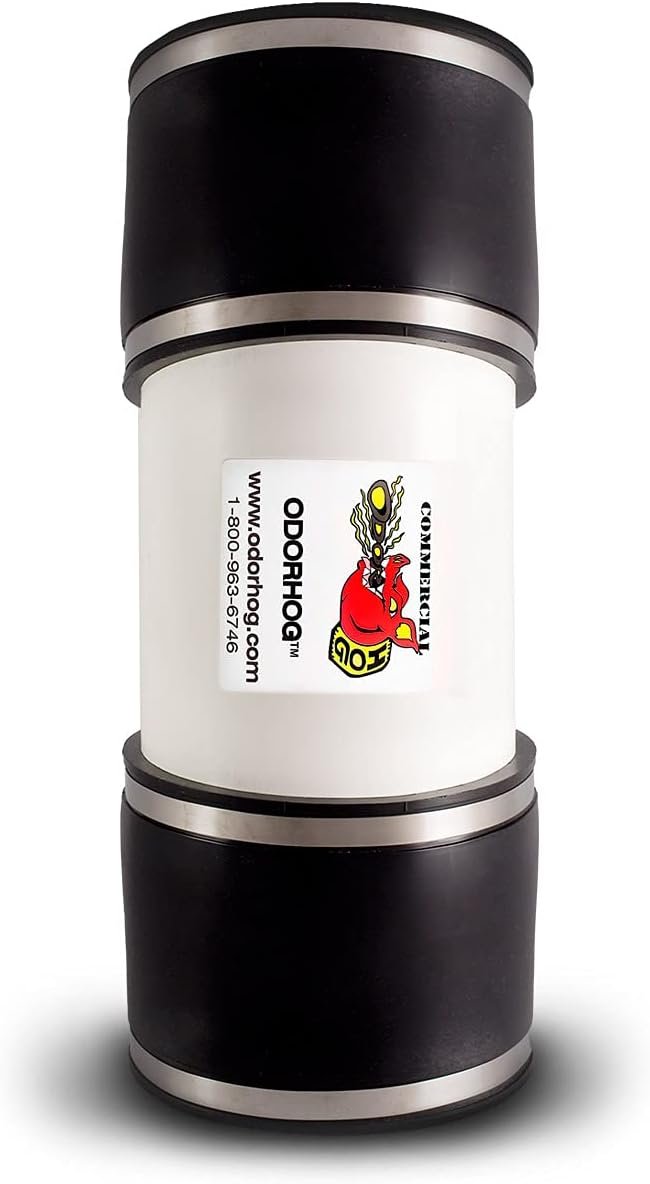
This image is property of Amazon.com.

What Customers Are Saying About the OdorHog
No current star rating or review count was supplied in the product information provided for this review, so it would be misleading to attach a numerical rating or claim a verified volume of buyer feedback. The OdorHog vent filter can therefore be assessed here from its stated specifications and intended use, but not from a confirmed statistical review summary.
That limitation also means specific themes such as reduced outdoor odor, attic-installation difficulty, ABS durability, pipe-size accuracy, and carbon-bag longevity should be checked directly on the current listing before purchase. Individual reviewers may describe less odor after installation, while others may report cramped access, unclear instructions, uncertain fit, or difficulty finding replacement bags. Those are useful experiences only when connected to the reviewer’s actual vent arrangement.
When reading feedback on the OdorHog vent filter, separate direct performance reports from expectations. A buyer who notices less odor near a roof vent offers relevant evidence, but that result does not prove the device resolves indoor sewer gas, septic failure, a blocked vent, or every odor caused by wind and temperature changes. Different results may reflect different pipe sizes, attic layouts, septic conditions, or odor sources.
Before ordering, check the live listing for the current rating, review count, recent comments about fit, and mentions of replacement-bag availability. Give extra weight to reviews that identify the measured pipe, installation position, and whether the smell was outdoors. A review that simply says “no change” is difficult to interpret unless it explains whether the underlying problem was actually a roof-vent odor.
Who Should Buy the OdorHog Inline Model?
The best match is a homeowner who has a plastic roof vent, has confirmed an outdoor septic or sewer odor, and can reach an attic installation point. You should also have a measured pipe that matches the 2.0-inch model’s sizing information. The OdorHog vent filter is less suitable when you cannot establish those three conditions.
Cold-climate owners may particularly appreciate the inline arrangement because the filter remains inside the attic instead of sitting on an exterior roof vent. It may also appeal to anyone who prefers a reusable housing with replaceable mesh bags rather than repeatedly discarding complete disposable filters. That preference should be balanced against the effort of attic access and the continuing cost of replacement media.
Pause before buying the OdorHog vent filter if the smell is indoors, the pipe size is uncertain, the attic cannot be reached, or you need a roof-mounted solution. You should also investigate first if there is a blocked vent, sewage backup, slow drainage, a dry trap, or a suspected septic failure. Odor-control equipment cannot substitute for septic pumping, vent repair, trap maintenance, or professional inspection.
Your pre-purchase check can be brief: identify where the odor occurs, measure the vent, inspect attic access, estimate installation difficulty, and compare the $80.95 price with expected replacement-bag costs. If those answers point to an outdoor roof-vent problem and manageable installation, the OdorHog vent filter has a clear use case. If they do not, spend the budget on diagnosis first.
OdorHog Versus Other Septic Vent Odor Filters
The supplied product data does not identify two competing Amazon roof-vent odor filters with current names, prices, ratings, review counts, and specifications. Because those details change and no verified competitor records were provided, it would be inaccurate to invent alternative product names or fill a comparison table with unsupported figures. The comparison below therefore shows what you should verify rather than pretending that unavailable data has been checked.
The OdorHog vent filter uses an attic-installed inline arrangement. A suitable exterior roof-vent charcoal filter would instead place its media above the roof, which could simplify attic access but expose the filter to freezing temperatures and weather. The deciding checks are installation position, measured pipe compatibility, sealing, and whether your climate makes exterior placement sensible.
A second type of alternative is a disposable cartridge or complete replacement filter. Compared with the OdorHog vent filter, that format may offer simpler routine replacement but can create more frequent whole-unit purchases. A reusable ABS housing with a mesh replacement bag may make more sense if replacement media remains available at a reasonable cost.
| Factor | OdorHog inline model | Exterior charcoal filter | Disposable cartridge filter |
|---|---|---|---|
| Installation position | Attic, inline | Exterior roof vent | Varies by verified listing |
| Pipe compatibility | 2.0-inch model; confirm sizing graph | Must be checked by listing | Must be checked by listing |
| Filter media | Commercial-grade activated carbon bag | Charcoal media, if specified | Cartridge media, if specified |
| Replacement approach | Mesh replacement bag | Varies | Usually complete cartridge or filter |
| Current price, rating, review count | $80.95; rating and count not supplied | Verify before purchase | Verify before purchase |
Do not confuse either category with septic-tank effluent filters such as EF-4 or EF-6 models. The OdorHog vent filter is for roof-vent odor control, so compare it only with products intended for that same job.
This image is property of Amazon.com.

Is the $80.95 OdorHog a Good Value?
At $80.95, the product’s value depends heavily on whether it solves a confirmed outdoor roof-vent odor problem. The purchase includes the ABS housing and a ready-to-use commercial-grade activated carbon bag, while the attic-friendly inline design avoids direct exposure to outdoor freezing temperatures. The manufacturer also states that the carbon lasts years rather than months, but that should not be treated as a guaranteed lifetime.
The initial price is only part of ownership cost. Add any connection materials, tools, professional installation, and the time needed to work safely in the attic. You should also account for future mesh replacement bags and the possibility that access becomes inconvenient if the unit is installed behind finished surfaces or dense insulation.
The OdorHog vent filter is easier to justify when the vent size is confirmed, the odor is clearly outdoors, and the reusable design can prevent repeated purchases of complete disposable filters. In that situation, the housing and supplied media provide a defined purpose rather than a speculative odor experiment.
Value is weak if you are trying to fix an indoor smell, need a plumbing repair, cannot confirm the pipe, or would need costly attic or roof work merely to install the unit. The listing is shown as in stock in 2026, but prices and availability can change. Buy the OdorHog vent filter when compatibility and odor source are established; investigate the plumbing system first when either condition is uncertain.
How to Decide Before Ordering
Use this decision path before placing the order. Confirm that the odor is strongest outdoors near a roof vent, rule out indoor plumbing causes, measure the vent pipe, verify that the attic is reachable, compare suitable roof-vent alternatives, and calculate the total installed cost rather than looking only at the product price.
- Locate the odor: determine whether it is outside at the vent or inside at drains, fixtures, or living areas.
- Record the vent: save a clear photo and your pipe measurement, then compare both with the manufacturer’s sizing graph.
- Assess access: make sure the proposed installation point will remain reachable for inspection and carbon-bag replacement.
- Check ownership cost: review replacement-bag listings, installation supplies, labor, and current competing prices.
- Recheck the listing: confirm the latest rating, review count, availability, and compatibility immediately before ordering.
The OdorHog vent filter is a focused outdoor vent-odor product, not an all-purpose septic, sewer, or indoor plumbing remedy. That distinction should guide your decision more than any general promise about carbon.
If the measurements and symptoms match, the OdorHog vent filter is a sensible specialist option to consider. If the smell is indoors, the vent cannot be identified, or the system shows drainage or backup symptoms, arrange diagnosis first rather than expecting an odor filter to correct the cause.
Pros and Cons
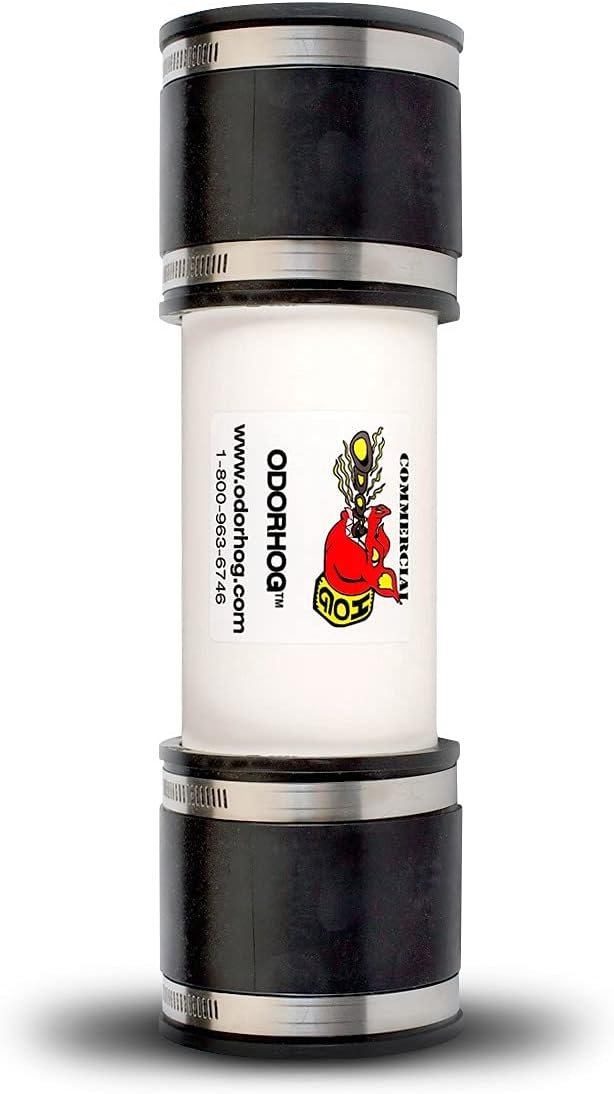
This image is property of Amazon.com.
Pros
- Designed specifically for outdoor septic and sewer odors escaping through roof vents.
- Attic-installed inline arrangement avoids direct exposure to freezing outdoor temperatures.
- ABS housing and replaceable mesh carbon-bag concept may reduce waste compared with complete disposable filters.
- Includes a ready-to-use commercial-grade activated carbon filter bag.
- Made in the USA according to the product description.
Cons
- Only suitable when the vent pipe and connection are compatible with the 2.0-inch model.
- Not recommended as a solution for indoor plumbing odors, blocked vents, septic backup, or other underlying faults.
- Attic installation may be difficult to access for inspection or replacement.
- Replacement-bag pricing and availability are not supplied in the product data.
- No current star rating or review count was provided for independent numerical assessment.
Final Verdict
Key Takeaways
- The product is a specialized attic-installed filter for outdoor roof-vent septic and sewer odors, not indoor plumbing smells or septic-system failures.
- The 2.0-inch model requires compatibility confirmation using the actual vent pipe and the manufacturer’s sizing information.
- Its ABS housing and replaceable mesh carbon-bag approach may offer lower waste than complete disposable filters, but replacement costs and attic access affect ownership value.
- The $80.95 price is most defensible when the outdoor odor source and pipe fit are both confirmed.
- No current star rating, review count, or verified competitor listings were supplied, so those details should be checked immediately before purchase.
Frequently Asked Questions
Is an effluent filter necessary for a septic system?
An effluent filter can help keep solids from leaving a septic tank and entering the drainfield, but whether it is required depends on local regulations, system design, and professional recommendations. It is different from the OdorHog, which is a roof-vent odor filter rather than a tank effluent filter.
What is the best effluent filter for a septic tank?
The appropriate effluent filter depends on tank outlet design, flow requirements, maintenance access, and local approval requirements. EF-4 and EF-6 products are examples of tank-filter categories, but they should not be compared with an attic vent-odor filter.
What is an effluent filter on a septic tank?
An effluent filter is installed at the septic-tank outlet or in an outlet assembly to screen solids before wastewater reaches the drainfield or pump system. It does not filter odors from a roof vent, which is the purpose of the OdorHog inline model.
How often do you need to clean an effluent filter?
Cleaning frequency varies with household use, tank condition, filter design, and inspection results. Follow the filter and septic-system manufacturer’s guidance, and have the tank and outlet inspected when servicing is due rather than applying one interval to every system.



)