Septic Tank Bristle Filter 4” Fit for Infiltrator Systems STF-110: Overview
Can a replacement filter keep solids away from septic pipes and drain-field components without turning routine maintenance into a difficult job? The Septic Tank Bristle Filter 4” Fit for Infiltrator Systems STF-110 looks promising on paper, with a large stated filtration area and a replacement design that does not require cutting or welding. For purchasing decisions, however, you should treat the connection, live availability, and final payable price as more decisive than the headline specifications.
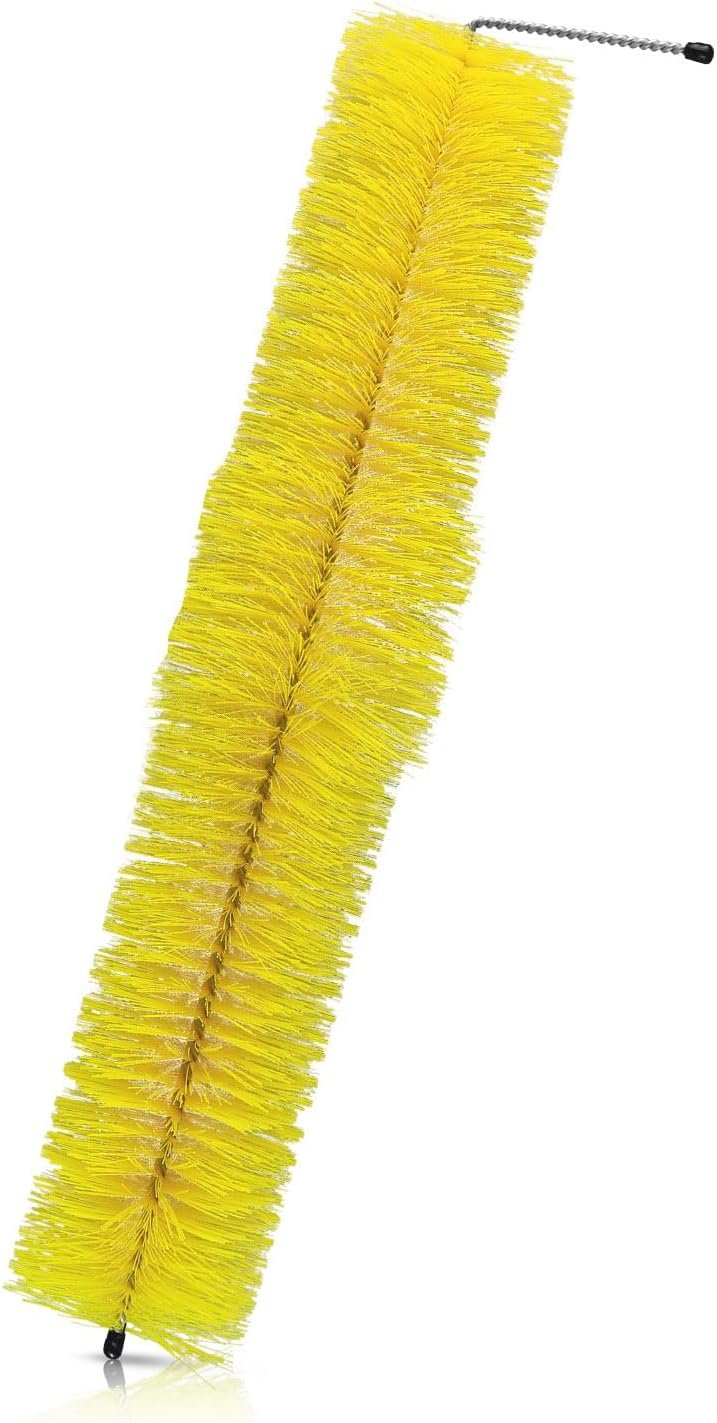
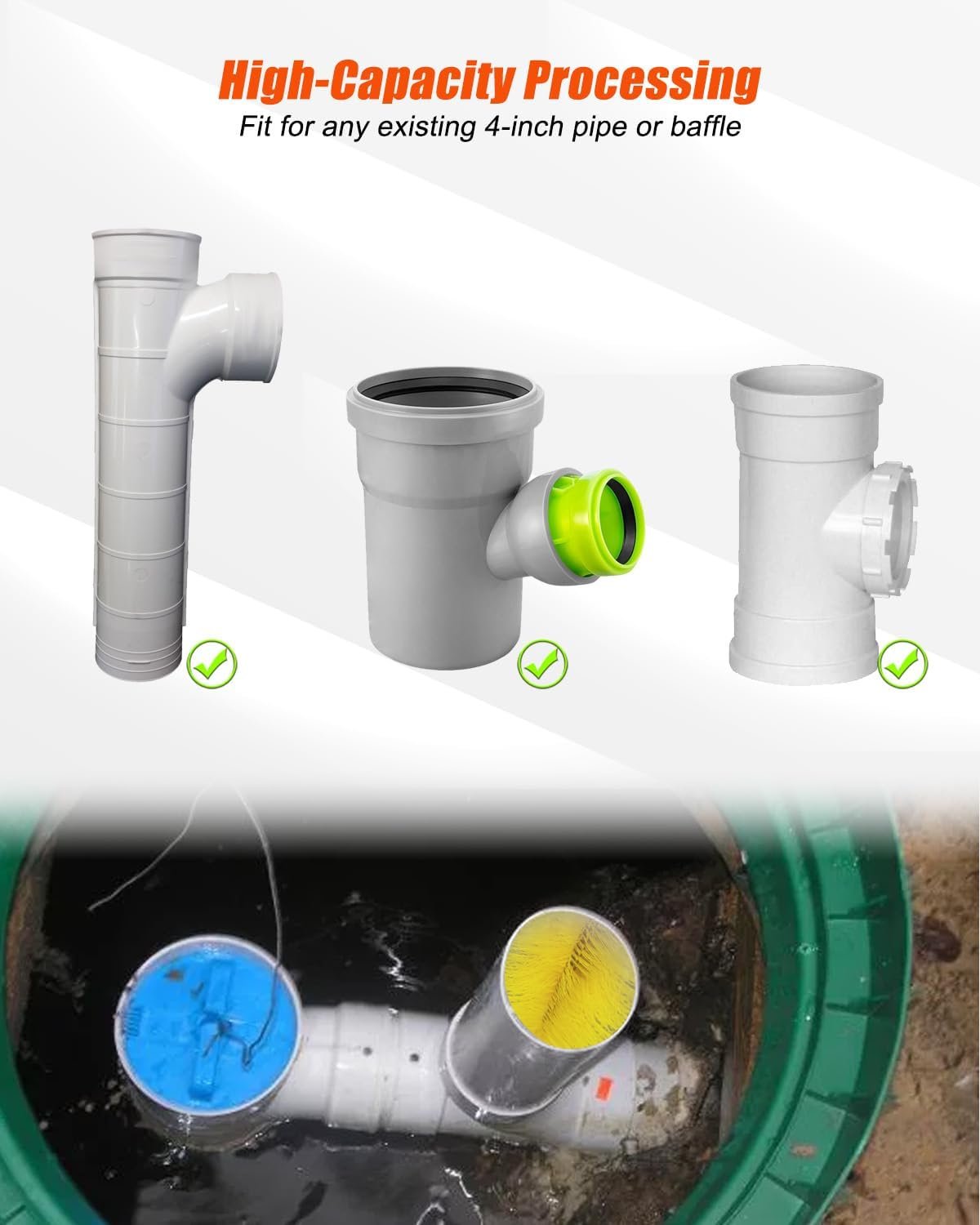
This septic tank bristle filter is described as a direct replacement for a compatible existing 4-inch pipe or baffle. Its listed specifications include a 1,200-gallon rated daily filtration capacity, more than 2,200 square inches of/16-inch filter area, high-density nylon bristles, and stainless steel brackets. Those details point to substantial filtering surface and a straightforward replacement process, but a nominal 4-inch fit does not automatically mean it will attach to every septic outlet with a similar measurement.
The displayed price is EUR0.00. That figure may be a temporary listing price, an unavailable offer, a coupon condition, or a checkout error, so confirm the actual payable total before judging the value. This septic tank bristle filter merits consideration if you already have compatible Infiltrator Systems hardware, but the product claims should remain separate from long-term performance results because no usable customer rating or review count was supplied with the listing information.
This image is property of Amazon.com.

How the septic tank bristle filter works
An effluent filter sits between the septic tank and outlet pipe. It allows partially clarified liquid to leave while retaining larger solids, fibres, hair, lint, paper fragments, and similar debris inside the tank, where they can be removed during normal pumping. In practical terms, wastewater enters the tank, heavier material settles, lighter material floats, and the liquid between those layers moves through the filter assembly toward the outlet.
The STF-110 uses high-density nylon bristles described as non-directional. That design is intended to let water pass through the filtering area without depending on one specific flow direction. With more than 2,200 square inches of/16-inch filter area, this septic tank bristle filter can spread incoming flow across a broad surface rather than concentrating it through a small opening. A larger area may delay blockage, but it cannot make the assembly clog-proof.
A septic tank bristle filter protects downstream plumbing and dispersal components; it does not replace pumping, responsible waste disposal, or professional inspections. Pay attention to a raised liquid level near the outlet, slow drainage, sewage odour, or repeated fouling. Those signs can indicate a dirty filter, excessive solids, a damaged outlet, or a wider system problem, and repeatedly rinsing the filter without finding the cause may postpone necessary service.
Key features and specifications
The measurable specifications give you a useful starting point, but they should not be confused with guaranteed results in every installation. The main details are:
| Specification | Listed detail |
|---|---|
| Product name | Septic Tank Bristle Filter 4” Fit for Infiltrator Systems STF-110 |
| Nominal fit | 4-inch pipe or baffle |
| Bristle material | High-density nylon |
| Bracket material | Stainless steel |
| Filter opening | 1/16 inch |
| Filtration area | More than 2,200 square inches |
| Rated daily capacity | 1,200 gallons |
| Installation method | Direct replacement; no cutting or welding stated |
| Maintenance approach | Moving water is intended to flush attached solids from the bristles |
The 4-inch description is practical only when your existing pipe or baffle and retaining arrangement are compatible. It is not proof that the septic tank bristle filter will fit every tank with a nominally similar outlet. The/16-inch opening is intended to retain fine fibres and larger suspended debris, although finer filtration can also make inspection more relevant when the household sends substantial paper, hair, or lint into the system.
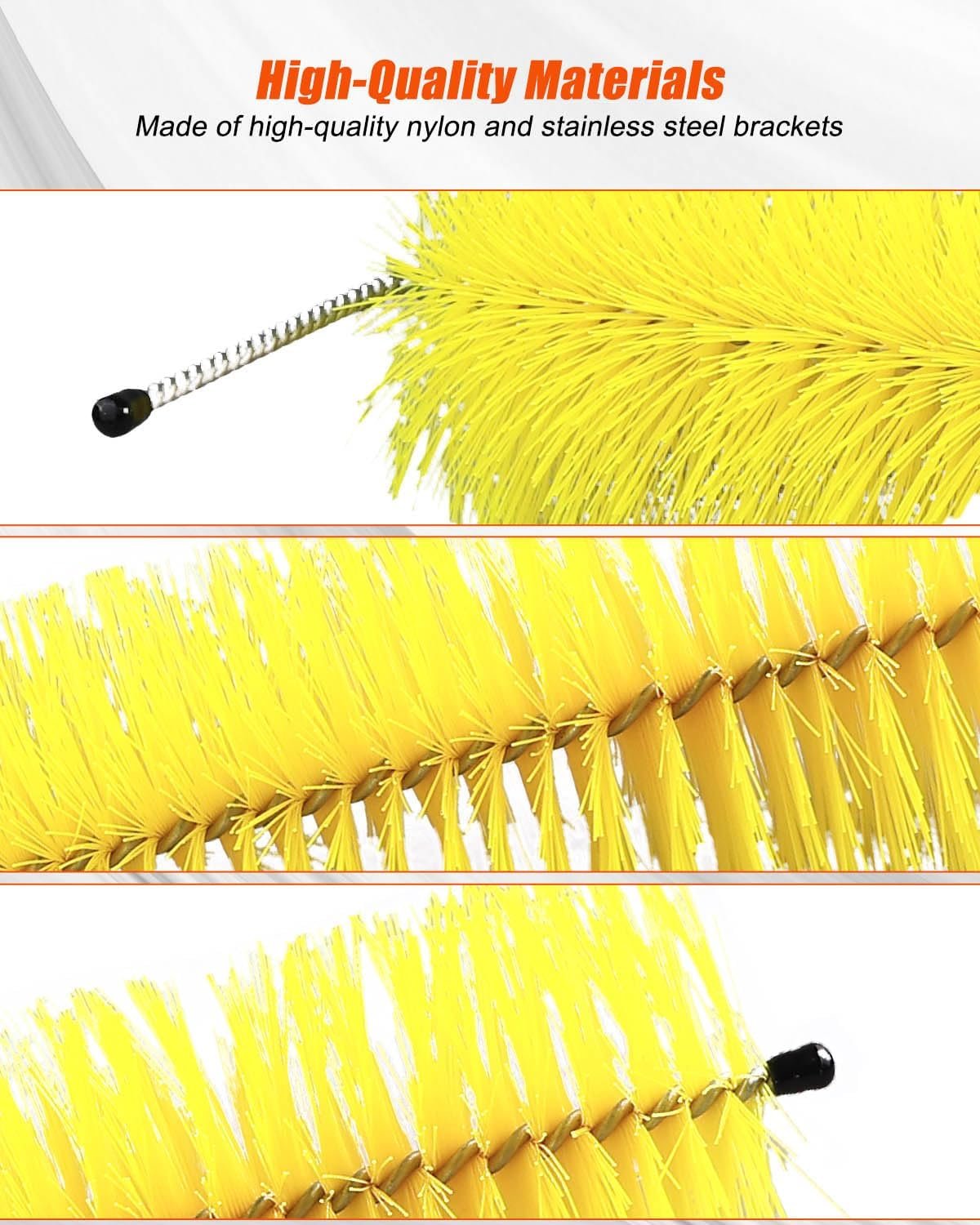
Stainless steel brackets should provide useful resistance to corrosion in a wet, chemically harsh environment, while the manufacturer says the nylon bristles resist harsh conditions and freeze cracking. Those are material claims, not a guarantee against every soil, temperature, chemical, or installation condition. Likewise, the 1,200-gallon figure is a rated processing capacity, not a promise that the septic tank bristle filter suits every household, flow pattern, local code, or commercial application.
Actual hydraulic performance depends on whether the assembly is correctly seated, how dirty it becomes, and whether wastewater loads are normal. A clean filter installed properly may behave differently from one exposed to grease, wipes, abnormal solids, or an outlet restriction.
Installation and compatibility checks before buying
The stated replacement process is simple: remove the old filter, place it in a suitable disposal bag, and install the new assembly without cutting, welding, or specialist tools. That simplicity applies only when the existing connection is compatible. A septic tank bristle filter that is forced into place or left loose can allow solids to bypass the filtering area.
Before opening the access point, use this preparation sequence:
- Identify the tank access point and arrange safe ventilation.
- Wear appropriate protective equipment and keep children and pets away.
- Confirm which assembly is connected to the outlet.
- Photograph the existing filter’s orientation and retaining method.
- Check the available clearance for removal and replacement.
Compare the old filter’s pipe or baffle connection, overall shape, retaining arrangement, and clearance instead of relying only on the phrase “4-inch fit.” If the old filter is missing, damaged, buried in sludge, or difficult to identify, ask a septic professional to verify the Infiltrator Systems connection style before ordering this septic tank bristle filter.
Septic tanks can contain toxic gases and biological hazards. Follow local safety rules, never enter the tank, and do not lean into an opening unnecessarily. After installation, verify that the filter is fully seated and the access cover is secure; where the liquid level or outlet flow needs assessment, have a qualified person perform that check. The product description says no cutting or welding is required, but it does not remove the need for safe handling or correct fit.
This image is property of Amazon.com.

Maintenance, cleaning, and expected service routine
The product description says moving water automatically flushes the bristles, dislodges attached solids, and extends the interval between manual cleanings. That can reduce maintenance effort, but it does not make the septic tank bristle filter maintenance-free. Grease, wipes, excess lint, hair, and abnormal solids can still accumulate and restrict flow.
Use your servicing professional’s schedule as the starting point, then inspect sooner after unusually heavy household use or when drainage slows. A sensible routine is to arrange safe access, lift the filter carefully, rinse it with controlled water into the tank or an approved waste area, inspect the bristles and brackets, and reinstall the assembly securely. Avoid aggressive chemicals and excessive water pressure that could damage the bristles or retaining hardware.
Do not allow contaminated rinse water to enter surface drains, streams, soil areas connected to groundwater, or other unauthorised disposal points. Cleaning intervals vary with household loading, tank design, wastewater habits, and sludge depth, so the listing cannot establish a universal service timetable. The/16-inch openings may retain more fine material than a coarser design, making inspection particularly relevant where wastewater contains paper fibres, hair, or lint.
Call a septic professional if the septic tank bristle filter repeatedly blocks, the liquid level is unusually high, the outlet pipe appears damaged, or cleaning does not restore normal flow. Those symptoms may point to a failing component or overloaded system rather than a simple need for more frequent rinsing.
What customers are saying about the septic tank bristle filter
No usable Amazon rating, review count, or review dates were provided for this listing at the time of writing. That means customer reviews cannot currently confirm whether the advertised 4-inch connection matches Infiltrator Systems hardware in real installations. The absence of supplied review evidence is not proof of poor performance, but it does make the septic tank bristle filter harder to validate than an established replacement with a substantial review history.
There is consequently no reliable buyer pattern to report about installation without modification, easier replacement, unrestricted flow, reduced manual cleaning, or retention of hair, lint, fibres, and paper fragments. Delivery, packaging, listing accuracy, bracket security, bristle shedding, and long-term durability also remain unverified rather than positive or negative findings. The 1,200-gallon rating and material descriptions should therefore be treated as specifications, not independently confirmed service results.
When reviews become available, give greater weight to detailed accounts that identify the tank type, connection, installation conditions, time in service, and results after several cleaning cycles. One-line five-star or one-star ratings tell you very little about fit or hydraulic behaviour. For this septic tank bristle filter, check whether the reviewer used a compatible 4-inch system, replaced an existing filter rather than creating a new installation, and observed performance through more than one maintenance cycle.
Until that evidence exists, your buying decision should rest on physical compatibility, professional confirmation where needed, the live listing details, and the final payable price. Avoid assuming that a product with strong specifications has already demonstrated long-term performance in your particular tank.
Who should consider this 4-inch septic tank bristle filter?
The strongest use case is a property owner replacing an existing compatible 4-inch effluent or bristle filter and looking for a tool-free replacement with a large stated filtration area. If your current assembly is damaged, difficult to clean, or no longer retaining common household debris, this septic tank bristle filter offers a plausible replacement route without the stated need for cutting or welding.
It may be especially relevant when you want to keep lint, hair, fibres, and paper debris away from the outlet. The rated 1,200 gallons per day may be relevant to ordinary residential wastewater volumes, but owners of larger homes, guest facilities, shared systems, or commercial sites should have hydraulic requirements checked professionally rather than treating the rating as automatic approval.
You should be cautious if you cannot identify a known 4-inch connection, have a nonstandard baffle, need local approval, or expect a filter to repair a failing drain field. A septic tank bristle filter cannot replace pumping, inspections, outlet repairs, or better waste-disposal habits. Wipes, grease, paper towels, and other unsuitable materials can continue to create problems upstream of any filter.
Your decision path is straightforward: identify the current assembly, confirm the connection and clearance, check current stock and the live EUR price, compare the stated specifications with the old filter, and purchase only after fit is verified. If any step is uncertain, a service company can usually provide a more dependable answer than a guess based on the product title.

This image is property of Amazon.com.

Value assessment at EUR0.00 and alternatives
At first glance, EUR0.00 makes the septic tank bristle filter look unusually good value. Treat that number cautiously: it could be a placeholder, unavailable offer, coupon condition, or listing error. Confirm the amount payable at checkout, along with shipping and any required components, before using EUR0.00 in your comparison.
The value proposition is broader than the displayed price. A direct replacement requiring no cutting or welding could reduce installation time, while nylon bristles and stainless steel brackets are intended for repeated wastewater exposure. Against that, an incorrect fit can cost far more than the filter itself through professional call-outs, repeated cleaning, outlet blockage, or avoidable system disruption.
For alternatives, compare the STF-110 with the Tuf-Tite EF-6 rather than assuming either is universally better. Check connection compatibility, filter design, rated flow, cleaning method, replacement availability, and the cost of a complete assembly. The SimTech No Vault Pump Filter is another named option, but a pump-related filter may not be a like-for-like replacement for a 4-inch baffle-mounted bristle filter.
Calculate total ownership cost by adding the purchase price, shipping, professional installation, replacement frequency, and cleaning effort. Divide that total by the expected service period, then compare the result with the potential cost of a blocked outlet, emergency service, or premature drain-field repairs. This septic tank bristle filter looks most compelling when the connection is confirmed and the final EUR price is genuinely available; uncertain pricing and limited customer evidence justify careful verification first.
Buying checklist for the STF-110
Use this short sequence before ordering the septic tank bristle filter:
- Record the model or identifying details of the existing filter.
- Confirm the outlet connection and retaining arrangement.
- Check the available removal and installation clearance.
- Compare the stated capacity, materials, opening, and assembly design.
- Ask the installer or servicing company to verify compatibility if the system is unusual.
Check the live listing for the final EUR price, stock status, included components, delivery timing, returns policy, and updated compatibility notes. Save photographs of the existing installation and compare them with the seller’s product images before removing anything. This can expose differences in shape or retention that the phrase “4-inch fit” does not show.
Confirm local septic regulations before changing an effluent filter. Professional advice is particularly sensible when the system is shared, commercial, unusually designed, or covered by a maintenance contract. After delivery, inspect the stainless steel brackets for damage, make sure the bristles are securely attached, verify the dimensions and clean openings, and check that the packaging contains the expected replacement assembly.
The product-specific rule is simple: purchase this septic tank bristle filter only when your existing system is a compatible 4-inch arrangement, the rated capacity suits the property, and the verified final EUR price is reasonable. If those three conditions are not clear, pause and obtain a fit confirmation before opening the tank.
Pros and Cons
This image is property of Amazon.com.
Pros
- Large stated filtration area of more than 2,200 square inches
- High-density nylon bristles and stainless steel brackets
- Direct-replacement design reportedly requiring no cutting, welding, or specialist tools
- Rated daily filtration capacity of 1,200 gallons
- Non-directional bristle design is intended to support unrestricted water flow
Cons
- Compatibility is not guaranteed for every nominally 4-inch septic outlet
- The EUR0.00 listing price may be a placeholder or checkout error
- No usable customer rating, review count, or long-term buyer evidence was provided
- Automatic flushing does not eliminate the need for inspection and cleaning
- The product cannot correct pumping, outlet, hydraulic, or drain-field problems
Final Verdict
Key Takeaways
- The STF-110 is specified as a direct replacement for compatible 4-inch pipe or baffle assemblies, not every nominally 4-inch septic outlet.
- Its listed design includes more than 2,200 square inches of/16-inch filtration area, nylon bristles, stainless steel brackets, and a 1,200-gallon daily rating.
- The displayed EUR0.00 price must be verified at checkout because it may be a placeholder, unavailable offer, or listing error.
- No usable customer rating or review count was supplied, so long-term performance and real-world fit remain unconfirmed.
- Buy only after comparing the existing connection, retaining method, clearance, capacity needs, and local requirements.
Frequently Asked Questions
Is an effluent filter necessary for a septic system?
An effluent filter is not required in every septic system, but it can help retain solids before they reach outlet pipes and dispersal components. Whether it is required or appropriate depends on the tank design, local rules, and the recommendation of your septic professional.
What is the best effluent filter for a septic tank?
The best filter is one that matches your tank’s outlet, baffle, flow requirements, and local approval requirements. The STF-110 is worth considering only when its stated 4-inch connection and 1,200-gallon daily rating suit your existing installation.
What is an effluent filter on a septic tank?
An effluent filter is an assembly fitted near the tank outlet that lets liquid effluent pass while retaining larger solids, fibres, hair, lint, and paper fragments. It helps protect downstream plumbing and dispersal components but does not replace pumping or inspections.
How often do you need to clean an effluent filter?
There is no universal interval because cleaning frequency depends on household loading, tank design, wastewater habits, and sludge levels. Follow your servicing professional’s schedule and inspect sooner if drainage slows, the filter repeatedly fouls, or the liquid level near the outlet rises.