Dewitt Septic Fabric Review: What This x 300-Foot Roll Does
Fine soil migrating into gravel can close the open spaces that drainage systems need, slowing water movement and encouraging premature saturation. Dewitt Septic Fabric is designed to act as a separation and filtration layer between native soil and drainage aggregate, making it relevant to French drains, leach fields, and other subsurface projects. The product looks most attractive when you need broad coverage rather than a small pre-cut patch.
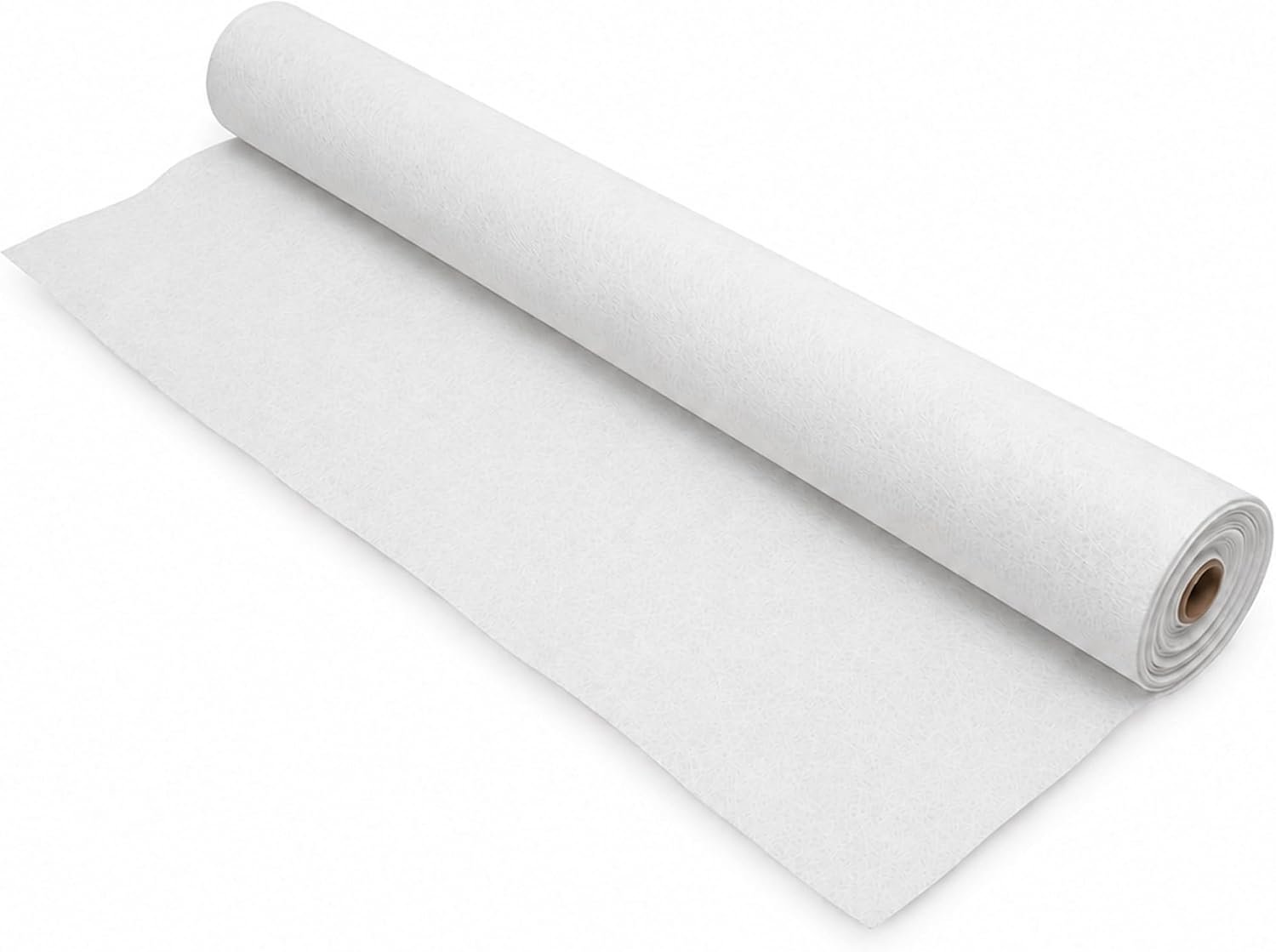
The roll measures feet wide by feet long, which provides 1,200 square feet of stated coverage before overlap and cutting waste. Its listed price is $72.99, or approximately $0.06 per square foot; that figure covers the fabric only, not gravel, pipe, excavation, tools, permits, or professional labor. For a larger drainage project, Dewitt Septic Fabric offers a potentially economical supply in one roll.
This is a nonwoven geotextile for drainage, filtration, and soil separation. It is not a septic-tank effluent filter and cannot replace a properly specified septic component, damaged pipe, or professional system design. In 2026, the central buying question is whether the coverage and flexible handling justify the price for your particular project. Based on the available description, Dewitt Septic Fabric is worth considering for general drainage work, but specification-sensitive septic installations deserve additional verification.
This image is property of Amazon.com.

Product Specifications and Intended Uses
The supplied listing identifies this as a broad-use nonwoven drainage fabric rather than a product with a full engineering data sheet. Here is the information available before ordering:
| Specification | Listed detail |
|---|---|
| Product name | Dewitt Septic Fabric |
| Fabric type | Nonwoven geotextile |
| Roll size | 4 feet by feet |
| Coverage area | 1,200 square feet |
| Listed price | $72.99 |
| Availability | In Stock |
| Project types | Leach fields, drainfields, French drains, pipe drainage, gravel beds, septic soil separation, backfill support, and landscaping drainage |
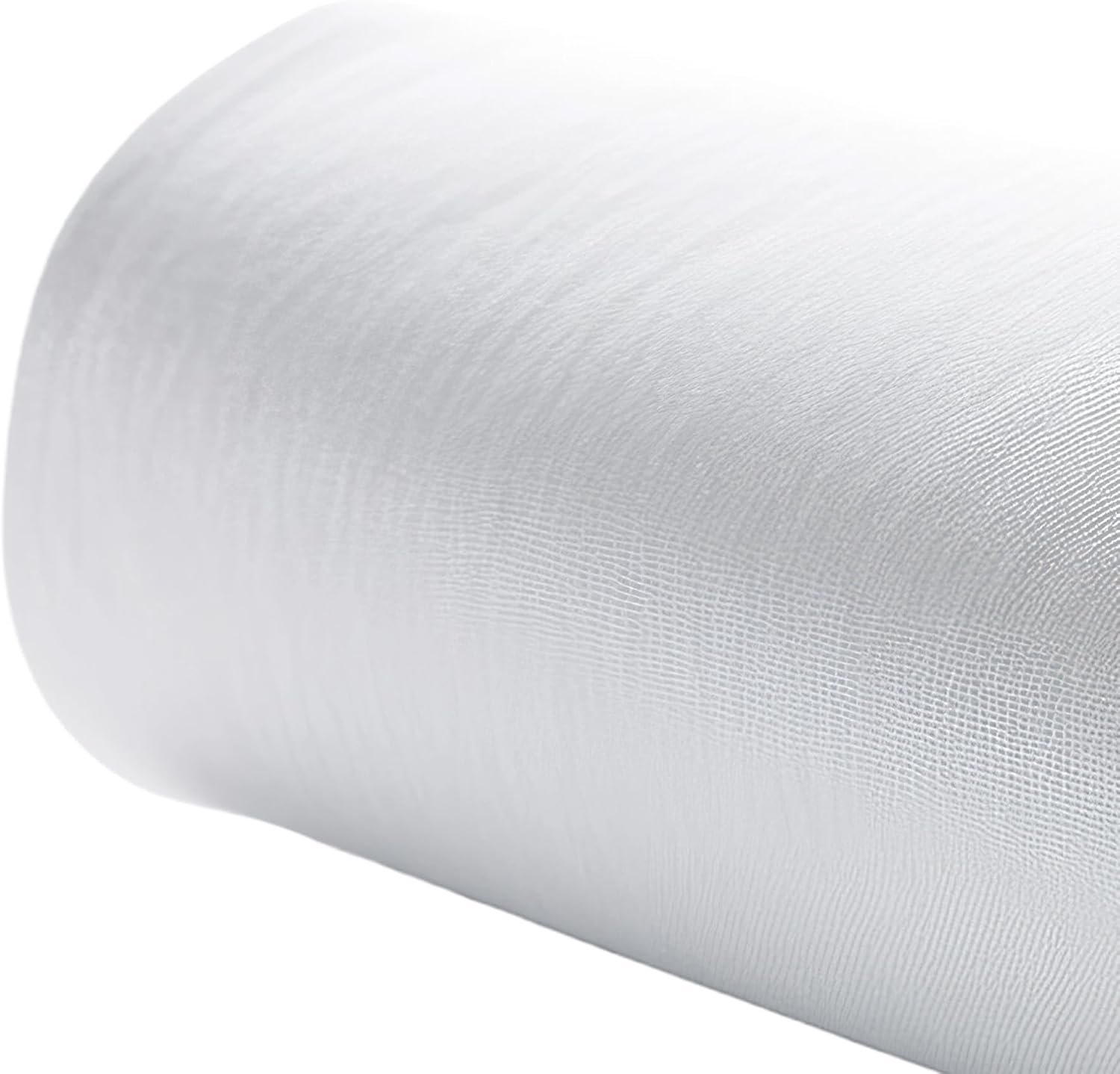
Dewitt Septic Fabric uses nonwoven material, which is generally selected where water passage and filtration matter. That differs from woven ground-cover fabric, which is often chosen for dimensional stability and weed-control applications. The listing does not provide fabric weight, thickness, tensile strength, apparent opening size, permeability, ultraviolet resistance, or burst strength.
The description supports use with corrugated and smooth-wall pipe, gravel beds, backfill, and soil separation. It does not establish suitability for every engineered system. Before using Dewitt Septic Fabric, match the project drawing to local code, ask an installer or engineer which performance values are required, and avoid assuming that a general-use label satisfies a regulated design.
How Dewitt Septic Fabric Supports Drainage and Soil Separation
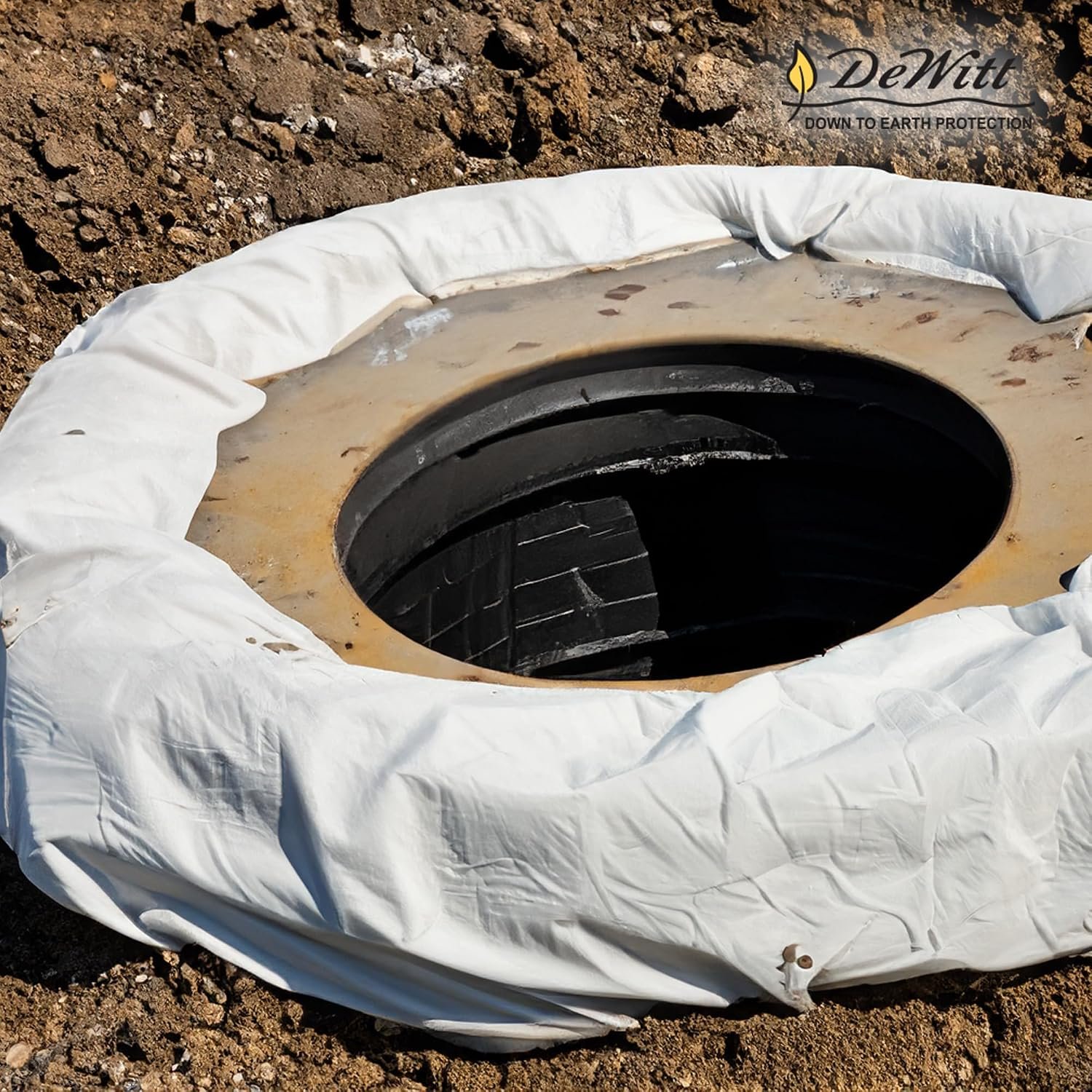
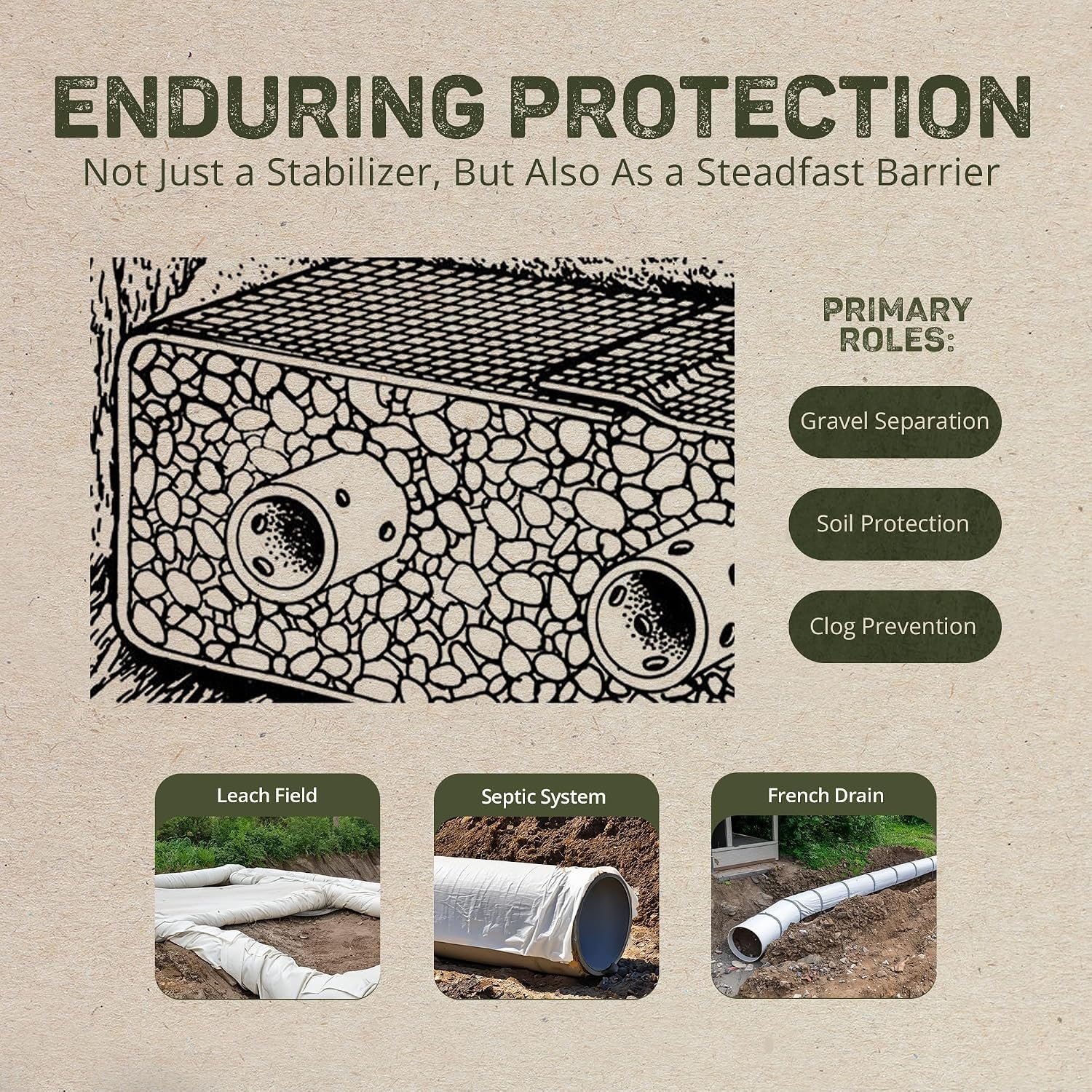
A typical drainage arrangement places native soil at the bottom and sides of a prepared trench, followed by geotextile, gravel or another aggregate, and pipe where the design calls for it. Additional aggregate, cover soil, or protective layers then go above the assembly. The exact order depends on the drainage plan, but Dewitt Septic Fabric is intended to sit between materials that need to remain separated.
Water can pass through the nonwoven layer while the fabric helps limit fine soil movement into the gravel. Keeping soil from filling aggregate voids can help preserve a more porous drainage bed, but Dewitt Septic Fabric does not promise a particular service life or guaranteed clog prevention. Soil separation and filtration are related but not identical: separation keeps different materials apart, while filtration controls water passage and the movement of suspended particles.
Results depend heavily on installation. Fabric placement, overlap, seams, trench preparation, aggregate size, and surrounding soil conditions all influence performance. A carefully installed layer cannot correct an undersized drainfield, poor grading, damaged pipe, saturated ground, or an improperly designed septic system. Treat Dewitt Septic Fabric as one part of a drainage assembly, not as a cure for an underlying design problem.
Key Features Deep-Dive: Coverage, Flexibility, and Pipe Compatibility
The 4-foot width can suit many narrow trenches and gravel beds. Depending on the design, you may lay it beneath aggregate, extend it up the trench sides, or shape it around a pipe-and-gravel assembly. The useful width depends on the trench profile, so a roll that appears wide enough on paper may need additional material once side coverage and overlaps are included.
The 300-foot length creates a total stated area of 1,200 square feet, potentially serving one large installation or several smaller repairs. Long continuous runs can reduce the number of seams, although folds, cuts, overlap, and damaged sections reduce usable coverage. The manufacturer describes the material as lightweight and easy to cut and shape, which should help around corners, trenches, pipes, and irregular areas. Dewitt Septic Fabric is therefore more adaptable than a rigid preformed separator.
The listing names compatibility with both corrugated and smooth-wall pipe, but the fabric does not replace perforations, fittings, cleanouts, or a specified filter sock. To estimate material, measure trench length and width, add any side or wrap dimensions, include the project-specified overlap, and then add a waste allowance. Compare that total with the stated 1,200 square feet. For demanding work, request missing values such as fabric weight, grab tensile strength, puncture resistance, and permeability before choosing Dewitt Septic Fabric.
This image is property of Amazon.com.

Installation Planning for a Septic or French Drain Project
Start with the drainage design, not the roll. Confirm the trench route, slope, aggregate, pipe layout, and required separation zone; mark the work area; remove sharp debris; and prepare a stable base. Keep the fabric clean and dry until placement so soil does not become embedded before the gravel goes in. For regulated septic work, Dewitt Septic Fabric should be installed only after the design and local requirements are settled.
- Unroll enough material beside the work area to reduce unnecessary seams.
- Cut it with clean shears or a utility knife, leaving enough fabric for the intended bottom, side, or wrap coverage.
- Position it carefully, then place pipe and aggregate without dragging the fabric out of alignment.
- Prevent rocks, tools, and equipment from puncturing the layer during backfilling.
Edges and overlaps matter because gaps can allow soil to bypass the separator. Follow the dimensions specified by the project engineer or authority rather than assuming one universal overlap. Although Dewitt Septic Fabric is simple to cut and place, excavation, slope, trench depth, pipe layout, aggregate selection, and soil assessment are not automatically do-it-yourself tasks.
Hire a professional for drainfield changes, code-regulated septic installations, unknown soil conditions, excavation near utilities, or any project where failure would be costly. A manageable fabric roll does not make every septic project suitable for a homeowner.
What Customers Are Saying About Dewitt Septic Fabric
The supplied product information does not include a verified star rating, review count, or a dependable set of customer quotations. That means you should not treat this review as evidence of a measured satisfaction score. For Dewitt Septic Fabric, the most useful buyer evidence would concern handling: whether customers could cut it cleanly, keep it manageable during placement, and complete a project without needing several smaller rolls.
When reading the live listing, look for detailed comments about thickness, tearing, fraying, stiffness, actual coverage, packaging, delivery condition, and whether the material matched the description. A review saying the roll was easy to position is useful for installation planning, but it does not prove multi-season performance in a septic field. Short-term handling satisfaction and long-term drainage results are separate questions.
Conflicting feedback may reflect different soil types, aggregate sizes, trench methods, or customer expectations. Someone seeking a general separator may be satisfied, while a buyer expecting a heavy-duty engineered geotextile may consider the missing technical data a problem. Customer reviews indicate more when they identify the project and show photographs rather than making unsupported claims about guaranteed system life.
Use this method: prioritize reviews with project context, inspect photos for material scale and visible construction, check recent comments for packaging or stock changes, and compare the reviewer’s application with yours. That approach gives Dewitt Septic Fabric a fair assessment without turning one installation anecdote into a universal performance claim.
Dewitt Septic Fabric Compared With Alternatives
Two names you may encounter while comparing drainage materials are Mirafi 140N and Mutual Industries Drainage Fabric. The first comparison is between a general-use roll marketed for drainage and a product shoppers may investigate when they need published engineering values and known project ratings. The second requires checking roll dimensions, fabric weight, filtration characteristics, and price per square foot because those details can differ substantially between listings.
Compare each option using the same framework: total coverage, cost per square foot, nonwoven construction, published performance data, width, length, return terms, and suitability for local requirements. Dewitt Septic Fabric may appeal when you want a large supply, flexible cutting, broad drainage uses, and a listed price of $72.99. An alternative may be the safer choice when your design requires certified specifications, high puncture resistance, a particular apparent opening size, documented permeability, or inspection paperwork.
Do not judge the installed project by fabric price alone. Add gravel, pipe, excavation, disposal, tools, permits, and professional labor to every comparison. Mirafi 140N or Mutual Industries Drainage Fabric may cost more or less depending on the seller and roll format, so verify current figures rather than relying on a generic brand comparison. The right decision is the product that matches the design, not automatically the lowest-priced roll.
This image is property of Amazon.com.

Who Should Buy This Drainage Fabric?
The strongest use cases include a homeowner building a French drain, a contractor preparing a gravel drainage bed, a landscaper separating soil from aggregate, or a property owner managing a larger subsurface water project. The broad roll format can be practical when you need substantial material or want one supply available for several outdoor projects. Dewitt Septic Fabric is most appealing when the job calls for general nonwoven separation and filtration rather than a documented specialty specification.
You should pause if you are actually looking for a septic-tank effluent filter, need certified engineering values, or have not confirmed the drainage design and local rules. Store the roll somewhere dry, clean, and protected from prolonged sunlight. Keep it away from sharp objects and construction traffic until installation so the material does not suffer avoidable damage.
Your decision process should be straightforward: define the project, calculate the required coverage including overlaps, confirm the technical properties the design demands, compare at least one general drainage fabric with one specification-driven option, and check whether the seller’s return terms fit the purchase. Dewitt Septic Fabric can be homeowner-friendly to handle, but handling is only one part of a septic installation.
If your project involves a drainfield, utilities, uncertain soil, excavation, or code approval, obtain professional guidance before ordering. A large roll is useful only when it suits the actual design.
Is the $72.99 Price Good Value?
At the listed $72.99, the roll works out to approximately $0.061 per square foot based on 1,200 square feet of stated coverage. That is a competitive-looking material cost for broad general drainage coverage, although the effective figure rises when you account for overlaps, cuts, waste, delivery, and unusable sections. Dewitt Septic Fabric therefore offers its strongest value on projects large enough to use much of the roll.
A long roll can reduce seams and lower the risk of running short during a substantial installation. For a small repair, however, you may pay for a large amount of material that remains unused. Calculate your expected fabric area, multiply it by about $0.061, and then add a realistic allowance for overlap and cutting waste before comparing the result with smaller rolls.
The trade-off is that the supplied listing does not state permeability, puncture resistance, tensile strength, or other engineering values. If your project needs verified documentation, a cheaper roll can become poor value if it fails inspection or proves unsuitable for the design. Dewitt Septic Fabric is better judged by application fit than by price alone.
In-stock availability may help with project planning, but verify delivery timing, packaging condition, and return eligibility before committing. For a general French drain or landscaping separation job, the price looks reasonable; for engineered or code-sensitive work, a documented specialty geotextile may offer better overall value.
What to Check Before Ordering Dewitt Septic Fabric
First, confirm that your project calls for geotextile soil separation or drainage filtration. This material should not be confused with a septic-tank effluent filter, erosion-control blanket, root barrier, or ordinary landscape fabric. Dewitt Septic Fabric may suit the separation role described in the listing, but the correct category depends on your system design.
Next, verify the required width, total area, overlap, and wrap arrangement against the project drawing or installer’s measurements. Ask the seller or manufacturer for any missing technical information, including fabric weight, thickness, permeability, apparent opening size, puncture resistance, and tensile strength. Those values matter when the fabric will face heavy aggregate, construction traffic, difficult soil, or formal inspection.
Check local septic and drainage rules before excavation, particularly where the work approaches a drainfield, property line, easement, well, foundation, or public utility. Compare the roll with at least one general drainage fabric and one specification-driven geotextile, considering complete project cost and return terms rather than the headline price.
Order Dewitt Septic Fabric when you need broad nonwoven separation fabric and its available specifications match the design. Choose another product when documented performance is mandatory or when an installer identifies requirements this listing does not establish.
This image is property of Amazon.com.
Pros and Cons
Pros
- Large stated coverage area suitable for substantial drainage projects or multiple smaller jobs
- Nonwoven construction is marketed for water passage, filtration, and soil separation
- Lightweight, cuttable material can be shaped around trenches, pipes, corners, and gravel beds
- Listed in-stock price of $72.99 produces a low approximate material cost per square foot
- Named compatibility with corrugated and smooth-wall drainage pipe
Cons
- The listing does not provide fabric weight, thickness, permeability, apparent opening size, tensile strength, puncture resistance, or burst strength
- A 300-foot roll may leave substantial unused material when you only need a small repair
- It is not a septic-tank effluent filter or a replacement for professional septic-system components
- Long-term drainage performance cannot be established from the supplied customer-review information
- Correct installation still depends on trench design, slope, aggregate, soil conditions, and local requirements
Final Verdict
Key Takeaways
- The nonwoven roll is intended for drainage filtration and soil separation, not as a septic-tank effluent filter.
- Its broad coverage and flexible cutting may suit French drains, gravel beds, landscaping drainage, and some septic-related separation work.
- The listing does not provide key engineering values such as permeability, puncture resistance, tensile strength, or apparent opening size.
- The listed $72.99 price is approximately $0.061 per square foot before overlap, waste, delivery, and installation costs.
- Confirm local requirements and project-specific specifications before using it in a regulated or engineered drainage system.
Frequently Asked Questions
Is an effluent filter necessary for a septic system?
Many septic systems use an effluent filter to help keep solids from reaching the drainfield, but requirements vary by system design and local rules. A qualified septic professional can confirm whether your tank needs one and specify the correct model. Drainage fabric is not a substitute for that tank component.
What is the best effluent filter for a septic tank?
The best filter depends on tank outlet design, flow, access, maintenance needs, and local requirements. Choose a properly sized, documented effluent filter recommended by a septic professional rather than using drainage geotextile fabric. The product reviewed here is intended for soil separation and drainage layers, not tank effluent filtration.
What is an effluent filter on a septic tank?
An effluent filter is a component installed at or near the septic tank outlet to help prevent suspended solids from leaving the tank and entering the drainfield. It normally requires periodic inspection and cleaning. It is different from fabric placed around gravel, pipe, or soil in a drainage installation.
How often do you need to clean an effluent filter?
Cleaning frequency depends on tank use, household size, wastewater solids, filter design, and local servicing guidance. Many systems are checked during routine septic maintenance, but a professional should set the interval for your installation. Follow the manufacturer’s instructions and never enter a septic tank.