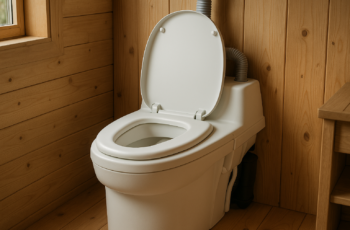
Separett Weekend Prime overview: a fully manual off-grid toilet
Can a $549 waterless toilet provide practical sanitation where electricity, plumbing, water, and sewage are unavailable? The Separett Weekend Prime is designed to answer yes, but only if you’re comfortable managing separated liquid and solid waste yourself. It is a specialist solution for remote camps, wilderness cabins, off-grid shelters, emergency-use rooms, and bunkers rather than a drop-in replacement for a flush toilet.
The Separett Weekend Prime is most compelling when silence and independence matter more than automation. Its operating concept is straightforward: urine diversion, a separate solids container, and compostable cover material such as sawdust, hemp, or coconut coir. There is no fan, pump, motor, or powered ventilation requirement, so you avoid both electrical installation and fan noise.
At $549, the price is the first value hurdle. The listing shows only units available, although stock status can change before you order. Later comparisons with the OGO NOMAD and Nature’s Head models will help you decide whether the Separett Weekend Prime’s simpler design justifies its cost for your off-grid project.

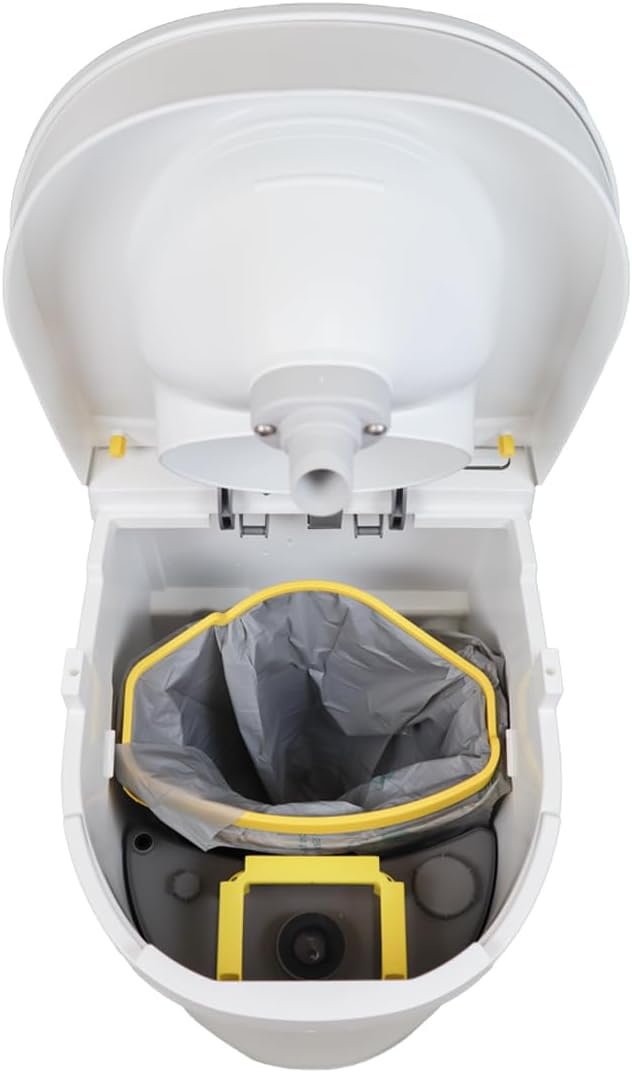
Separett Weekend Prime Urine-Separating Compost Toilet
$549
Only left in stock – order soon.
How the Separett Weekend Prime works without electricity or water
The Separett Weekend Prime directs liquid into an internal urine container while solid waste stays in a separate area. That separation can help keep the solids portion drier and reduce the wet conditions that encourage odor, though it won’t guarantee a completely odor-free experience in every climate or installation.
The Separett Weekend Prime needs no electricity, water connection, sewage connection, fan, or powered ventilation. After use, you add an appropriate dry, compostable cover material. Sawdust, hemp, and coconut coir can absorb some moisture and help limit odors, but you’ll need to use a material that behaves well in your local humidity and is suitable for your waste-management method.
A practical workflow is:
- Position the unit securely and prepare the collection arrangement.
- Add the chosen dry cover material before or after use, according to your routine.
- Use the toilet and allow liquid and solids to remain in their separate areas.
- Empty, route, or store each waste stream responsibly.
- Clean exposed contact surfaces regularly.
An optional urine tube may support external liquid handling. Before relying on it, confirm the desired routing arrangement and check local sanitation rules for storage, discharge, or disposal.
Separett Weekend Prime key features and construction
The Separett Weekend Prime uses a fixed upper part with no moving components. That choice supports a stable, uncomplicated user experience and removes several mechanical failure points that could be troublesome in a harsh or remote environment. You sit on a fixed unit rather than unfolding or assembling a temporary camping toilet each time it is needed.
The Separett Weekend Prime’s compact construction is suited to cabins, camps, shelters, and other locations where a full plumbing installation is unrealistic. Because the design is quiet and contains no fan or motor, it can work well near sleeping quarters, in a hunting cabin, or in a shared emergency space where continuous mechanical noise would be irritating.
“Self-contained” describes the toilet’s independence from water and plumbing infrastructure; it does not mean waste disappears or that servicing is unnecessary. You still need access to the internal container, a solids-handling plan, cleaning supplies, and somewhere suitable for separated liquid.
The separately available solids-bucket lid is not required for most users, but it may help with storage, transport, or a particular disposal routine. The supplied description identifies the internal urine container and core toilet construction, while the urine tube and solids-bucket lid are optional. Check the live package contents before ordering so you don’t mistake the $549 base listing for a fully accessorised setup.
Installation and day-to-day maintenance
Start by choosing a level, stable location, then leave enough access around the unit to service both collection areas. Before installation, decide whether liquid will remain in the internal container or be routed externally, prepare your cover material, and establish where solids will be stored or disposed of.
The Separett Weekend Prime avoids plumbing, but no-plumbing installation still needs planning. You should be able to remove or reach the internal container without awkward lifting, spills, or unnecessary contact with surrounding walls and equipment. Safe access matters more than simply finding an empty corner.
A sensible maintenance rhythm includes checking the urine container regularly, emptying it according to local rules, monitoring the solids container, adding dry cover material when needed, and wiping exposed surfaces with a suitable cleaner. Odor control depends on correct separation, enough dry material, timely emptying, and proper cleaning—not on the toilet alone.
The Separett Weekend Prime’s lack of a fan is both an advantage and a trade-off. You get no power demand and no fan noise, but powered airflow cannot compensate for poor setup or delayed waste handling. Test the complete routine during a short stay: use the toilet with the intended users, service it, transport or dispose of waste, and clean it before making it the only toilet at a remote property.

What Customers Are Saying about the Separett Weekend Prime
The supplied listing does not provide a star rating, review count, or a sufficient set of verified buyer comments to support claims about repeated customer experiences. A trustworthy assessment therefore needs to separate documented product information from assumptions: the listing confirms silent, non-electric operation, urine diversion, fixed construction, and suitability for remote locations, but it does not establish a measured odor rate, capacity figure, or long-term failure rate.
When you inspect the current customer reviews, give greatest weight to comments from cabin, camping, shelter, and off-grid users. Their experience is more relevant than feedback from someone expecting a conventional flush toilet. Look for concrete reports about separation performance, leakage, comfort, container capacity, odor during real use, cleaning effort, and durability over time.
Potential concerns to investigate include the $549 purchase price, the work involved in handling two waste streams, the availability and cost of optional accessories, and uncertainty about disposal. Read the newest critical comments as well as positive reviews, then identify whether a complaint relates to the toilet itself, unsuitable cover material, poor installation, or unrealistic expectations.
For the Separett Weekend Prime, repeated specific observations are more useful than isolated praise such as “easy” or “great.” If several buyers independently describe the same leak, difficult cleaning point, or stable cabin installation, that pattern deserves more attention than a single broad opinion.
Who should buy the Separett Weekend Prime?
The strongest audience for the Separett Weekend Prime is an owner of a remote cabin, wilderness camp, off-grid shelter, bunker, or emergency-use room without dependable electricity, water, or sewage. It particularly suits you if you want a completely silent toilet and don’t want to maintain a fan, battery, solar system, or powered ventilation setup.
The Separett Weekend Prime also appeals if you prefer a fixed, stable toilet over a folding camping toilet or chemical portable toilet. Its simplicity can reduce installation complexity, but simplicity at the hardware level shifts responsibility to your daily routine. You must be comfortable adding dry cover material, emptying or routing urine, managing solids, and cleaning the unit.
You may prefer another design if you want an RV-style, low-maintenance experience, a flush-like interaction, active odor extraction, or a larger self-contained capacity. A powered toilet may be a better fit where electricity is reliable and ventilation is a priority; a larger system may suit heavier occupancy if its stated capacity and servicing requirements match your needs.
Use this decision test before buying the Separett Weekend Prime: can you answer where liquid will go, where solids will be stored or processed, what cover material you’ll use, and how often the system will be serviced? If those answers are practical, this model is more likely to fit. If they’re vague, the toilet may create as many logistical questions as it solves.
Separett Weekend Prime versus competing off-grid toilets
The Separett Weekend Prime takes a fully manual approach: no fan or power is required, and urine is separated internally. The OGO NOMAD belongs in the same broad off-grid category, but you should verify its current power, ventilation, capacity, and waste-handling requirements before making a direct choice. Nature’s Head Self Contained Composting Toilet with Close Quarters Spider Handle Design uses a different operating approach, so compare its included hardware, capacity, mixing or crank requirements, ventilation arrangement, and current listed price rather than assuming the products work the same way.
| Model | Power needs | Water/plumbing | Urine separation | Odor approach | Installation style | Accessories | Price |
|---|---|---|---|---|---|---|---|
| Separett Weekend Prime | None | None | Internal diversion | Dry cover material and separation | Fixed, self-contained | Urine tube and solids-bucket lid available separately | $549 |
| OGO NOMAD | Verify current listing | Verify current listing | Verify current listing | Verify current listing | Portable or installed according to listing | Verify package contents | Verify current price |
| Nature’s Head Self Contained Composting Toilet | Verify current ventilation needs | No conventional flush connection; verify setup | Different operating approach; verify current specifications | Ventilation and solids-management system | Self-contained installation | Check included hardware and handle configuration | Verify current price |
The Separett Villa Urine-Separating Compost Toilet is another internal alternative if you need a higher-capacity or more permanent installation. The Weekend Prime is positioned for a simpler, non-electric setup, whereas the Villa may be more appropriate when occupancy and permanence matter more than minimal infrastructure.
Compare total installed cost, including urine tubing, the solids-bucket lid, cover material, collection containers, shelter modifications, and disposal supplies. Choose the Weekend Prime for silent simplicity, a powered model for active ventilation, or a larger system for heavier occupancy when the competitor’s specifications support that use.

Is the $549 Separett Weekend Prime good value?
At $549, the Separett Weekend Prime is not the cheapest way to provide temporary sanitation. Its value comes from avoiding plumbing work, water use, sewage connections, electrical wiring, fan power, and ventilation infrastructure. If your cabin or shelter has no practical route to those services, avoiding installation work can matter more than the toilet’s sticker price.
The value case is strongest when conventional infrastructure would be expensive or impossible—not when you simply want the lowest-cost portable toilet. Ownership costs can include sawdust, hemp, or coconut coir; replacement or extra containers; optional urine tubing; the separately available solids-bucket lid; cleaning supplies; and transport or disposal arrangements.
The fixed upper part and absence of moving components may support durability value, particularly where servicing complex mechanisms would be difficult. That isn’t a guarantee of indefinite reliability: correct use, regular cleaning, storage conditions, and protection from harsh exposure will still affect how long the system remains useful.
To assess the Separett Weekend Prime, calculate $549 plus accessories and annual consumables. Then compare that total with the cost of installing and maintaining a conventional water-and-sewage toilet at the intended site. The listing currently says only are left in stock, but confirm current price, availability, package contents, and delivery details before ordering.
What to check before ordering the Separett Weekend Prime
Before ordering, confirm that your intended location has a level, stable base and enough room to reach the collection areas during servicing. Decide whether the internal urine container is sufficient for your expected use or whether the optional urine tube and an external handling arrangement are necessary.
Check local rules covering urine, solid waste, composting, and disposal. A waterless toilet removes the need for a flush connection, but it doesn’t remove your responsibility to handle waste safely and lawfully.
Source suitable dry cover material before the toilet arrives, then test how it behaves in your local climate. Material that works well in a dry cabin may be less practical in damp conditions, so a short trial can reveal moisture and storage problems before an extended stay.
Verify the live listing’s package contents so the $549 price isn’t confused with a fully accessorised installation. Pay particular attention to whether the accessories you want are separate purchases.
Finally, read recent customer feedback for specific details about odor, leaks, comfort, cleaning, container handling, and durability. Treat isolated claims cautiously unless the same issue appears repeatedly, and test the Separett Weekend Prime with its intended users before making it the only sanitation option at a remote property.
Pros and Cons
Pros
- Fully manual operation needs no electricity, water, sewage connection, fan, pump, or motor.
- Urine diversion and dry cover material can support a drier, more manageable solids container.
- Silent operation suits cabins, shelters, sleeping areas, and emergency-use spaces.
- The fixed upper part has no moving components, supporting stable use in remote locations.
- Compact, self-contained construction avoids the complexity of a conventional plumbing installation.
Cons
- The $549 purchase price is high for a manual toilet.
- You must manage urine and solid waste as separate waste streams.
- There is no powered airflow to compensate for poor placement, excess moisture, or delayed servicing.
- Optional accessories, collection supplies, and cover material can raise the total installation cost.
- The supplied listing does not provide a capacity figure, dimensions, star rating, or review count.
Final Verdict
Key Takeaways
- The $549 manual design avoids electricity, water, sewage, fans, pumps, and powered ventilation.
- Urine diversion and dry cover material can make solids management more practical, but waste still requires regular handling.
- The best fit is a remote cabin, shelter, camp, bunker, or emergency space where silent operation matters.
- Budget for cover material, cleaning supplies, collection arrangements, and optional accessories beyond the base price.
- Confirm local disposal rules and trial the full servicing routine before relying on it as your only toilet.
Frequently Asked Questions
What are the drawbacks of a composting toilet?
The main drawbacks are ongoing waste handling, the need to control moisture and odor manually, regular cleaning, and the space required for separate liquid and solids management. It also won’t provide the convenience of a conventional flush toilet or powered ventilation system.
What is the best off-grid composting toilet?
The best choice depends on your site, occupancy, power access, ventilation plans, and waste routine. The Separett Weekend Prime is a strong option when you want silent, fully manual operation, while powered models may suit users who prioritise active airflow or larger capacity.
What if you have diarrhea in a composting toilet?
Diarrhea can make moisture and odor management more difficult because the solids container may become wetter than usual. Add suitable dry cover material, clean contact areas promptly, and follow local guidance for handling and disposal rather than assuming the waste will compost normally.
What do you do with toilet paper when using a composting toilet?
Follow the toilet’s collection instructions and local sanitation rules. Depending on your setup, toilet paper may go into the solids container or be handled separately; using modest amounts of suitable paper can help reduce moisture and filling speed.