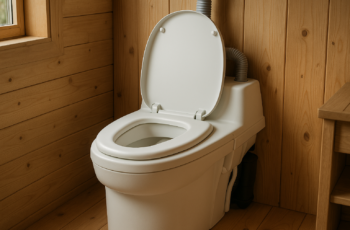
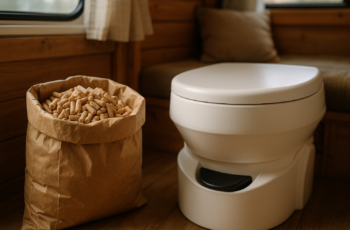
TROBOLO WandaGO Lite composting toilet: quick product overview
Can a compact, waterless toilet offer a cleaner and more practical alternative to a traditional porta-potty in a campervan or campsite? The TROBOLO WandaGO Lite is designed to do exactly that by separating urine from solid waste without water, electricity, or chemical additives. At the listed price of $199, reduced from $229 and shown as in stock, it makes a strong first impression for mobile sanitation.
The TROBOLO WandaGO Lite measures 11.8 inches high, 15.0 inches deep, and 13.4 inches wide, and weighs 7.9 pounds. That combination makes it most appealing for campervan owners, emergency backup, boat trips, cabin stays, and short periods off-grid. The compromise is capacity: buyers wanting a large, residential-style composting toilet will likely find this compact format too limiting.
Its core design is a portable urine-diverting dry toilet. Solids and liquid are kept apart, and the SafeShell System adds a barrier intended to help contain smells and spills. The early verdict is straightforward: this is a space-first portable toilet, not a substitute for a full-size bathroom installation.

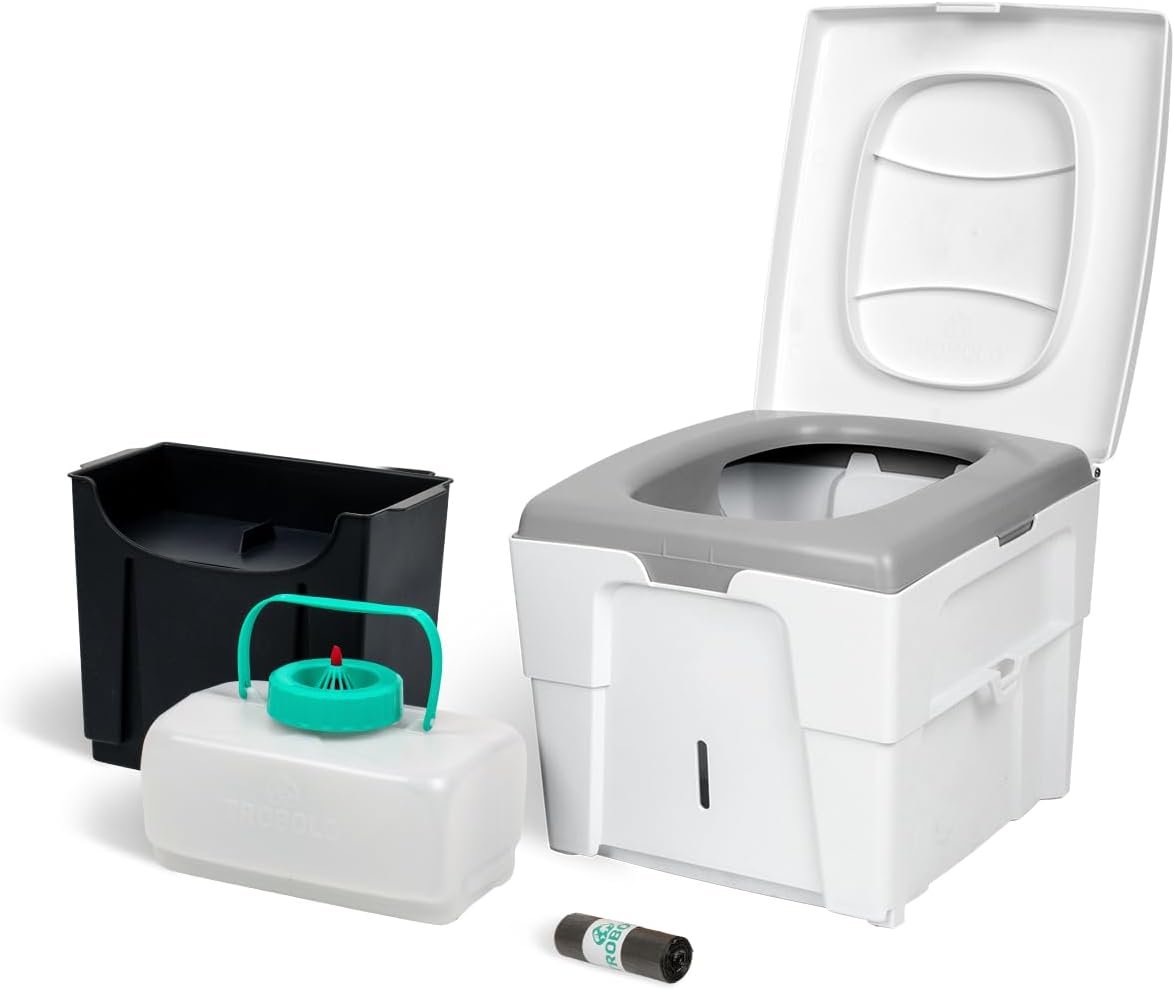
TROBOLO WandaGO Lite composting toilet, compact camping toilet for on the go, portable urine diverting dry toilet
$229.00 $199
In stock
TROBOLO WandaGO Lite size, weight, and campervan fit
The TROBOLO WandaGO Lite is built around a small footprint that can fit storage compartments in many common campervans and mobile setups. Its 7.9-pound weight is especially useful in practice: you can lift it out of a cupboard, reposition it inside a vehicle, or carry it to an appropriate emptying point without handling the bulk associated with larger self-contained toilets.
The TROBOLO WandaGO Lite stands 11.8 inches high, so its seating position may feel low if you are tall or accustomed to a household toilet. That can be manageable for occasional use, but comfort becomes more personal when the toilet is used repeatedly over a longer trip. The compact shape also makes it portable beyond vans, including tent camping, boats, cabins, cars, and emergency sanitation storage.
Before buying, follow this sequence:
- Measure the intended storage compartment, including its narrowest point.
- Check the doorway or hatch opening through which the toilet must pass.
- Allow enough floor space for stable sitting and access to the lid.
- Open the lid in the proposed position and check overhead and side clearance.
- Confirm that the usable space—not merely the compartment’s advertised size—allows removal for emptying.
There is no universal guarantee of fit in every vehicle. Your available compartment, floor shape, and lid clearance determine compatibility.
How the TROBOLO WandaGO Lite urine-diverting system works
The TROBOLO WandaGO Lite uses a simple separation principle: urine is directed into a separate container while solids remain in a dedicated waste area. Keeping the two waste streams apart reduces liquid exposure around the solid material and can make emptying more manageable than handling one container filled with mixed waste.
The TROBOLO WandaGO Lite includes the SafeShell System as an added barrier against smells and liquid spills, plus a urine level indicator to show when the liquid container needs attention. This is a dry toilet, not a conventional flush toilet and not a fully powered electric composting unit. No pump, flush water, or electrical connection is part of the basic operating concept.
Correct use still matters. Sit centrally so the separator receives liquid as intended, keep the separator clean, check the urine level before setting off, and follow local rules for disposing of both urine and solid waste. Separation can simplify handling, but it cannot remove the need for sensible hygiene or legal disposal.
Odor control, chemical-free operation, and hygiene
The main operating advantage of the TROBOLO WandaGO Lite is independence from water, electricity, and chemical additives. That suits a vehicle without plumbing, a campsite without a reliable hookup, or an emergency kit that may sit unused until normal services are unavailable. The description also says that no additional accessories are needed for basic operation, and regular toilet paper can be used.
The TROBOLO WandaGO Lite combines urine separation with a SafeShell enclosure to reduce odor and spill concerns, but “odor-free” should not be treated as a guarantee in every condition. Ventilation, temperature, cleaning frequency, correct sitting position, and how quickly containers are emptied all affect the result. The hygienic urine-diverter holder built into the lid is useful during emptying and cleaning because it gives the component a designated place rather than leaving it exposed.
Use this maintenance routine:
- Inspect the separator after use and remove visible residue promptly.
- Empty the urine container before it becomes full.
- Secure the solid-waste area so its contents cannot shift during handling.
- Wipe contact surfaces with cleaning materials suitable for the manufacturer’s dry-toilet system.
- Close the lid fully before moving the unit.
This routine is more work than flushing, but it avoids carrying water or storing chemical additives.

TROBOLO WandaGO Lite capacity and emptying frequency
The TROBOLO WandaGO Lite is advertised for approximately 10–20 urination uses and 8–12 defecation uses before the containers need emptying. Those are operating ranges, not guaranteed day counts. A solo user taking short trips may empty less often than a family using the toilet continuously, even if both own the same model.
The TROBOLO WandaGO Lite capacity varies with the number of users, trip duration, liquid intake, solid-waste volume, and whether it serves as a primary toilet or an emergency backup. A solo weekend user may find the arrangement convenient, while several people on an extended journey may need to include emptying in the daily routine.
Use the urine level indicator and inspect the actual solid-waste container instead of waiting for an assumed maximum. For better planning:
- Carry suitable liners or disposal supplies where local regulations require them.
- Identify legal disposal points before leaving home or the campsite.
- Empty containers at a planned stop rather than moving a full unit unnecessarily.
- Allow more frequent handling when the toilet is shared or used as the primary facility.
This is where the compact design’s trade-off becomes clearest: it saves storage space, but longer stays demand more attention.
Comfort, load rating, lid security, and travel readiness
The TROBOLO WandaGO Lite has an ergonomically shaped seat, which should make occasional use more comfortable than an improvised bucket arrangement. However, its compact form may still feel unlike a household toilet, particularly during extended use. The stated support limit is 330.7 pounds, but a tested load rating is not a promise that every user will find the seat equally comfortable.
The TROBOLO WandaGO Lite also has a firmly closing lid and fastening system. Those details matter when the toilet travels inside a moving campervan, car, boat, or other vehicle: a closed lid can help contain smells and reduce accidental access between uses. Engage the fastening system completely before driving rather than assuming the lid is secure because it appears closed.
The product is described as being made from tough materials for outdoor conditions, but the supplied information does not confirm exact materials, a weatherproof rating, or lifetime durability. Treat it as outdoor equipment, not as proof that prolonged exposure to rain, ultraviolet light, or freezing temperatures is harmless.
Before each journey, check the following:
- Empty or securely close the containers.
- Close the lid and engage the fastening system.
- Place the toilet on a level, stable surface.
- Prevent shifting with suitable vehicle storage or positioning.
- Inspect for movement and lid opening after the first drive.
What Customers Are Saying about the TROBOLO WandaGO Lite
The supplied product data does not include the live Amazon star rating or review count, so a responsible review cannot invent those figures. Check the current listing’s rating and number of reviews at publication, then read comments that explain where and how the unit was used. The TROBOLO WandaGO Lite should be judged differently by a weekend camper than by someone seeking a permanent household toilet.
When evaluating the TROBOLO WandaGO Lite, look for repeated verified-buyer themes rather than isolated praise. Useful positive patterns would include easy storage, simple setup, reduced odor, a secure lid, and straightforward emptying. Negative patterns deserve equal attention: comments about low seat height, limited urine-container capacity, frequent cleaning, solid-waste handling, leakage, or discomfort during extended use may reveal whether the buyer’s expectations matched the product’s compact purpose.
Separate customer experience from manufacturer specifications. A reviewer can describe whether the lid stayed closed in a van, but that comment does not replace the stated 7.9-pound weight, 330.7-pound support limit, or advertised use ranges. Likewise, one report of odor or leakage may reflect setup, heat, cleaning, or incorrect positioning rather than establish a universal defect.
Mixed feedback is understandable. Buyers who value small size and chemical-free operation may see ordinary emptying as an acceptable trade-off. A deal-breaker would be repeated, credible reports of leakage during correct use or a fastening system that regularly fails in transit; more frequent cleaning and modest capacity are normal compromises for a portable dry toilet.

TROBOLO WandaGO Lite versus competing portable toilets
The TROBOLO WandaGO Lite prioritizes a 7.9-pound compact form and simple operation without water, electricity, or chemical additives. The OGO NOMAD Portable Composting Toilet is another named waterless option for RV, van, camping, and boat use, but the supplied data does not verify its exact weight, power requirements, or capacity, so those figures should be checked on its current listing before purchase.
The TROBOLO WandaGO Lite also differs from the Kohree Portable RV Toilet. Kohree is described as a conventional portable toilet with a detachable waste tank and flush-style design, whereas the TROBOLO separates urine and solids as a dry system. Nature’s Head Self Contained Composting Toilet is a larger, established self-contained alternative aimed at a different installation category; it may suit buyers who can sacrifice portability for more substantial off-grid use.
| Toilet | Operating method | Power or water needs | Portability | Maintenance style | Capacity information | Best use case |
|---|---|---|---|---|---|---|
| TROBOLO WandaGO Lite | Urine-diverting dry toilet | No water, electricity, or chemical additives | 7.9 pounds; compact mobile design | Separate liquid and solid emptying; cleaning separator | 10–20 urination uses and 8–12 defecation uses | Campervans, short trips, boats, cabins, backup use |
| OGO NOMAD Portable Composting Toilet | Waterless composting toilet | Exact requirements not confirmed in supplied data | Exact portability specifications not confirmed | Check current product information | Not confirmed in supplied data | RV, van, camping, and boat use |
| Kohree Portable RV Toilet | Conventional portable toilet with detachable waste tank | Flush-style design; exact requirements not confirmed | Portable RV format | Detachable tank handling | 5.8-gallon tank description supplied | RV travel, boats, trips, and indoor or outdoor use |
| Nature’s Head Self Contained Composting Toilet | Self-contained composting toilet | Exact requirements not confirmed in supplied data | Larger self-contained category | Designed for more permanent installation | Not confirmed in supplied data | Longer-term off-grid or fixed installations |
Match the choice to available space, user count, trip length, and your tolerance for emptying. Larger alternatives may offer a different capacity or odor-control approach, but usually bring more bulk, weight, or installation demands.
Who should buy the TROBOLO WandaGO Lite?
The best match for the TROBOLO WandaGO Lite is a campervan owner who needs a lightweight primary or backup toilet that can live in a compact compartment. It also makes sense for weekend campers, boat owners, road trippers, cabin users, emergency-preparedness buyers, and anyone planning short off-grid stays without a permanent bathroom.
The TROBOLO WandaGO Lite is particularly practical when you lack a water hookup, electrical outlet, chemical supplies, or room for permanent installation. The advertised range of 10–20 urination uses and 8–12 defecation uses makes household size and trip length central to the decision. A single user on a brief trip has a different requirement from a group relying on it continuously.
Choose an alternative if you need high capacity, a conventional flush experience, a taller seat, or a residential off-grid toilet intended to remain installed. Use this decision sequence:
- Measure the storage area and confirm lid and removal clearance.
- Estimate daily use based on the number of people and trip length.
- Decide whether chemical-free, waterless operation is a priority.
- Review local disposal arrangements before travelling.
- Compare the $199 purchase price with larger alternatives, without assuming their maintenance will be the same.
It earns consideration when transport and storage matter more than maximum capacity.
Setup, daily use, and cleaning routine
Set up the TROBOLO WandaGO Lite before your first trip, not when you urgently need it. Unpack the unit, inspect the lid and fastening system, confirm that the urine-diverter components are seated correctly, place it on a stable level surface, and test the opening and closing action. This simple check can reveal an assembly or clearance problem while you are still at home.
With the TROBOLO WandaGO Lite, sitting correctly is central to effective urine separation and cleaner operation. Check the urine level indicator during use, look for spills, keep contact surfaces clean, confirm the lid closes fully, and inspect the solid-waste area. Regular toilet paper is permitted by the product description, but cleaning supplies should be appropriate for a dry, chemical-free system; follow any deeper-cleaning instructions supplied by the manufacturer.
A practical maintenance rhythm is:
- After use: check the separator, surfaces, lid, and solid-waste containment.
- During heavy daily use: inspect the urine level and wipe contact areas at least daily.
- When indicated: empty containers based on the level indicator and their actual condition, not a fixed calendar timetable.
Diarrhea or other liquid-heavy waste can challenge separation and containment. In that situation, follow the manufacturer’s cleaning and disposal guidance, clean promptly, and keep an alternative sanitation plan available. Campsite, municipal, and waste-handling rules govern disposal, including toilet paper.
Price, availability, and long-term value
The listed price for the TROBOLO WandaGO Lite is $199, down from an original price of $229, and the item is shown as in stock. Prices and availability can change before publication, so treat those figures as a current listing snapshot rather than a permanent guarantee.
The TROBOLO WandaGO Lite has a sensible ownership proposition because normal operation needs no water, electricity, or chemical additives, and the description says no extra accessories are required. That does not mean it is maintenance-free. You still spend time emptying containers, cleaning the separator, checking containment, and arranging lawful waste disposal.
Compared with larger composting toilets, this model exchanges capacity and household-style comfort for easier transport and storage. Compared with conventional portable RV toilets, it avoids a flush-style system and its associated operating approach, but requires you to manage separated waste rather than simply treating it as a standard detachable tank. A lower purchase price elsewhere would not necessarily mean lower running effort; competitor prices and maintenance requirements vary.
The fastening lid, urine-level indicator, odor-control enclosure, and ergonomic seat may matter more in a moving vehicle than raw capacity alone. Choose this model when compact storage, chemical-free use, and easy transport justify regular emptying. If maximum capacity or household comfort is your priority, put the $199 toward comparing larger alternatives instead.
Pros and Cons
Pros
- Compact 7.9-pound design is well suited to campervans, boats, cabins, and emergency storage.
- Operates without water, electricity, or chemical additives.
- Urine separation, the SafeShell System, a urine level indicator, and a fastening lid address common portable-toilet concerns.
- Advertised capacity of approximately 10–20 urination uses and 8–12 defecation uses suits short trips and backup use.
- The tested support limit is 330.7 pounds, and regular toilet paper can be used.
Cons
- The low 11.8-inch height may not suit taller adults or anyone expecting household-toilet comfort.
- Container capacity is limited compared with larger self-contained or residential composting toilets.
- Correct sitting position, separator cleaning, and lawful waste disposal are ongoing responsibilities.
- The supplied product data does not include a live customer rating or review count, so review sentiment should be checked on the current listing before purchase.
Final Verdict
Key Takeaways
- The toilet’s strongest advantages are its compact 7.9-pound design and operation without water, electricity, or chemical additives.
- Its urine-diverting system, SafeShell enclosure, level indicator, and fastening lid are useful features for mobile use, but they do not eliminate cleaning or disposal duties.
- Advertised capacity is approximately 10–20 urination uses and 8–12 defecation uses, so shared or extended use requires planning.
- The 11.8-inch height and compact seat may be less comfortable than a household toilet for some adults.
- At $199, it offers good value when portability matters more than maximum capacity or permanent-installation comfort.
Frequently Asked Questions
What are the drawbacks of a composting toilet?
The main drawbacks are finite container capacity, more frequent emptying than a residential toilet, and the need for correct sitting position and regular cleaning. Seat height and comfort may also feel less familiar than a full-size household or RV toilet, while disposal must follow local rules.
What is the best off-grid composting toilet?
The best off-grid composting toilet depends on your space, user count, trip length, and tolerance for maintenance. The TROBOLO WandaGO Lite is a strong fit when portability, urine separation, and operation without water, electricity, or chemicals matter more than maximum capacity.
What if you have diarrhea in a composting toilet?
Liquid-heavy waste can challenge urine separation and containment. Follow the manufacturer’s cleaning and disposal guidance, clean affected surfaces promptly, and keep an alternative sanitation plan available for situations where the toilet cannot be used hygienically.
What do you do with toilet paper when using a composting toilet?
Regular toilet paper can be used with this toilet. Dispose of it according to the manufacturer’s instructions and local campsite, municipal, or waste-handling rules rather than assuming every location permits the same method.