Nature's Head Structure Kit: What You Get for $1015
Can a $1015 waterless toilet replace the plumbing, septic system, sewer connection, or black-tank arrangement that a conventional toilet demands? In the right building, yes—but you are paying for an off-grid sanitation setup, not simply a portable receptacle. The Nature’s Head Structure Kit is listed as in stock and made in the USA, and its intended audience includes owners who would rather avoid major infrastructure work.
The package includes the Nature’s Head composting toilet with the Foot Spider Handle, ventilation components, a 110V AC adapter, and a free 9L bag of coco coir. That makes it aimed at a complete structure installation for cabins, tiny homes, workshops, storm shelters, homesteads, remote buildings, RVs, and marine environments. The included parts are more relevant to a permanent bathroom plan than to a weekend camping trip.
For 2026, the buying question is therefore straightforward: are you replacing an expensive infrastructure project, or just looking for the cheapest emergency toilet? The Nature’s Head Structure Kit is most attractive when a building has no practical sewer, septic, or water route. It is less convincing if you need something temporary, highly portable, or inexpensive at the checkout.
One caution: the supplied listing confirms the package contents, stock status, and USA manufacturing statement, but it does not confirm warranty coverage or every installation fitting. Treat the Nature’s Head Structure Kit as a high-priced permanent or semi-permanent system and verify the current instructions before planning the room.

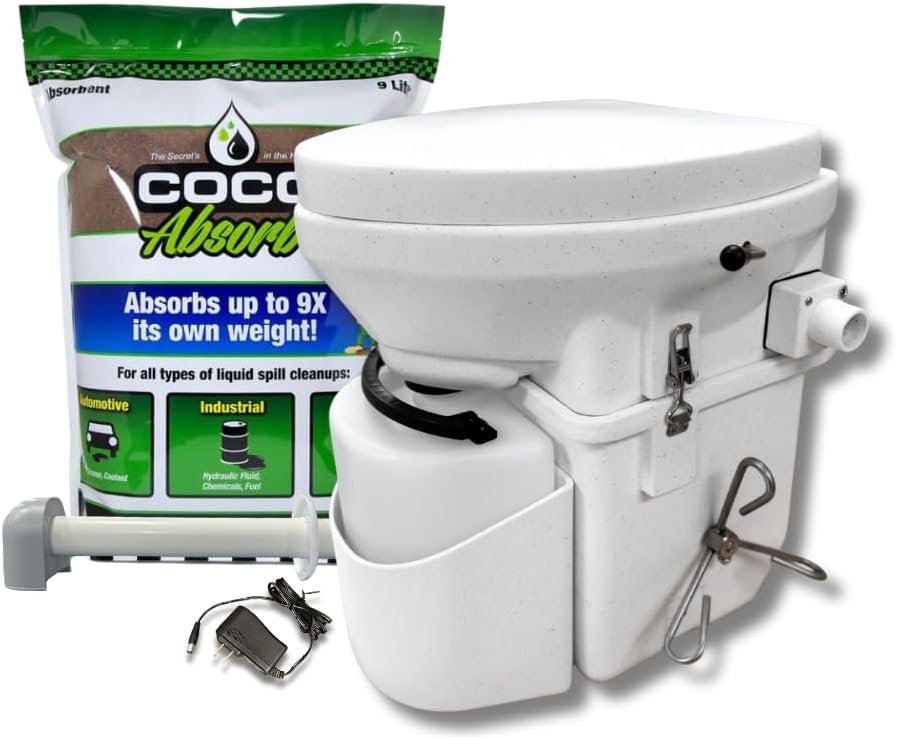
Nature's Head® Structure Kit with Composting Toilet – Complete All-Inclusive Kit – 100% Self-Contained Waterless Toilet System for Cabins, Tiny Homes & Off-Grid Living – Foot Spider Handle
$1015
In Stock
Key Specifications and Capacity at a Glance
The Nature’s Head Structure Kit uses separate liquid and solid waste handling, so its capacity figures need to be read as two different maintenance schedules. The solids chamber may last considerably longer than the urine tank, meaning the liquid container is likely to dictate how often you visit the toilet for emptying.
| Specification | Listed detail |
|---|---|
| Price | $1015 |
| Operation | Waterless and self-contained |
| Solid capacity | Approximately 60–80 solid uses |
| Urine tank | 2.2 gallons |
| Solids-bin guidance | Up to one month for two users |
| Ventilation | Continuous integrated fan |
| Power accessory | 110V AC adapter |
| Starter medium | Free 9L coco coir bag |
In practical terms, the Nature’s Head Structure Kit is described as providing about 60–80 solid uses, while the urine bottle generally needs emptying every 2–3 days depending on household use. Those are planning figures, not guarantees: occupancy, fluid intake, temperature, and correct separation all change the schedule. Two people may approach the stated one-month solids interval under typical conditions, but a busier household will shorten it.
“Self-contained” means waste stays within the toilet rather than travelling to a drain, septic tank, sewer, or black tank. You still need a safe liquid-disposal plan and a suitable way to handle solids. Also check the current installation documentation for external dimensions, seat height, weight, fan power draw, battery compatibility, and exact vent-hose length; none of those details is supplied here.
The 110V adapter matters because waterless does not mean completely infrastructure-free. A cabin or shelter without standard household electricity needs a confirmed, approved power arrangement before installation.
Nature's Head Structure Kit Installation and Ventilation
Installation is simpler than connecting a flush toilet to a sewer line, but it still needs careful planning. Start by choosing a level location, then confirm user clearance, map the vent route, plan access for removing the liquid container, connect the ventilation components, and provide the fan with 110V power. The Nature’s Head Structure Kit removes the water and waste-pipe requirements; it does not remove the need for airflow and electricity.
The integrated low-draw fan is designed to circulate air continuously through the solid chamber. That airflow helps keep the material drier and supports odor management when the vent path is correctly installed. A fan alone cannot compensate for poor separation, saturated coco coir, a blocked route, infrequent urine emptying, or contact surfaces that need cleaning.
Before cutting an opening, work through this checklist:
- Choose a stable wall or floor position and confirm the toilet sits level.
- Mark the vent exit and check that the proposed route is practical and protected from avoidable damage.
- Leave access for removing the solids bin and liquid container without awkward lifting or spills.
- Identify a safe, lawful place to empty the urine tank.
- Confirm the 110V outlet or electrical work is suitable for continuous fan operation.
- Consider freezing conditions in seasonal cabins or exposed structures.
The Nature’s Head Structure Kit should not be installed from assumptions about vent diameter, mounting dimensions, weatherproofing, or hose length, because those specifications are not included in the supplied data. Read the current installation instructions and confirm every opening, fitting, and electrical requirement before modifying the building.
For a good result, think of ventilation as part of the sanitation system rather than an optional accessory. A short, sensible route with dependable power is more useful than simply placing the toilet in a convenient corner.
Hands-Free Foot Spider Handle and Everyday Usability
The Foot Spider Handle is the feature that most clearly separates this package from a basic bucket-style toilet. Instead of reaching into the solids chamber, you use a foot-operated mechanism to agitate or mix the dry material. The Nature’s Head Structure Kit therefore offers a hands-free routine that can be useful in a compact cabin bathroom, workshop, tiny home, or accessibility-conscious installation.
That convenience comes with a fair tradeoff: a moving mechanism has more parts to keep aligned and clean than a passive container. Before finalising the position, demonstrate the operating motion and make sure you can use it naturally without twisting or striking nearby walls. Customer feedback is especially worth checking for comments about stiffness, alignment, durability, and cleaning around the handle rather than relying only on the product description.
Daily use depends on keeping liquid and solids separate. Urine should be directed into the liquid tank, while solids remain in the composting chamber with the appropriate dry material. When that separation works, waterless operation saves flushing water and avoids a sewer, septic, or black-tank hookup; it does not eliminate the need to turn the handle, inspect moisture, empty liquid, and clean contact areas.
The Nature’s Head Structure Kit is at its most user-friendly when the handle is easy to reach and the room allows you to operate it without crowding. In a workshop or storm shelter, that small practical detail can matter more than a long list of headline features.
Do not interpret “hands-free” as “maintenance-free.” The mechanism reduces direct contact with the solids material, but you still need to follow the operating motion and respond if the material becomes too wet or begins to interfere with normal mixing.

Using and Maintaining the Nature's Head Structure Kit
A realistic routine begins with adding the supplied coco coir according to the manufacturer’s instructions. Use the toilet in a way that preserves urine separation, operate the Foot Spider Handle as directed, check that airflow is present, and monitor the liquid tank rather than waiting for an unpleasant surprise. The Nature’s Head Structure Kit rewards consistent small tasks more than occasional heavy maintenance.
The stated rhythm is uneven: the urine container generally needs attention every 2–3 days depending on usage, whereas the solids bin may last up to about one month for two users in typical conditions. Treat those intervals as planning references. A larger household, frequent visitors, or poor separation can reduce capacity substantially.
“Composting” also should not be understood as instant disposal. The solid chamber needs suitable dry material, ventilation, and time, and any finished material must be handled in line with local sanitation and waste-disposal rules. You should check those rules before installation, especially if the toilet is intended for a permanent dwelling.
Toilet paper requires a practical decision. Follow the manufacturer’s guidance; where permitted, thinner paper or a separate covered receptacle can help preserve chamber capacity and airflow. If diarrhea occurs, excess liquid may overwhelm separation and upset the moisture balance, so follow the manufacturer’s cleanup and waste-handling directions and expect extra servicing.
For emptying, use this sequence:
- Secure or disconnect the relevant container before moving it.
- Carry it carefully to the approved disposal location and avoid overfilling or spills.
- Clean contact surfaces with a suitable non-damaging product.
- Replenish dry material when the chamber requires it.
- Restore ventilation and check normal airflow before regular use.
This routine is manageable, but it is still a routine. The Nature’s Head Structure Kit suits you if you accept hands-on sanitation management in exchange for avoiding conventional plumbing.
What Customers Are Saying About Nature's Head Structure Kit
The supplied product data does not include a live star rating or review count, so it would be misleading to invent a number or present customer experience as a measured consensus. The Nature’s Head Structure Kit should therefore be judged from the available specifications first, while you check the current product page for the present rating, review total, and recent buyer comments before ordering.
When you read those reviews, give more weight to detailed accounts covering several months, two-person occupancy, repeated liquid emptying, winter use, or installation in a cabin, RV, boat, or tiny home. Those reports can reveal whether odor control remains acceptable over time, whether the fan noise is tolerable, and whether the Foot Spider Handle continues to operate smoothly after repeated use.
Short comments saying “works great” provide much less evidence than a review describing the vent route, solids-bin interval, urine-tank frequency, cleaning routine, and any installation difficulty. Separate complaints about delivery, missing accessories, or wall modifications from defects in the toilet itself. The listing confirms the toilet, ventilation components, adapter, starter coco coir, and handle, but a buyer’s installation problem may still concern site preparation rather than the appliance.
Conflicting odor reports deserve careful interpretation. One owner’s result may reflect vent routing, moisture balance, temperature, cleaning, or incorrect urine separation; another may have a better installation and a lighter usage pattern. Verified buyers can tell you what happened in a real setting, but they cannot turn the listed capacity into a guarantee.
The Nature’s Head Structure Kit has a strong theoretical fit for off-grid buildings, yet its friction points are clear: $1015 is substantial, the fan needs power, liquid emptying is frequent, and first-time users need to learn the separation and moisture routine. Manufacturer specifications establish what is included and what is claimed; customer reviews show how those claims translate into individual homes.
How Nature's Head Compares With OGO NOMAD and Separett Villa
The Nature’s Head Structure Kit is best compared with the OGO NOMAD Portable Composting Toilet and the Separett Villa Urine-Separating Compost Toilet by considering the whole installation. The OGO NOMAD is the more obvious alternative if your priority is RV, van, boat, camping, or portable use. The Separett Villa is more naturally positioned against a fixed cabin, cottage, or homestead bathroom, where its own separation and maintenance approach may suit your layout.
| Factor | Nature’s Head kit | OGO NOMAD | Separett Villa |
|---|---|---|---|
| Upfront price | $1015 | Confirm current listing | Confirm current listing |
| Water requirement | None | Confirm current listing | Waterless approach; confirm details |
| Venting | Ventilation components included | Confirm current configuration | Confirm current installation kit |
| Power | 110V AC adapter supplied | Confirm voltage and adapter | Confirm current power arrangement |
| Liquid handling | 2.2-gallon tank; frequent emptying | Confirm capacity and routine | Separate approach; confirm details |
| Solids handling | Approximately 60–80 uses | Confirm current capacity | Confirm current capacity |
| Portability | Permanent or semi-permanent fit | Portable-oriented | Fixed-installation oriented |
| Best fit | Cabins and off-grid structures | RV, van, boat, and mobile use | Fixed cottage or homestead bathroom |
Do not assume competitor price, voltage, capacity, or included accessories from an older comparison. Check each current listing, because the installed cost can change once you add a vent route, power arrangement, consumables, cleaning supplies, and disposal provisions.
For a structure installation, the Nature’s Head Structure Kit may justify its price through the included ventilation parts, 110V adapter, coco coir, and Foot Spider Handle. A lower-cost portable toilet can still be the better choice if you need mobility or the lowest initial outlay. Compare ownership, not just the toilet displayed on the product page.
The OGO NOMAD Portable Composting Toilet deserves attention when storage and portability outweigh long intervals between solid emptying. The Separett Villa deserves attention when you prefer a different fixed urine-separation workflow. The right choice depends on your building and routine, not the name on the lid.

Who Should Buy This Waterless Toilet System?
The strongest buyer is someone who needs a dependable toilet in a cabin, tiny home, workshop, storm shelter, homestead, or remote structure where adding plumbing or septic service is expensive or impractical. The Nature’s Head Structure Kit suits one or two regular users who can provide continuous ventilation power and accept a liquid-emptying routine instead of expecting a conventional flush experience.
The capacity guidance supports that profile: the solid chamber is described as lasting up to about one month for two users, while the urine tank may need attention every 2–3 days. That means you should plan access to the liquid container even if the toilet receives light daily use. A good fit is not simply someone attracted to the word “eco-friendly”; it is someone avoiding a specific infrastructure problem.
It is less suitable for a large household with heavy daily use, a rental where you cannot vent through a wall or floor, or a site without reliable 110V power unless an approved alternative is confirmed. It is also excessive for an emergency toilet that needs no installation, no fan, and no ongoing separation routine.
Use this decision process before ordering:
- Confirm local rules for liquid and finished-solid disposal.
- Calculate the expected number of regular users and likely emptying frequency.
- Map the vent and power route without cutting openings prematurely.
- Check that you can reach the containers safely during maintenance.
- Compare the installed cost with plumbing, septic, sewer, or black-tank alternatives.
- Read recent reviews from buyers using similar buildings and occupancy levels.
The Nature’s Head Structure Kit is a targeted infrastructure substitute, not a universally suitable bathroom accessory. If its self-contained format solves your site’s biggest problem, it deserves serious consideration; if portability or zero-power operation matters more, start with alternatives.
Is the Nature's Head Structure Kit Worth $1015?
At $1015, the value depends on what you are replacing. The Nature’s Head Structure Kit includes the composting toilet, Foot Spider Handle, ventilation components, 110V AC adapter, and free 9L coco coir bag, so the fair comparison is with a complete off-grid installation rather than an empty toilet shell. It can be easier to justify in a fixed cabin or tiny home where plumbing, a septic system, sewer connection, or black tank would involve construction, permitting, excavation, or ongoing service.
You still have ownership costs. Continuous ventilation uses electricity, and you may need replacement coco coir or another approved medium, cleaning products, liquid-disposal arrangements, and a lawful process for finished solids. The purchase price avoids some infrastructure, but it does not make sanitation free or maintenance-free.
For a permanent structure used regularly, the $1015 price is more defensible than it would be for occasional camping. A portable toilet may cost less initially and require less installation, even if it offers a different capacity and maintenance experience. Ask yourself: would installing conventional sanitation cost more than this kit plus the work needed to vent and power it?
Use this worksheet to calculate your real starting cost:
- Product: $1015
- Delivery: add the current checkout charge.
- Vent installation: include materials and labour if required.
- Electrical work: include an outlet or approved power arrangement.
- Site modifications: allow for wall, floor, or access changes.
- Consumables: budget for coco coir, cleaning supplies, and approved replacements.
- Disposal: include local liquid and solids-handling costs.
In the buying context, verify the live $1015 price, stock status, included components, and competitor specifications before ordering. Choose this system when infrastructure savings and self-contained operation outweigh the high upfront cost. Compare alternatives first when portability, no-power operation, or the lowest initial price is your main priority; the Nature’s Head Structure Kit is worthwhile only when its complete structure-focused package matches your site.
Pros and Cons
Pros
- Complete structure-oriented package with the toilet, Foot Spider Handle, ventilation components, 110V AC adapter, and a free 9L coco coir bag.
- Waterless, self-contained operation avoids a water hookup, sewer connection, septic system, or black tank.
- Approximately 60–80 solid uses and a solids-bin life of up to about one month for two users can reduce solid-waste handling.
- Hands-free Foot Spider Handle can make routine mixing more hygienic and practical in compact bathrooms.
- Made in the USA and listed as in stock in the supplied product information.
Cons
- The $1015 upfront price is high for a toilet and may be difficult to justify for occasional camping or emergency use.
- Continuous ventilation requires access to 110V power and a properly planned vent route.
- The 2.2-gallon urine tank may need emptying every 2–3 days, even though the solids bin can last much longer.
- Successful odor control depends on correct urine separation, moisture balance, airflow, and regular cleaning.
- The supplied product data does not confirm external dimensions, weight, fan power draw, battery compatibility, or exact vent-hose length.
Final Verdict
Key Takeaways
- This is a structure-oriented waterless toilet system, not a simple portable camping toilet.
- The package includes ventilation components, a 110V AC adapter, Foot Spider Handle, and 9L coco coir starter material.
- The 2.2-gallon urine tank may require emptying every 2–3 days, while the solids bin is described as lasting up to about one month for two users.
- Its value is strongest where plumbing, septic, sewer, or black-tank infrastructure would be costly or impractical.
- Confirm current dimensions, power details, installation requirements, local disposal rules, live price, and recent reviews before ordering.
Frequently Asked Questions
What are the drawbacks of a composting toilet?
The main drawbacks are the relatively high upfront price, the need for continuous ventilation power, regular liquid-tank emptying, and a learning curve around urine separation and moisture control. It also isn’t maintenance-free: you still need to rotate the mixing handle, clean surfaces, replenish dry material, and manage finished solids according to local rules.
What is the best off-grid composting toilet?
The best choice depends on your site, power access, occupancy, and whether you need a fixed or portable installation. The Nature’s Head Structure Kit is a strong fit for one or two users in a cabin, tiny home, workshop, or other off-grid structure when you can provide venting and 110V power.
What if you have diarrhea in a composting toilet?
Diarrhea can introduce too much liquid into the solids chamber and upset urine separation and moisture balance. Follow the manufacturer’s cleanup and waste-handling instructions, clean affected surfaces promptly with a suitable non-damaging product, and expect additional maintenance rather than assuming the toilet will handle the situation normally.
What do you do with toilet paper when using a composting toilet?
Follow the manufacturer’s instructions for toilet paper. In many installations, using thinner paper or placing paper in a separate covered receptacle can help preserve solids capacity and airflow, where local hygiene requirements and the manufacturer’s guidance permit it.