Composting Toilet Overview: What This Waterless System Does
A waterless toilet can remove the need for flush plumbing, but active features also make installation more involved. At $599.99, the central question is whether this composting toilet offers enough control for your off-grid setup to justify its price. The product is described as a waterless system for tiny houses, vans, boats, and other compact spaces, with heating, electric mixing, urine separation, and powered ventilation.
The claimed process is straightforward: urine is diverted into a container behind the unit, while solid waste falls vertically into the chamber below. An electric mixer is intended to distribute material, and the product description claims that composting takes place inside the toilet rather than the unit merely storing solid waste for later processing. That distinction sounds useful, but you still need the seller to explain capacity, processing time, and disposal requirements.
The main differentiators are the microbial package, heating plate, automatic exhaust fan, and motorized mixing. In theory, those parts give this composting toilet more environmental control than a passive separator. In practice, they also introduce power use, moving parts, venting work, and more potential service points.
Only units are shown as available at the stated price, so confirm the current stock and price rather than treating the listing as permanent. Before ordering, ask for electrical requirements, included accessories, installation instructions, returns, warranty coverage, and replacement-part information. This review examines the design, likely maintenance routine, installation demands, available customer evidence, alternatives, and who should—or should not—consider the unit.
For a fixed cabin or tiny house with dependable power, this composting toilet could make sense if its claims are supported by clear documentation. For occasional camping or a mobile build without a reliable vent and electrical route, a simpler non-electric separating model may be easier to live with.

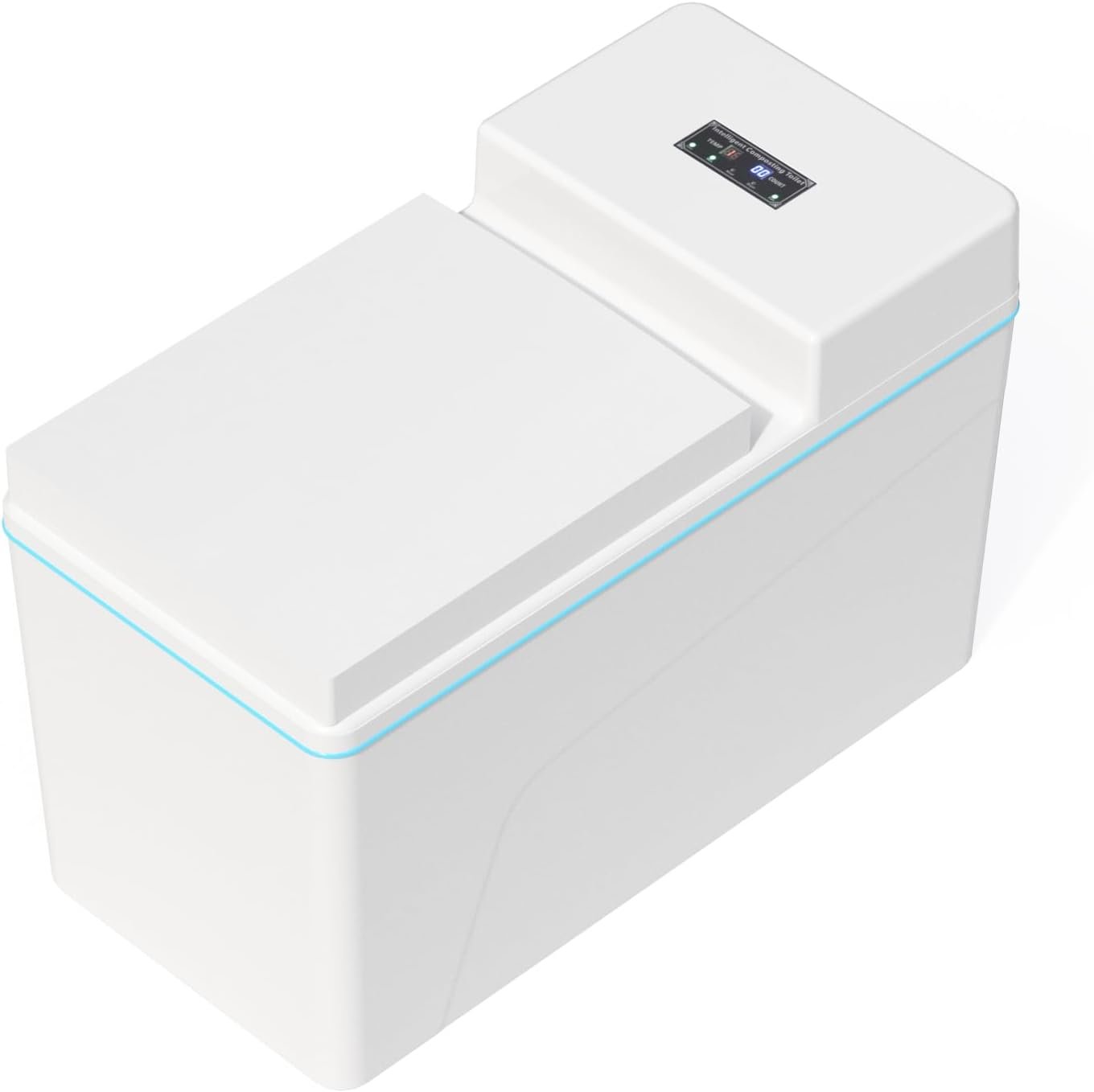
Composting Toilet, Waterless Toilets Suitable for Tiny Houses, Vans, Boats, with Heating Plate, Electric Mixing, Urine Separating and Exhaust Fan
$599.99
Only left in stock – order soon.
How the Composting Toilet Handles Waste and Moisture
The urine-separating layout is the foundation of this composting toilet. During correct use, liquid moves toward the rear urine container, while feces drop vertically into the solid-waste chamber. Keeping those streams apart can help the solids remain drier and can reduce the unpleasant mixing that makes ordinary waste containers harder to manage.
The listing also includes a microbial package, described as helping break down waste inside the unit. That is a manufacturer claim rather than a measured result supplied with the product. Before relying on it, confirm the chamber capacity, expected processing time, how often the microbial material must be replenished, whether replacement packs are available, and what the finished material may legally be used for or where it must be disposed of.
Electric mixing should help distribute solids and composting material, potentially reducing the need for manual stirring. The available information does not provide a mixing speed, noise rating, cycle schedule, or confirmation that operation is fully automatic, so you should not assume any of those details. The heating plate is intended to raise internal temperature in cold conditions and reduce humidity during damp weather, which may make the system more controlled than a passive design.
That control comes with added complexity. A motor, heater, fan, and electrical controls create more parts to inspect than a basic urine-separating toilet. Before buying this composting toilet, request written answers to the following:
- What voltage and wattage do the heater, mixer, and fan require?
- Are heating controls adjustable, and is overheating protection fitted?
- Does the fan run continuously, only during use, or on a timed cycle?
- How is urine drained or collected, and how is the container accessed?
- What replacement parts and microbial supplies are available?
If the answers are clear, the composting toilet becomes easier to plan around. If they are vague, treat the active-processing claim as unverified rather than assuming it will eliminate all emptying or sanitation work.
Key Features of This Composting Toilet in Daily Use
The advertised feature set makes this composting toilet more than a passive container, but each feature affects daily ownership differently. The microbial package is promoted as supporting rapid composting, yet no guaranteed processing speed, pathogen-reduction level, or maintenance interval is provided. You should view the microbial system as a claimed aid to decomposition, not proof that waste will become immediately safe or garden-ready.
The automatic exhaust fan is intended to move air from the toilet and vent odor outdoors. That can help, but the fan alone cannot compensate for a badly routed vent, poor sealing, blocked tubing, dirty surfaces, or an overfilled urine container. Odor control depends on the complete airflow path and on correct use. The outlet must be planned so air actually reaches outdoors rather than ending in a wall cavity, cupboard, or enclosed vehicle space.
The heating plate may be valuable in a cold climate or seasonal cabin, where low temperatures and dampness could make passive processing less predictable. However, the listing gives no wattage, temperature range, control method, overheating protection, or confirmation that continuous operation is permitted. Electric mixing can reduce manual stirring, but the moving mechanism may eventually need cleaning or service if residue accumulates.
Urine separation should improve hygiene during ordinary use because liquid is directed away from the solid area. You still need to empty and rinse the container, check for residue around the separator, and respond quickly to misalignment or spills. Water savings are a genuine environmental advantage, although electricity for heating, mixing, and ventilation plus microbial consumables should be included in your environmental and running-cost calculation.
Before regular service, inspect this composting toilet in sequence:
- Check the seat, separator, chamber opening, and accessible seals.
- Pour a small amount of clean water through the urine route and confirm it reaches the intended container without leaking.
- Power the fan and verify that the planned outlet moves air outdoors.
- Test the mixer for normal operation and listen for unusual resistance.
- Test the heating function according to the instructions before closing panels or adding bedding materials.
That inspection will not prove long-term reliability, but it can reveal installation or assembly problems before the toilet is difficult to access.
Installation, Ventilation, and Electrical Planning
This composting toilet is not simply a portable camping toilet. Its exhaust fan, heating plate, and electric mixer require a stable location, an outdoor ventilation route, and a safe electrical connection. The product data does not provide dimensions, seat height, vent diameter, cable length, mounting details, or included vent hardware, so do not cut panels or buy fittings until those specifications are confirmed.
Start with the physical installation. Measure the available bathroom footprint, door clearance, service access, vent path, and the space needed to remove the urine and solid containers. Check that the floor can support the installed unit and that you can reach the parts requiring cleaning without dismantling permanent furniture. This is especially relevant in a van or boat, where a few centimetres of lost access can turn routine emptying into a frustrating job.
Next, map the ventilation route. The exhaust outlet should terminate outdoors, and the duct should be sealed properly. Excessive bends, obstructions, condensation traps, or a poorly positioned outlet can weaken airflow and return odors to the living area. Ask the seller for the required vent diameter and whether the fan is intended to push through a specific duct length.
Electrical planning is equally important. Follow the supplied instructions and use a qualified installer when local electrical rules, marine wiring, vehicle systems, or shore-power connections are involved. Confirm the supply voltage, total wattage, cable requirements, fusing, and whether the heater, fan, and mixer can operate together without overloading your battery or circuit.
For this composting toilet in a boat or van, account for vibration, movement, condensation, limited battery capacity, and water intrusion. A sensible pre-installation plan is:
- Choose and secure the location.
- Map the shortest practical vent route to an outdoor termination.
- Identify the power source and protective equipment.
- Confirm container-removal clearance and cleaning access.
- Test every function before sealing trim, flooring, or wall panels.
Do not place this composting toilet into service until the seller has clarified the missing voltage, wattage, vent, cable, hardware, and mounting information.

Using and Maintaining the Composting Toilet
Correct use matters more with this composting toilet because urine separation depends on positioning. Sit or position yourself as the separator instructions require, keep unsuitable liquids and harsh cleaning chemicals out of the solid chamber, and watch the rear container rather than waiting for an overflow. Poor alignment can create spills, odor, and extra cleaning even when the internal mechanism is working normally.
The listing says the exhaust fan turns on automatically during use, but it does not provide a verified runtime, airflow rating, or after-use operating period. You should therefore confirm whether the fan continues running after use and whether the system needs a separate switch. In a fixed installation, check the vent outlet and airflow regularly; in a vehicle, also inspect for condensation and movement-related disconnections.
Routine checks should include moisture buildup, a blocked vent, mixer obstruction, residue around the separator, and urine-container fullness. The heating plate may help in cold or damp surroundings, but confirm its control method and energy demand before depending on it for winter operation. A heater that consumes more power than your off-grid system can provide will not solve a practical cold-weather problem.
For maintenance, switch off power as directed, inspect the fan and vent, clean accessible surfaces with products approved by the instructions, empty and rinse the urine container, and check the mixer for trapped material. Restart only after components are dry, secure, and correctly reassembled. Never assume a fixed emptying interval: household capacity, processing time, user limits, and moisture conditions are not stated.
When handling material from this composting toilet, follow local sanitation regulations and the manufacturer’s disposal instructions. Do not spread material on food-growing soil or discard it with ordinary waste unless local rules and the product documentation permit that method. A realistic owner accepts that this composting toilet saves flush water but still requires monitoring, cleaning, container management, and responsible waste handling.
What Customers Are Saying About This Composting Toilet
The available product data does not supply a displayed star rating, total review count, recent review dates, or a verified proportion of positive and critical comments for this composting toilet. That limitation matters. You cannot responsibly claim that buyers praise its odor control, report quiet operation, confirm reliable mixing, or describe successful long-term installations when those records have not been provided.
There is also no supplied customer evidence establishing how the fan performs after repeated use, whether the heating plate works in cold weather, or whether urine separation prevents leaks in real installations. No verified buyer reports are available here about missing instructions, unclear wiring, difficult internal access, condensation, replacement parts, customer support, or durability. Treat the product description as a set of claims awaiting confirmation rather than as a substitute for an established review history.
If you are examining the listing yourself, separate first-use impressions from long-term ownership reports. A new owner may describe easy assembly or a clean first test, while repeated emptying and cleaning cycles reveal whether seals hold, the mixer remains dependable, the fan stays effective, and the heater is practical to run. Give greater weight to repeated patterns, detailed installation contexts, photographs, and reviews that explain the vent and power setup.
For this composting toilet, a few positive odor comments would not establish universal performance. Conversely, repeated reports of liquid leakage, weak ventilation, unclear electrical instructions, or unavailable replacement parts would deserve serious attention. Review totals and ratings can change, so record what is displayed when you research the item in rather than relying on a later or different listing.
Until a meaningful review history is available, this composting toilet is less proven than established alternatives with larger bodies of customer experience. Ask the seller for installation photographs, the manual, support response details, and replacement-component sources before treating the active-composting design as tested in your particular climate or vehicle.
Who Should Consider This Composting Toilet?
A tiny-house owner with a fixed bathroom, no desire to install flush plumbing, and dependable electrical service is the clearest potential match for this composting toilet. Heating, mixing, and ventilation may be useful where a passive system would be exposed to cold or damp conditions. You should still be comfortable emptying the urine container, inspecting the chamber, maintaining the vent, and handling powered equipment.
Van and boat applications require separate judgment. A mobile user must assess vibration, movement, battery capacity, condensation, water protection, outdoor vent routing, and access for service. A unit that works well in a stationary cabin may be inconvenient in a compact vehicle if the fan duct is difficult to route or if the heater and mixer place too much demand on the electrical system.
Off-grid property owners in cold or wet climates may find the heating plate appealing because it is intended to support internal conditions when temperatures fall or humidity rises. The benefit remains conditional: the listing does not state power consumption, temperature control, or performance results. If you want a completely non-electric toilet, a passive alternative is a better starting point.
Choose this composting toilet when active environmental control and water savings matter more than minimal mechanical complexity. Reconsider it if you lack an outdoor vent route, reliable power, container access, or time for maintenance. A bucket toilet or manually mixed separator may be less automated, but it can be easier to understand and repair.
Before selecting this composting toilet, answer four practical questions:
- Where exactly will the urine go, and how will you prevent overflow?
- How will the vent exit outdoors without entering an enclosed space?
- What is your sanitation plan during a power outage?
- Who will service the fan, heater, mixer, or controls if one fails?
If those answers are workable and the seller confirms the missing specifications, the design deserves consideration. If not, prioritise a passive model whose operation better matches your site.

Composting Toilet Alternatives to Compare
The closest comparisons depend on how and where you plan to use the unit. The OGO NOMAD Portable Composting Toilet is positioned as a portable option for applications such as RVs, vans, camping, and boats. Compare its electrical operation, urine-separation arrangement, ventilation requirements, servicing access, and included hardware with this composting toilet rather than assuming that two waterless designs install identically.
Nature’s Head Self Contained Composting Toilet with Close Quarters Spider Handle Design represents a better-known manually mixed, self-contained format. Its central contrast with this model is the apparent emphasis on manual mixing instead of an electric mixer and heating plate. That may appeal to a buyer who values a simpler mechanism, while this model may suit someone willing to trade added complexity for active temperature control and automatic ventilation.
Separett Villa Urine-Separating Compost Toilet is another comparison point for a fixed off-grid installation where urine separation is a priority. You should verify its current electrical requirements, vent hardware, mixing method, storage or drainage arrangement, warranty, and service network directly from the current listing. Do not assume competitor pricing, ratings, capacity, or included accessories without checking them at the time you buy.
The reviewed composting toilet appears most distinctive because it combines a heating plate, electric mixing, urine separation, microbial processing, and an automatic exhaust fan. The question is whether you need all five features. For cold-climate fixed use, active heating may matter; for a mobile van or boat, portability and low power demand may matter more; for occasional use, passive simplicity may win.
Make a comparison table for yourself with these questions: Does the alternative require electricity? Does it heat the chamber? How is mixing performed? Is urine stored or drained? What vent hardware is included? Can you reach service parts without dismantling the room? Include venting materials, wiring, mounting, consumables, and replacement parts in the total. The cheapest purchase price may not produce the lowest ownership cost, and the most feature-rich composting toilet is not automatically the best fit.
Is This Composting Toilet Good Value at $599.99?
At $599.99, this composting toilet offers a feature combination that is more ambitious than a basic passive separator: a heating plate, electric mixer, urine separation, microbial package, and automatic exhaust fan. The price may be reasonable for a buyer who genuinely needs active environmental control, but the listing does not provide enough performance or ownership data to call it an automatic bargain.
Your existing infrastructure will determine the real cost. If you already have a suitable vent route, safe electrical supply, stable floor, and accessible service area, the $599.99 purchase price may represent most of the project. If you need new ducting, exterior fittings, wiring, protective equipment, mounting supplies, drainage arrangements, or professional installation, those additions could substantially increase the finished cost.
Operating expense is separate from the purchase price. Heating, mixing, and ventilation all use electricity, but the listing provides no wattage or estimated consumption. Confirm those figures before calculating battery size, solar requirements, shore-power needs, or monthly running cost. Also allow for cleaning products, microbial replenishment, and replacement mechanical or electrical components.
For a proper value calculation, add:
- $599.99 for the toilet itself.
- Venting materials and the outdoor termination.
- Electrical work, fusing, wiring, and any required converter.
- Mounting supplies and access modifications.
- Cleaning supplies, microbial replenishment, and likely replacement parts.
The listing shows only units left in stock, but that message should not push you past checks of specifications, returns, warranty coverage, and installation compatibility. A simpler passive composting toilet may cost less to operate and service, while an established alternative may justify a higher price through documentation, support, and parts availability. For mild climates or occasional use, simplicity may provide better value; for a cold or damp fixed installation, this composting toilet could justify its cost if the active features perform as claimed.
Questions to Resolve Before Buying in 2026
Before ordering this composting toilet in 2026, ask for the missing specifications that directly affect fit and operation: exact dimensions, seat height, solid-chamber capacity, urine-container capacity, voltage, wattage, fan airflow, vent diameter, noise level, warranty, and included installation hardware. These are not minor details when you are planning a vehicle, marine, cabin, or permanent building installation.
Ask whether the microbial package is included in the box, how often it must be replenished, and where replacement packs can be obtained. Confirm whether the heating plate and mixer can be controlled independently, whether the heater has temperature regulation and overheat protection, and whether the fan starts through a lid or seat switch. Also ask how the unit behaves during a power outage: can it be used temporarily, does ventilation stop immediately, and is there a manual fallback?
Suitability should be confirmed for the intended setting. A boat may require marine-appropriate wiring and secure mounting; a van may require protection from vibration and battery limitations; a cabin may need winter operating guidance; and a permanent building may be subject to local plumbing, electrical, ventilation, or sanitation rules. The product description alone does not establish approval for any of these environments.
Save the listing details, instruction manual, seller contact information, order record, and written answers before installation. Stock, price, availability, and review totals can change, and retaining the original information may help if you need support later. Do not rely on the current “only left” message as a reason to skip technical checks.
My buying recommendation is conditional: choose this composting toilet only if the seller verifies the electrical, venting, capacity, installation, warranty, and replacement-part details and your site can support them. If those answers remain unavailable, select a simpler passive separator or an established alternative with clearer documentation. The feature list is promising, but customer evidence and essential specifications should decide the purchase—not the product description alone.
Pros and Cons
Pros
- Combines urine separation, a heating plate, electric mixing, microbial processing, and an automatic exhaust fan.
- Waterless operation can reduce dependence on flush plumbing in tiny houses, vans, boats, and off-grid buildings.
- The heating plate is intended to support operation in cold or damp conditions.
- Vertical solid-waste drop and a rear urine container are designed to keep liquid away from the solid chamber.
Cons
- The listing does not state dimensions, capacity, voltage, wattage, vent diameter, airflow, noise level, warranty, or included installation hardware.
- Heating, electric mixing, and the exhaust fan make this more dependent on electrical planning than a passive separating toilet.
- There is no supplied star rating, review count, or detailed customer feedback record to confirm long-term reliability.
- You remain responsible for urine-container emptying, cleaning, ventilation checks, and compliant waste handling.
Final Verdict
Key Takeaways
- The $599.99 unit combines heating, electric mixing, urine separation, microbial processing, and automatic exhaust ventilation.
- The product may suit fixed tiny houses, cabins, vans, or boats, but it requires careful vent, electrical, mounting, and service planning.
- No star rating, review count, or detailed customer feedback record was supplied, so long-term reliability remains unproven.
- Confirm dimensions, capacity, voltage, wattage, vent requirements, warranty, included hardware, and replacement-part availability before ordering.
- A passive alternative may offer better simplicity if you lack dependable power or an outdoor vent route.
Frequently Asked Questions
What are the drawbacks of a composting toilet?
The main drawbacks are dependence on correct ventilation, regular urine-container emptying, electrical requirements, and more maintenance than a basic bucket toilet. This product also has unspecified capacity, power consumption, noise level, and warranty details, which makes planning more difficult.
What is the best off-grid composting toilet?
The best choice depends on your installation. This model is worth considering if you want heating, electric mixing, urine separation, microbial processing, and automatic exhaust ventilation; a passive model may suit you better if you want simpler operation and no electricity.
What if you have diarrhea in a composting toilet?
Follow the manufacturer’s sanitation instructions and avoid assuming that diarrhea can be handled like normal solid waste. Extra liquid may overwhelm the separator or raise moisture in the chamber, so you should have a backup sanitation plan and clean affected surfaces promptly.
What do you do with toilet paper when using a composting toilet?
Whether toilet paper belongs in the solid chamber depends on the manufacturer’s instructions and the system’s capacity. If permitted, use modest amounts of suitable paper; otherwise, place it in a separate lined container to reduce moisture and the risk of blockage.