EcoHancer Septic Treatment Review: Quick Product Overview
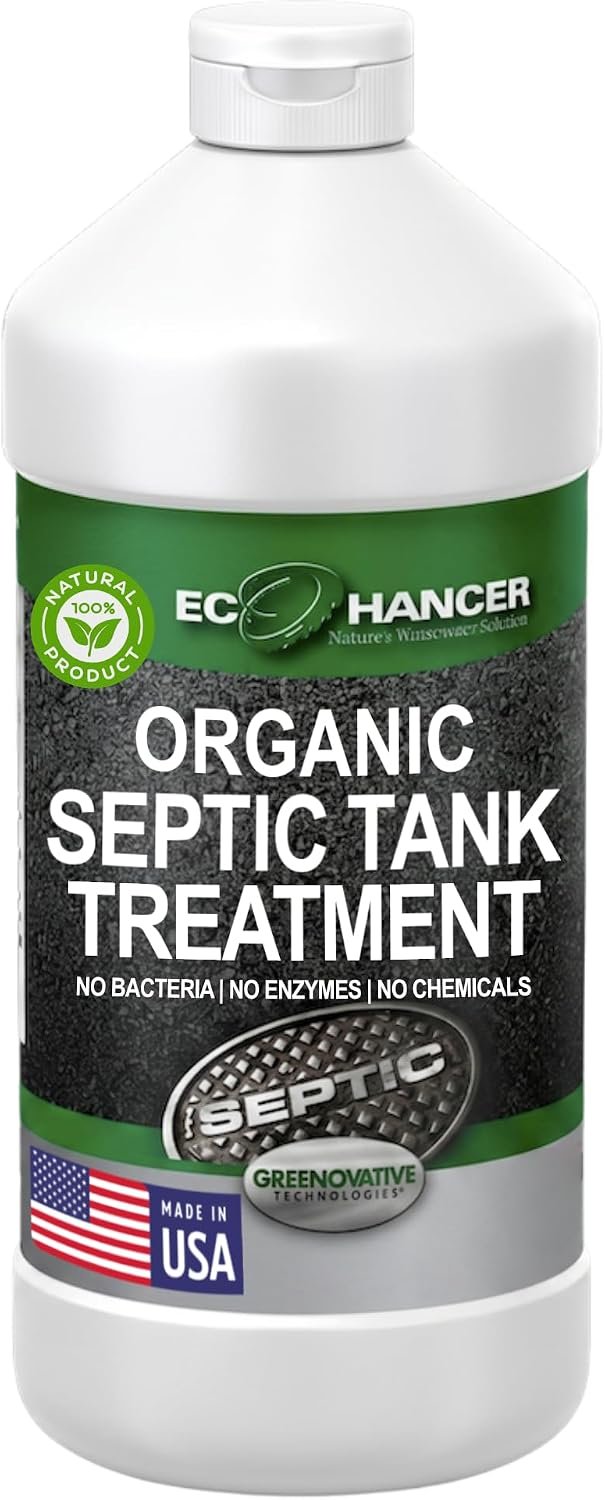
Recurring septic odors, wet drain fields, puddles, backups, and frequent pumping can make routine maintenance feel like a losing battle. You may also worry that household cleaners, sanitizers, grease, and medications are placing extra stress on the system. The EcoHancer Organic Septic Tank Treatment & Drain Field Cleaner is listed at $24.95, made in the USA, and currently shown as in stock.
The stated use case is straightforward: this is a monthly additive for residential and business septic systems, including systems exposed to high-strength waste such as grease and coffee grounds. The EcoHancer septic treatment is easy to dose and may appeal if you want a biological maintenance product rather than a complicated installation. It shouldn’t replace tank pumping, inspections, effluent-filter service, or professional diagnosis when your system is failing.
This EcoHancer septic treatment review assesses the supplied specifications, dosing instructions, product claims, available customer-feedback information, claimed study support, price, and practical buying considerations for 2026. The early takeaway is cautious: it looks convenient for routine maintenance, but the product information doesn’t establish that it can repair a blocked, undersized, saturated, or structurally damaged system.
This image is property of Amazon.com.

What Is EcoHancer and How Is It Supposed to Work?
EcoHancer is described as a septic additive built around a patented, carbon-rich peat extract. The intended mechanism is not to add conventional chemical catalysts or foreign microbial cultures, but to stimulate microorganisms already present in the tank and drain field. In theory, stronger biological activity could support effluent clarification and the breakdown of organic material.
The EcoHancer septic treatment is flushed into the plumbing, so it should not be confused with an effluent filter. An effluent filter is a physical component installed at the septic-tank outlet; it catches suspended solids before they enter the distribution system. One is a consumable additive, while the other is hardware that needs inspection and cleaning.
The product description says the carbon-rich formula supports the existing microbial workforce, optimizes soil conditions in the leach field, and rapidly clarifies effluent. It also claims that wet, muddy areas can become dry, firm, and odor-free within weeks. Those are manufacturer-supplied claims, not a guaranteed timeline or independently confirmed outcome for every soil type, tank design, or loading pattern.
Household cleaners, sanitizers, medications, grease, and coffee grounds can complicate septic biology or add solids and fats that the system must handle. Even so, no additive can correct every cause of poor performance. A clogged outlet, damaged pipe, hydraulic overload, compacted soil, or overdue pumping remains a physical maintenance problem.
EcoHancer Septic Treatment Features and Specifications
The supplied specification is a 30-ounce bottle with a half-bottle monthly dose. You pour half of the container into a toilet connected to the septic system and flush it. That means one bottle provides two monthly applications, making the listed $24.95 price approximately $12.48 per dose or $12.48 per month before tax and shipping.
For the EcoHancer septic treatment, the practical routine is simple: identify the septic-connected toilet, measure half of the bottle as accurately as the label allows, pour it into the bowl, and flush. Repeat the same process the next month. If you are considering use in a business or a larger property, confirm the system size, service schedule, and any professional recommendations first rather than assuming the residential dosing applies.
Made-in-USA positioning and organic or natural formulation language may matter if you are trying to avoid products marketed around harsh chemical catalysts. Those labels alone, however, don’t prove effectiveness or compatibility with every septic design. The supplied information also doesn’t give bottle dimensions, shelf life, ingredient percentages, septic-capacity limits, or a complete schedule for unusually large systems.
That missing detail affects how confidently you can match the product to a particular installation. Before applying an additive to a commercial, shared, unusually large, or already failing system, check the label and ask a qualified septic professional whether the treatment fits the equipment and local requirements.
How to Use EcoHancer Correctly for Monthly Septic Maintenance
Use the EcoHancer septic treatment as a consistent monthly routine rather than an emergency fix. Start by reading the current label and preparing the bottle as directed. Then follow these steps:
- Choose a toilet that is connected to the septic system.
- Measure half of the bottle; don’t guess at a much smaller or larger amount.
- Pour the measured portion into the toilet.
- Flush fully so the product enters the system.
- Record the date and set a reminder for the following month.
Don’t use a partial dose unless the label specifically permits it. A fixed monthly date is easier to track than irregular applications, especially when you are trying to connect a change in odor or drainage with a particular treatment. Keep the rest of the bottle stored according to its label rather than leaving the container open near plumbing or heat.
Normal septic care still matters. Use water responsibly, keep grease and coffee grounds out of drains, protect the drain field from vehicles and heavy storage, and follow the pumping interval recommended for your household. Monitor odor intensity, standing water, muddy areas, slow drains, sewage backups, and changes in toilet or sink performance after each application.
If sewage surfaces, strong indoor odors persist, wastewater appears above ground, or backups recur, stop adding doses and contact a licensed septic professional. The EcoHancer septic treatment cannot substitute for an effluent-filter inspection, tank pumping, drain-field evaluation, or repair when a blockage or structural failure is present.
This image is property of Amazon.com.

Drain-Field and Odor Claims: What the Product Can and Cannot Address
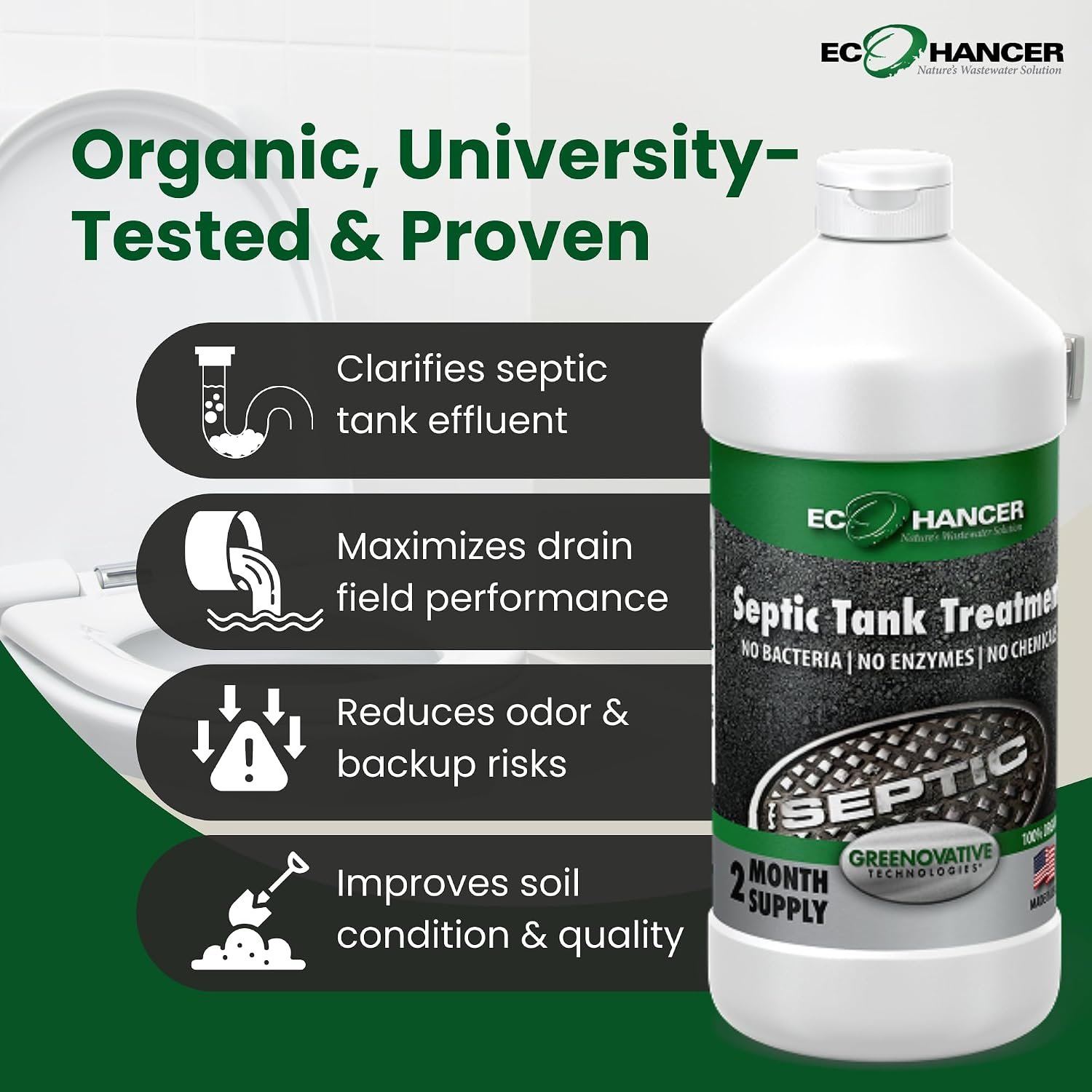
Wet, smelly, soft, or puddled drain-field areas can result from several different faults: hydraulic overload, saturated ground, compacted soil, biomat buildup, damaged distribution pipes, poor grading, or an inadequate original design. That makes the product’s claim about turning muddy areas dry and firm within weeks difficult to apply universally. The EcoHancer septic treatment description supplies no guaranteed success rate, test population, or fixed response timeline.
The proposed biological benefit is plausible as a maintenance concept: supporting microbial activity might help a system process organic waste under suitable conditions. But a treatment cannot create additional soil absorption capacity or reopen a physically blocked line. If the yard remains saturated after normal weather and water use, the symptom deserves investigation rather than repeated dosing.
EcoHancer also claims to neutralize odors associated with modern cleaners, sanitizers, medications, and other substances that may affect beneficial microbial activity. A reduction in smell could be useful, but odor reduction isn’t proof that wastewater treatment, tank capacity, or drain-field performance has returned to normal. Masking or reducing an odor while effluent continues surfacing would be a poor outcome.
If you trial the EcoHancer septic treatment, take photographs of the affected areas before starting. Note recent rainfall and household water use, inspect the same locations weekly, and record whether softness, puddling, or odor changes. The claim concerning grease and coffee grounds should be read as a high-strength-waste use case, not permission to dispose of those materials into a septic system.
What Customers Are Saying About EcoHancer
The supplied product data does not include a verified star rating, review count, review excerpts, or a review-history export. That means you shouldn’t treat any broad statement about customer satisfaction as established evidence. The EcoHancer septic treatment may attract buyers looking for reports of reduced odors, drier drain-field areas, fewer backups, easier monthly use, or longer intervals between pump-outs, but those outcomes cannot be quantified from the information provided.
When you inspect individual listings, separate experience reports from proof of universal performance. Septic systems vary in age, tank capacity, soil type, water loading, pumping history, and failure cause. A positive result on a lightly loaded system doesn’t necessarily predict the same result for a saturated drain field or a tank with a blocked outlet.
Pay attention to timing. The product description refers to improvements within weeks, yet it doesn’t promise one fixed response period. The most useful reviews explain what symptom existed, whether regular pumping continued, what type of system was involved, and whether the result lasted for more than one monthly application.
Mixed feedback would also be worth examining for reports of no visible improvement, uncertainty over measuring half a bottle, expectations of immediate repair, or disappointment when professional drain-field work was still necessary. Before purchasing the EcoHancer septic treatment, verify the current rating, number of reviews, recent review dates, and any customer photos on the live listing. Without those figures, the review evidence remains an open question rather than a selling point.
EcoHancer Septic Treatment Compared With Other Septic Treatments
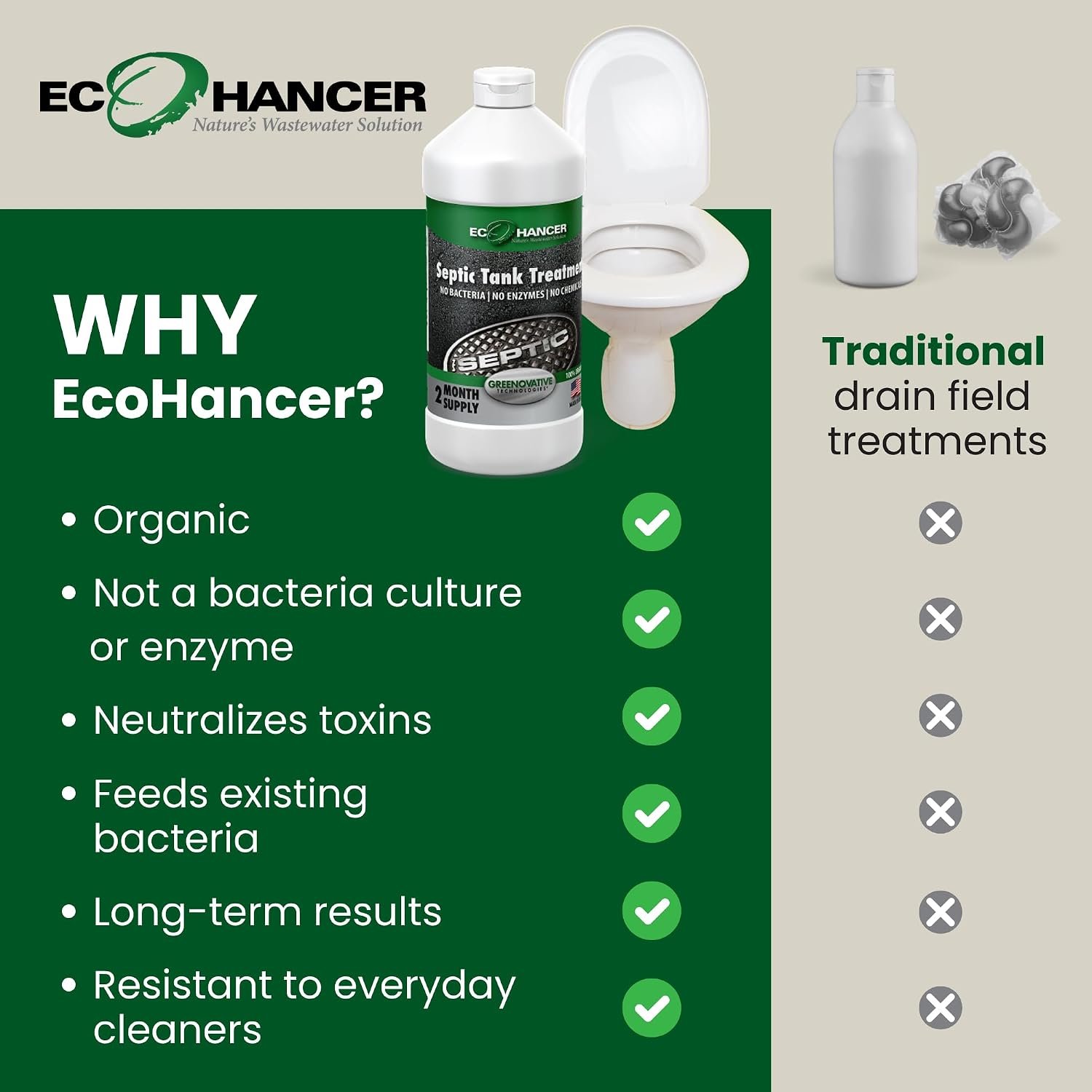
EcoHancer is positioned as a monthly, flushable biological additive using peat extract. RID-X Septic Treatment is another widely recognized additive category, while Roebic K-37-Q is commonly considered by shoppers focused on septic and drain-field maintenance. The supplied data doesn’t provide current prices, ratings, review counts, package sizes, or full formulas for either alternative, so claiming one performs better would go beyond the evidence.
| Product name | Intended use | Dosing schedule | Bottle or package information | Current price | Review rating | Review count | Best-fit buyer |
|---|---|---|---|---|---|---|---|
| EcoHancer Organic Septic Tank Treatment | Biological support, odor and drain-field claims | Half bottle monthly | 30-ounce bottle; two-month supply | $24.95 | Not supplied | Not supplied | Buyer wanting simple monthly dosing |
| RID-X Septic Treatment | Routine septic additive | Check current label | Check current listing | Verify at purchase | Verify at purchase | Verify at purchase | Buyer comparing established additive options |
| Roebic K-37-Q | Septic or drain-field maintenance category | Check current label | Check current listing | Verify at purchase | Verify at purchase | Verify at purchase | Buyer prioritizing product-specific directions |
For the EcoHancer septic treatment versus those alternatives, compare the actual label, ingredients, dose frequency, package size, and recent review details on the day you order. Don’t choose solely because a product says organic, natural, enzyme, or bacteria. Compatibility, maintenance history, and the source of the symptom matter more than a marketing category.
Physical components are a different kind of solution. An effluent filter, outlet baffle, distribution box, or drain-field repair may address a hardware or flow problem that no additive can resolve. Check live listings because prices, stock, formulations, package sizes, ratings, and review counts can change.
This image is property of Amazon.com.

Who Should Consider EcoHancer in 2026?
The strongest fit for the EcoHancer septic treatment is a homeowner who already follows normal septic care and wants a simple monthly routine intended to support existing microbial activity. You may also be interested if occasional odors or exposure to ordinary cleaners, sanitizers, medications, grease, or other household inputs has made biological maintenance a concern. That is a potential maintenance use, not a promise that treatment will reverse damage.
Businesses require more caution. A commercial system may have a different service interval, larger loading pattern, regulatory obligations, or dosing requirement. Use should be discussed with the responsible maintenance provider before you apply a residentially presented product to a business system.
Poor-fit situations include active sewage backup, standing wastewater, severe drain-field saturation, suspected broken pipes, overdue pumping, or a tank that has never been inspected. In those cases, adding a product could delay the diagnosis that protects your property and groundwater.
Use this decision sequence: identify the symptom; check the last pumping and inspection history; compare the $24.95 two-month supply with the cost of needed service; read the current label; then decide whether a maintenance additive is appropriate. If you want a low-effort, flushable product, the format may be appealing. If you need documented remediation of a failing system, look for professional evaluation instead.
Price, Supply, and Long-Term Value
At the listed $24.95, the bottle covers two months under the stated half-bottle dosing plan. That works out to approximately $12.48 per month before taxes or shipping. The product is currently listed as in stock, although the delivered price and arrival date can change, so check the live listing before basing a maintenance plan on them.
The value argument is reasonable only if the treatment helps with your particular maintenance concern. A small recurring expense may appeal if you are trying to manage occasional odors or avoid unnecessary repeat pump-outs, but the saving isn’t automatic. A product that doesn’t affect the underlying cause adds another cost without reducing service needs.
The description suggests that treatment can spare thousands of dollars in repairs, repeated pumping, or system overhauls. Treat that as a possible outcome used to describe the value proposition, not a guaranteed financial result. Septic service costs depend on location, access, system type, diagnosis, and the work required, so no unsupported break-even figure should be assumed.
For a simple calculation, estimate your current annual maintenance and emergency spending, then subtract the annual product expense based on six bottles per year. Judge the result only after including the professional care you still need, such as pumping, inspection, effluent-filter cleaning, drain-field evaluation, or repair. The EcoHancer septic treatment is best viewed as a modest maintenance expense, not insurance against major failure.
Important Limitations Before You Buy
No septic additive can physically remove a blocked outlet, repair a cracked tank, replace a failed distribution box, restore compacted soil, or correct an undersized drain field. The EcoHancer septic treatment may be designed for biological support, but its category sets a clear boundary: physical and hydraulic failures require inspection and service.
The supplied information doesn’t include an ingredient panel with concentrations, a guaranteed treatment area, a maximum household size, a formal success rate, or a detailed compatibility list. Those omissions make it harder to determine whether the formula is appropriate for unusual treatment technology, large systems, shared systems, or sensitive groundwater settings.
The description refers to scientific proof connected with a Rowan University Department of Chemical Engineering study. Before relying on that claim, look for the study’s methods, test conditions, measured endpoints, funding, and applicability to your own septic design. Evidence from a controlled test may not predict results in a property with different soil, loading, weather, or maintenance history.
Follow the current label and local regulations, particularly if you manage a business or shared system. Organic or natural positioning doesn’t mean unlimited use, and it shouldn’t offset harmful disposal habits. Keep your receipt, record objective observations, and avoid assuming that a short-term odor change proves the drain field has recovered.
This image is property of Amazon.com.
How to Decide Whether EcoHancer Fits Your Septic System
Buy the EcoHancer septic treatment only if you want monthly biological maintenance and your system has no urgent sign of structural or hydraulic failure. Before ordering, confirm four facts: the last pumping date, the last inspection result, the location of the drain field, and whether the current symptom points toward an additive issue or a service issue.
The strongest reasons to consider it are the half-bottle monthly routine, the two-month 30-ounce supply, the listed $24.95 price, the made-in-USA positioning, and claims aimed at odor and drain-field conditions. Those features make the product easy to understand and easy to schedule. They don’t establish that every household will see a measurable improvement.
Reasons for caution include limited supplied specification detail, no provided rating or review count, uncertain applicability across septic systems, and the risk of delaying professional diagnosis. If you do trial the EcoHancer septic treatment, create a simple record containing the application date, weather, household water use, odor level, surface wetness, backups, and any professional maintenance performed during the trial.
The practical distinction is clear: this is a convenient maintenance additive, not a repair product for an already failing septic system. If your inspection history is sound and your expectations are modest, the low-effort format may be worth considering. If wastewater is surfacing or the system is overdue for service, spend the next dollar on diagnosis rather than another dose.
Pros and Cons
Pros
- Simple half-bottle monthly dosing with no installation required
- One 30-ounce bottle provides a stated two-month supply
- Made-in-USA positioning and peat-extract biological-support formulation
- Listed price of $24.95 is relatively straightforward to calculate as a monthly maintenance cost
- Designed for homeowners seeking a flushable additive for odor and drain-field concerns
Cons
- The supplied product information does not include a verified star rating or review count
- No formal success rate, guaranteed timeline, complete ingredient concentrations, or maximum system capacity is provided
- An additive cannot repair blocked outlets, damaged pipes, compacted soil, failed distribution boxes, or undersized drain fields
- Claims about avoiding thousands of dollars in repairs are potential outcomes, not guaranteed savings
- Commercial, shared, unusually large, or failing systems may require professional guidance before use
Final Verdict
Key Takeaways
- The $24.95, 30-ounce bottle supplies two monthly half-bottle applications, or approximately $12.48 per month before tax and shipping.
- Its peat-extract formula is marketed as biological support for existing septic microorganisms, with additional claims involving odors and wet drain fields.
- The supplied information does not include a customer rating, review count, formal success rate, complete ingredient concentrations, or system-capacity limits.
- Use an additive only for routine maintenance; sewage backups, standing wastewater, saturated drain fields, and suspected structural faults require professional service.
- Check the current label and listing before purchase because pricing, availability, package details, and customer-review information can change.
Frequently Asked Questions
Is an effluent filter necessary for a septic system?
Many septic systems benefit from an effluent filter because it helps prevent suspended solids from reaching the drain field, but requirements vary by system design and local regulation. A qualified septic professional can confirm whether your tank has one and how it should be maintained.
What is the best effluent filter for a septic tank?
The best filter is one correctly sized for your tank outlet, flow requirements, and septic design. Compare compatibility, service access, filtration capacity, and local professional recommendations rather than choosing solely by brand.
What is an effluent filter on a septic tank?
An effluent filter is a physical device installed at the septic-tank outlet. It catches solids before clarified liquid flows toward the distribution box and drain field, helping protect downstream components.
How often do you need to clean an effluent filter?
Cleaning intervals depend on household loading, tank design, and the filter’s condition. Have it checked during routine septic service and clean it sooner if slow drains, backups, or abnormal flow suggest restriction.