PSF1 Spin-Down Sediment Filter Overview
Sediment, rust, and sand can quietly clog plumbing and shorten the working life of water heaters, washing machines, and reverse-osmosis equipment. The PSF1 spin-down sediment filter is a whole-house pre-filter designed to intercept those larger particles before they travel through your home. It is currently listed in stock at $42.99, reduced from $45.99, and its reusable design makes it appealing if you dislike recurring cartridge purchases.
The PSF1 spin-down sediment filter is not a carbon filter, water softener, disinfectant, or fine drinking-water purifier. It is a washable first-stage screen, so you should pair it with other treatment equipment when your water test identifies chlorine, hardness, bacteria, viruses, dissolved metals, or other contaminants.
For 2026, the main attraction is practical rather than glamorous: you can see buildup, flush the screen, and choose from three mesh options. The manufacturer lists a maximum capacity of GPM, but your home’s pipe size, pressure, peak demand, and sediment load will determine the flow you actually receive. Overall, the PSF1 spin-down sediment filter is worth considering for coarse sediment protection, provided your plumbing matches the supplied fittings and you understand that the listed flow figure is not a guarantee for every installation.
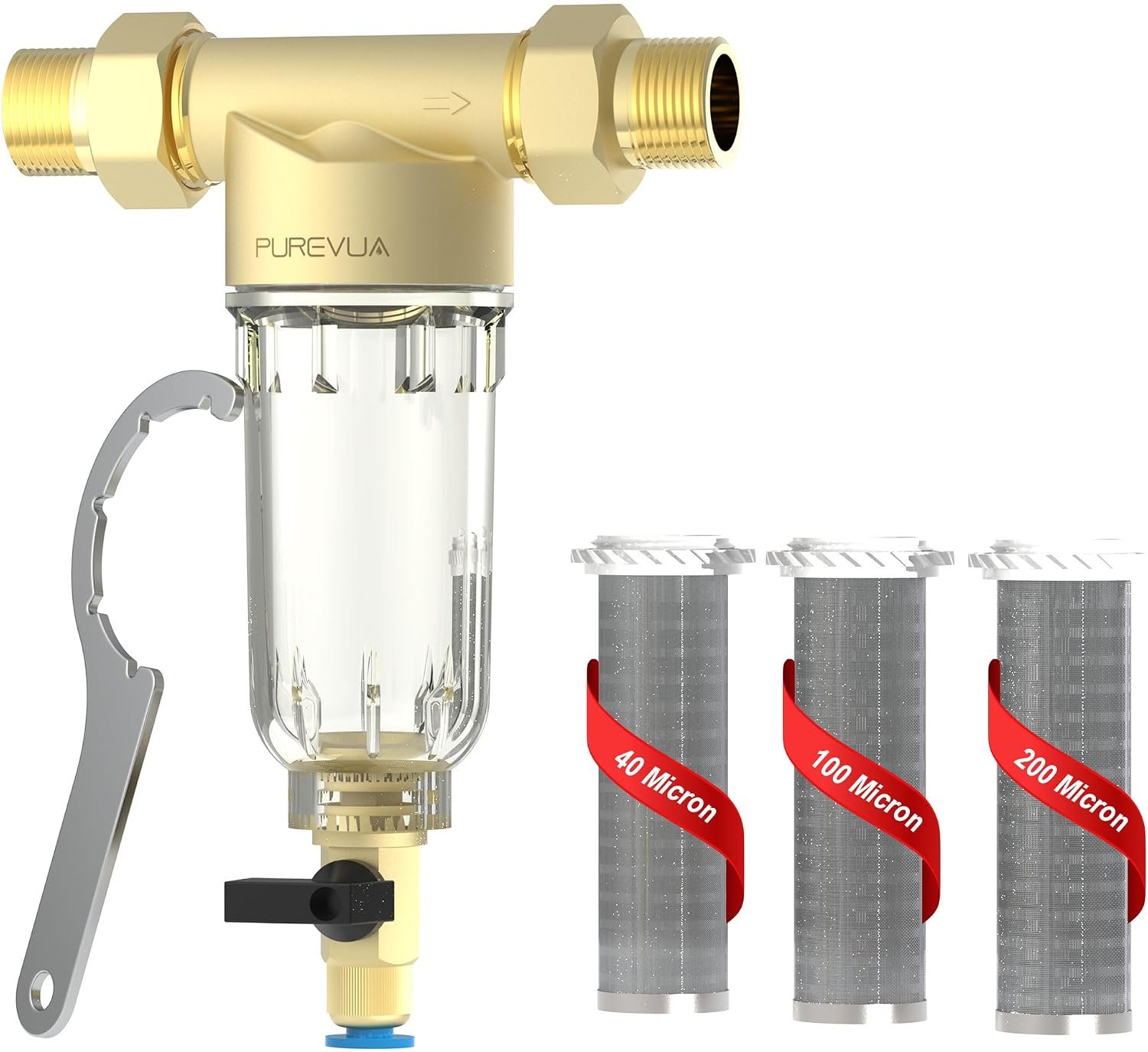
This image is property of Amazon.com.

What the PSF1 Spin-Down Sediment Filter Does
A spin-down filter works by directing incoming water through a screen inside a housing. Larger particles remain on the stainless steel mesh, while the flush valve gives you a way to discharge the collected debris instead of removing a disposable cartridge. With the PSF1 spin-down sediment filter, the transparent housing lets you see whether the screen is loading before pressure loss becomes obvious.
The distinction between screening and purification matters. This type of pre-filter targets visible or relatively large sediment, including particles such as sand, silt, and rust flakes. It does not claim to remove dissolved minerals, chlorine, chemicals, bacteria, viruses, or every fine contaminant, so a whole-house treatment train may still need carbon, softening, disinfection, or certified drinking-water filtration.
Installed upstream of appliances and treatment equipment, the PSF1 spin-down sediment filter can be more practical than putting a small filter at one faucet. It can protect an RO pre-filter or water heater from coarse debris throughout the home. The stated GPM maximum is best treated as a manufacturer performance claim: compare it with your household’s peak simultaneous demand and the pressure drop you can tolerate. In short, the PSF1 spin-down sediment filter is a first barrier, not a complete water-quality answer.
PSF1 Filter Specifications and Included Parts
The PSF1 package is built around flexible connections and interchangeable screens. Its key connection details are shown below so you can compare them with the pipework at your intended installation point.
| Specification | Listed detail |
|---|---|
| Filter connections | 1-inch MNPT and/4-inch FNPT dual-thread arrangement |
| Included adapter | 3/4-inch MNPT adapter |
| Screen choices | 40, 100, and microns |
| Drain hose | 60 centimetres, or inches |
| Housing | BPA-free, high-impact transparent housing |
The PSF1 spin-down sediment filter includes three interchangeable stainless steel screens: 40, 100, and microns. That is useful because you can adjust the balance between particle capture and flow without immediately buying another filter assembly. The supplied 60-centimetre, or 24-inch, drain hose can direct flush water into a suitable drain or bucket and should make maintenance less messy.
The stated sealing components are a reinforced O-ring between the head and housing plus connection gaskets. The optional mounting bracket and replacement screens are separate accessories, however, so the PSF1 spin-down sediment filter may cost more to install permanently than the initial package price suggests. Check whether your setup needs the bracket, additional adapters, or spare mesh before ordering. The PSF1 spin-down sediment filter itself supplies the main filter assembly, adapter, screens, and hose, but not every possible installation accessory.
Choosing Between the 40, 100, and Micron Screens
The screen rating controls how restrictive the first stage may be. A lower micron number generally targets smaller particles, but a finer screen can collect sediment sooner and require more frequent flushing. A higher micron number usually gives debris more room to pass while preserving flow in water that loads filters quickly.
Start with the 40-micron screen when finer sediment capture is your priority and you can inspect the housing regularly. The 100-micron option is the sensible middle ground for many households wanting visible sediment protection without making the screen unnecessarily restrictive. The 200-micron screen is the least restrictive choice of the three and may suit heavily sedimented water as a coarse first stage before finer downstream treatment.
To choose for the PSF1 spin-down sediment filter, first collect a sample and inspect the sediment visually. Begin with the screen that balances the amount of debris and your flow needs, then check buildup and pressure after initial use. If the screen loads too rapidly, move coarser; if larger particles are still reaching downstream equipment, try finer. The PSF1 spin-down sediment filter ratings should not be treated as proof that every particle at or above a stated size will be removed, because velocity, screen condition, installation, and particle shape affect real results. For the PSF1 spin-down sediment filter, monitoring is more reliable than choosing a rating by number alone.

This image is property of Amazon.com.

Installation, Thread Compatibility, and Leak Control
The dual-thread head is intended to broaden compatibility with standard US plumbing layouts, but matching thread types does not guarantee a trouble-free installation. Before buying the PSF1 spin-down sediment filter, verify the pipe sizes, available clearance, drain access, and whether nearby pipework can support the housing without strain. A household connection that looks similar may still require another adapter.
- Shut off the water supply and release pressure from the line.
- Confirm the marked flow direction and select the correct connection or supplied adapter.
- Apply suitable thread-sealing material where appropriate, while keeping sealant away from the water path.
- Fit the connection gaskets and reinforced O-ring correctly; do not install damaged seals.
- Connect the drain hose securely and position its outlet over a suitable drain or bucket.
- Pressurize the assembly slowly, inspect every joint, then repeat the inspection after normal household flow.
The PSF1 spin-down sediment filter can benefit from the optional bracket when rigid plumbing might pull on the filter head or connections. Even with the reinforced O-ring and gaskets, over-tightening, crossed threads, unsupported pipework, or a misaligned seal can create leaks. Take extra care during the first pressure test rather than assuming the PSF1 spin-down sediment filter is leak-proof simply because the product description uses that phrase.
Flushing and Ongoing Maintenance
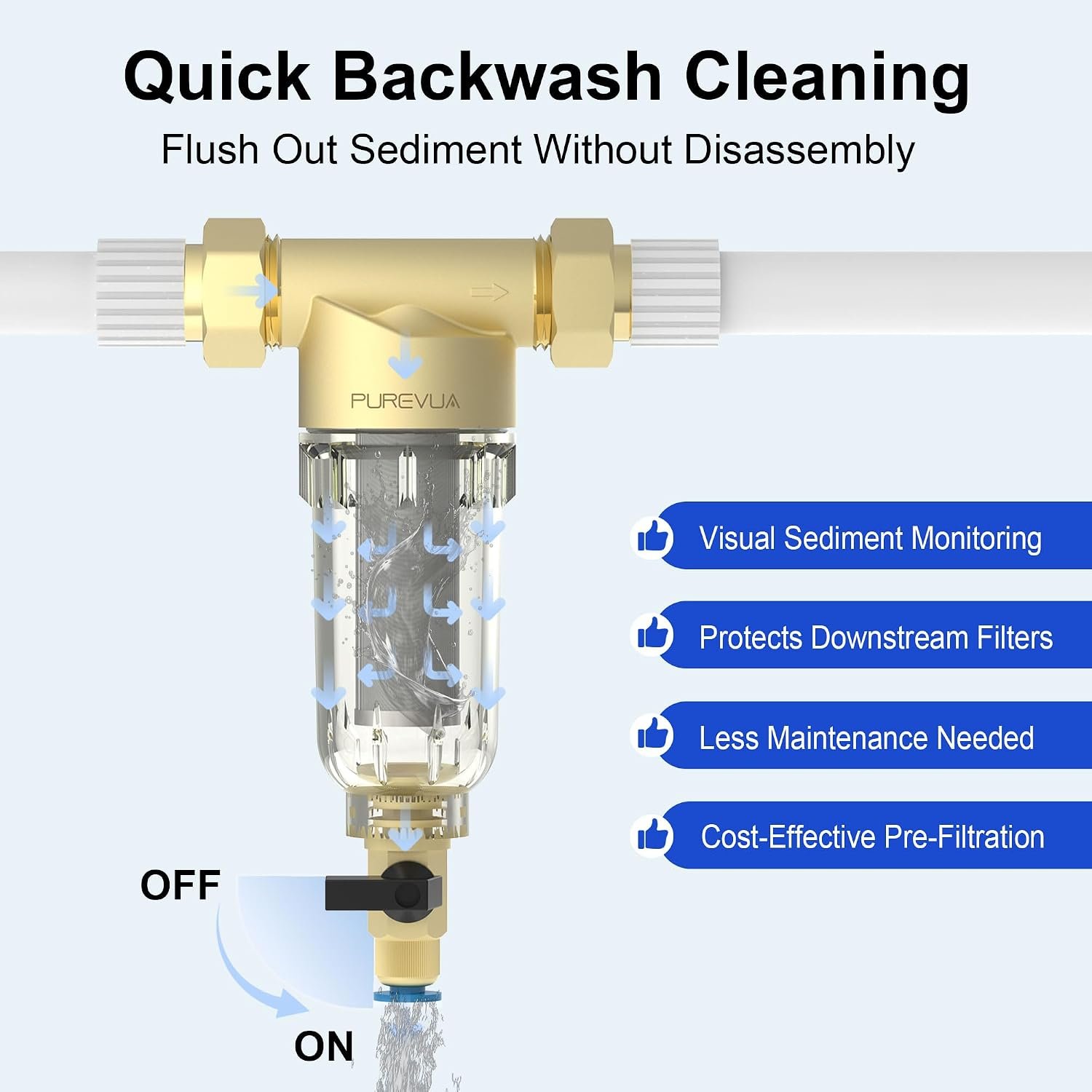
Maintenance is the main reason to choose a washable spin-down design. For the PSF1 spin-down sediment filter, the advertised routine is to turn the flush valve and send discharged water through the supplied drain hose, removing accumulated sediment without routinely replacing a disposable cartridge.
The manufacturer recommends bi-monthly maintenance, which means approximately every two months. That schedule is only a starting point: well water, construction debris, seasonal changes, or a visibly dirty screen can justify more frequent flushing. Washable does not mean maintenance-free; you still need to inspect the housing, clean the screen when necessary, check seals, and replace worn parts.
- Inspect the transparent housing for buildup and discoloration.
- Place the drain hose securely so the discharge cannot splash or pull free.
- Open the flush valve briefly, then close it and check whether flow improves.
- Look around the head, connections, and valve for leaks.
- Remove and clean the screen if pressure remains low or coating persists.
Deeper cleaning is justified when pressure loss continues, the screen remains coated after flushing, or debris prevents normal flow. Replacement 40-, 100-, and 200-micron screens are available separately. That supports longer ownership of the PSF1 spin-down sediment filter, although replacement parts add a future expense and the PSF1 spin-down sediment filter still depends on you keeping to a sensible inspection routine.
Real Customer Feedback: What Buyers Report
The supplied product information does not include a verified displayed star rating or review count, so those figures should be checked on the listing immediately before publication. It would be misleading to assign a rating, describe the product as highly rated, or present a review total without confirmation. The listed price should also be rechecked because the current $42.99 price and in-stock status can change.
For the PSF1 spin-down sediment filter, the most useful review evidence to look for is concrete rather than broad praise. Customer reviews indicate value when buyers describe visible sediment collecting in the housing, straightforward flushing, reusable screens, or protection for downstream equipment. Verified buyers report more useful installation information when they explain whether the dual-thread head and included adapter fit their plumbing, whether the drain hose reached a practical discharge point, and whether pressure remained acceptable.
Reviewers frequently mention the time needed for cleaning, gasket performance, thread fit, and whether heavily sedimented water clogs a screen quickly. Give more weight to recurring patterns than to one isolated leak or one unusually high-flow installation; no individual comment proves that every home will achieve the stated capacity. For a fair publication check, confirm the PSF1 spin-down sediment filter rating, review count, price, and recent comments on the listing. Until those figures are verified, the PSF1 spin-down sediment filter should be judged from its documented specifications rather than invented customer sentiment.
This image is property of Amazon.com.

How the PSF1 Compares With Alternative Filters
The iSpring WSP50ARJ is a reasonable comparison if you are shopping for reusable spin-down screening. Compare its supplied mesh choices, connection configuration, transparent housing, flushing method, and current purchase price directly with the PSF1 spin-down sediment filter. Do not assume one is better simply because one brand is more familiar; the practical winner is the model that fits your plumbing and offers the screen range you actually need.
The Rusco Spin-Down Filter is another established name to examine, particularly for well-water sediment. Look at how each unit handles screen selection, cleaning access, installation fittings, replacement parts, and any mounting hardware. The product information supplied here does not provide verified current prices, ratings, or performance figures for either competitor, so those details should be checked separately rather than guessed.
The PSF1 spin-down sediment filter stands out on the supplied specification sheet for including three screen options in one package, a stated GPM capacity, a dual-thread head, a 24-inch drain hose, and transparent BPA-free housing. An alternative may be preferable if it offers a better-supported pressure rating, a different pipe size, a broader replacement-parts ecosystem, or a bracket in the box. When comparing the PSF1 spin-down sediment filter, record each model’s actual micron rating, flow claim, connection size, flush arrangement, housing material, bracket availability, and screen cost before deciding.
Who Should Buy the PSF1 Spin-Down Sediment Filter?
The PSF1 spin-down sediment filter makes the most sense if your plumbing receives visible rust, sand, silt, or other larger particles. It can serve as a protective first stage ahead of a water heater, washing machine, or RO system, especially when you prefer cleaning a screen instead of buying disposable cartridges.
Well-water users may benefit from having three interchangeable mesh choices, but they should be prepared to inspect and flush the unit according to the home’s actual sediment load. Look elsewhere if your main goal is chlorine reduction, lead removal, scale control, microbial treatment, or certified drinking-water purification. A water test should determine the rest of your treatment system; this pre-filter is not a universal solution.
Renters may find the installation impractical if they cannot access the main line, shutoff, drain point, or required plumbing tools. DIY installers should be comfortable isolating the supply, sealing threaded connections, and testing for leaks. For the PSF1 spin-down sediment filter, use this decision sequence: identify the contaminant, check pipe and thread compatibility, estimate peak flow, choose a starting mesh, plan drainage, and price the bracket or replacement screens. If those steps fit your situation, the PSF1 spin-down sediment filter is a sensible coarse-sediment pre-filter rather than an all-purpose purifier.
Price, Ownership Costs, and Overall Value
At the time of the supplied product listing, the PSF1 spin-down sediment filter costs $42.99, compared with a listed original price of $45.99. That is a $3.00 difference, but you should not assume the reduction will continue. The initial package is more useful than a bare housing because it includes three stainless steel screen choices and a drain hose, reducing the need to buy a separate first-stage screen immediately.
The ownership calculation should include the optional mounting bracket, replacement mesh, thread-sealing supplies, any adapters beyond the included fitting, and professional installation if your plumbing requires it. Compared with cartridge systems, the PSF1 spin-down sediment filter may reduce recurring filter purchases, but it transfers more responsibility to you: flushing, screen cleaning, seal inspection, and eventual replacement parts all take time.
For a simple comparison, add your expected cartridge spending for one year, then add the PSF1 accessories and a realistic value for maintenance time. Compare that total with alternatives offering similar flow and sediment screening. The PSF1 spin-down sediment filter is worth considering when your plumbing matches its fittings and your problem is coarse sediment rather than dissolved or biological contamination. At $42.99, the PSF1 spin-down sediment filter offers a credible reusable whole-house pre-filter package, while the PSF1 spin-down sediment filter is less compelling if you need purification or want an entirely maintenance-free system.
This image is property of Amazon.com.
Pros and Cons
Pros
- Three interchangeable stainless steel screens—40, 100, and microns—are included.
- Transparent BPA-free housing makes sediment buildup visible without opening the unit.
- Flush-valve design and supplied drain hose support reusable, cartridge-free sediment maintenance.
- Dual-thread head and included adapter may suit a range of standard US plumbing layouts.
- Listed GPM maximum capacity is attractive for a whole-house first-stage filter.
Cons
- The product does not remove dissolved minerals, chemicals, bacteria, viruses, or other fine contaminants.
- The optional mounting bracket and replacement screens are separate purchases.
- Actual flow may be lower than the listed GPM depending on household plumbing and sediment load.
- Washable operation still requires regular flushing, screen cleaning, seal inspection, and maintenance.
- The supplied information does not provide a verified current star rating or review count.
Final Verdict
Key Takeaways
- The PSF1 is a washable whole-house sediment pre-filter, not a purifier, softener, carbon filter, or disinfectant.
- Its strongest package features are three stainless steel mesh choices, dual-thread connections, a transparent housing, and a supplied drain hose.
- The listed GPM capacity is a manufacturer claim; actual household flow depends on pressure, pipework, demand, and sediment loading.
- Regular flushing and screen inspection are still required, and the optional bracket and replacement screens add to ownership cost.
- At $42.99, it is most suitable for coarse sediment, rust, sand, or silt when your plumbing matches the fittings.
Frequently Asked Questions
Is an effluent filter necessary for a septic system?
An effluent filter is often useful because it helps keep suspended solids from reaching the drain field, but whether it is necessary depends on the septic tank design and local requirements. The PSF1 is a household sediment pre-filter, not a septic-tank effluent filter, so it should not be treated as a substitute.
What is the best effluent filter for a septic tank?
The best septic effluent filter depends on tank outlet design, required flow, access, cleaning arrangements, and local regulations. Choose a model sized for the system and supported by clear maintenance guidance; the PSF1 is intended for incoming household water, not septic effluent.
What is an effluent filter on a septic tank?
A septic effluent filter is installed at or near the tank outlet to screen solids before wastewater leaves the tank for the drain field. It is different from a whole-house spin-down sediment filter, which screens incoming supply water before it reaches household plumbing.
How often do you need to clean an effluent filter?
Cleaning frequency depends on the tank, household loading, and the amount of solids captured. Many systems are inspected during routine septic maintenance, while heavy loading may require more frequent cleaning; follow the filter and septic-system instructions rather than using a fixed schedule.