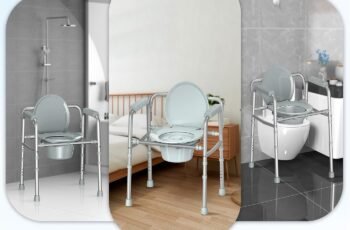
LE-310 Compact Dry Flush Toilet: Quick Overview
Managing toilet waste in a van, campsite, or off-grid property usually means choosing between water, odors, liquid tanks, or hands-on cleanup. The LE-310 takes a different route: it is a compact electric dry flush toilet designed to seal waste bags automatically rather than using a flush-water tank or a traditional composting process. That makes it most interesting when limited water and simpler waste handling are your main concerns.
The supplied listing shows a price of $0.00, but that should be treated only as the provided reference. Confirm the live price at checkout, along with shipping, taxes, coupons, and what accessories are actually included, because displayed listing prices can change. In 2026, compact sanitation equipment remains especially relevant for van conversions, emergency preparedness, and properties without normal plumbing infrastructure.
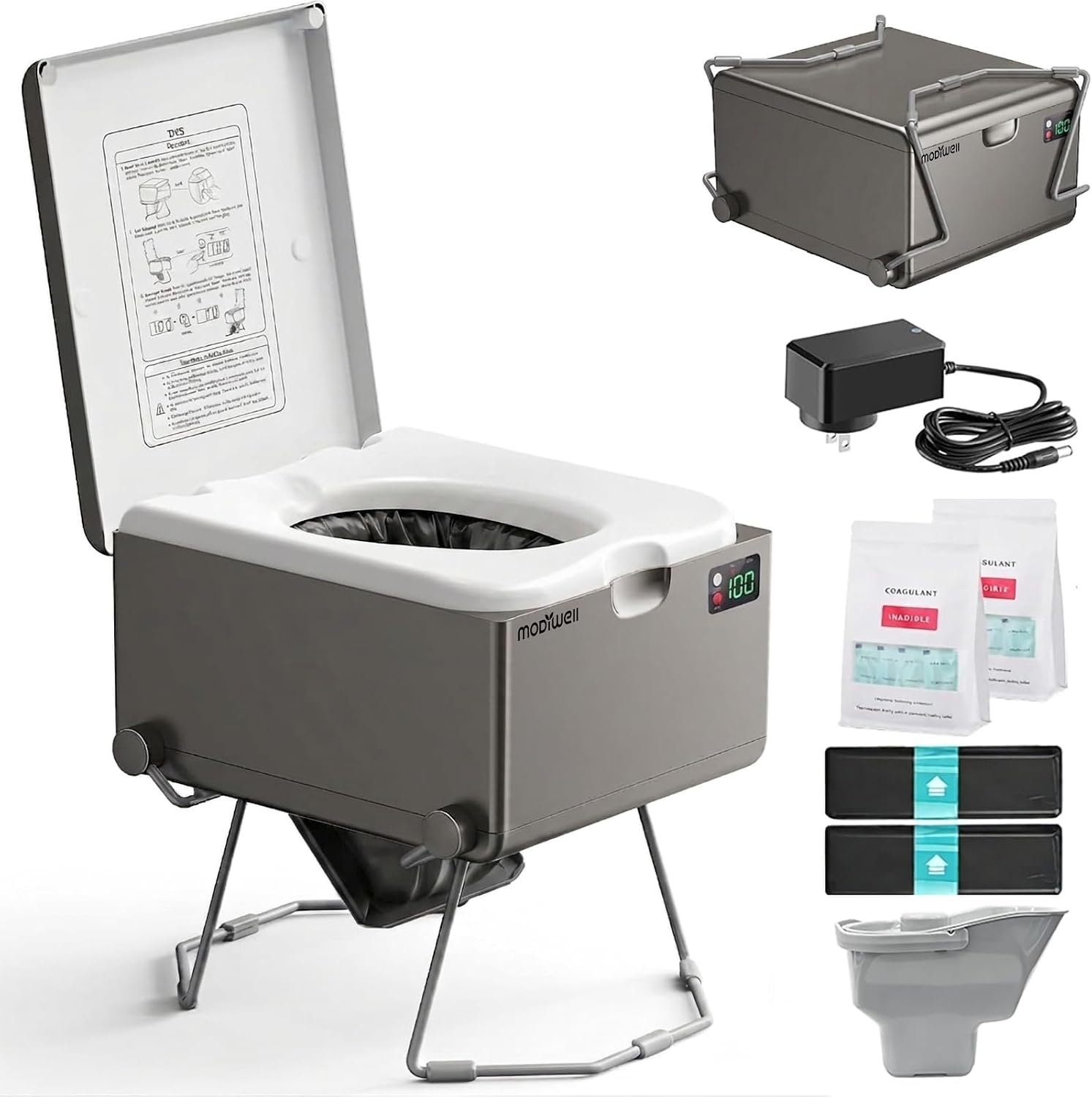
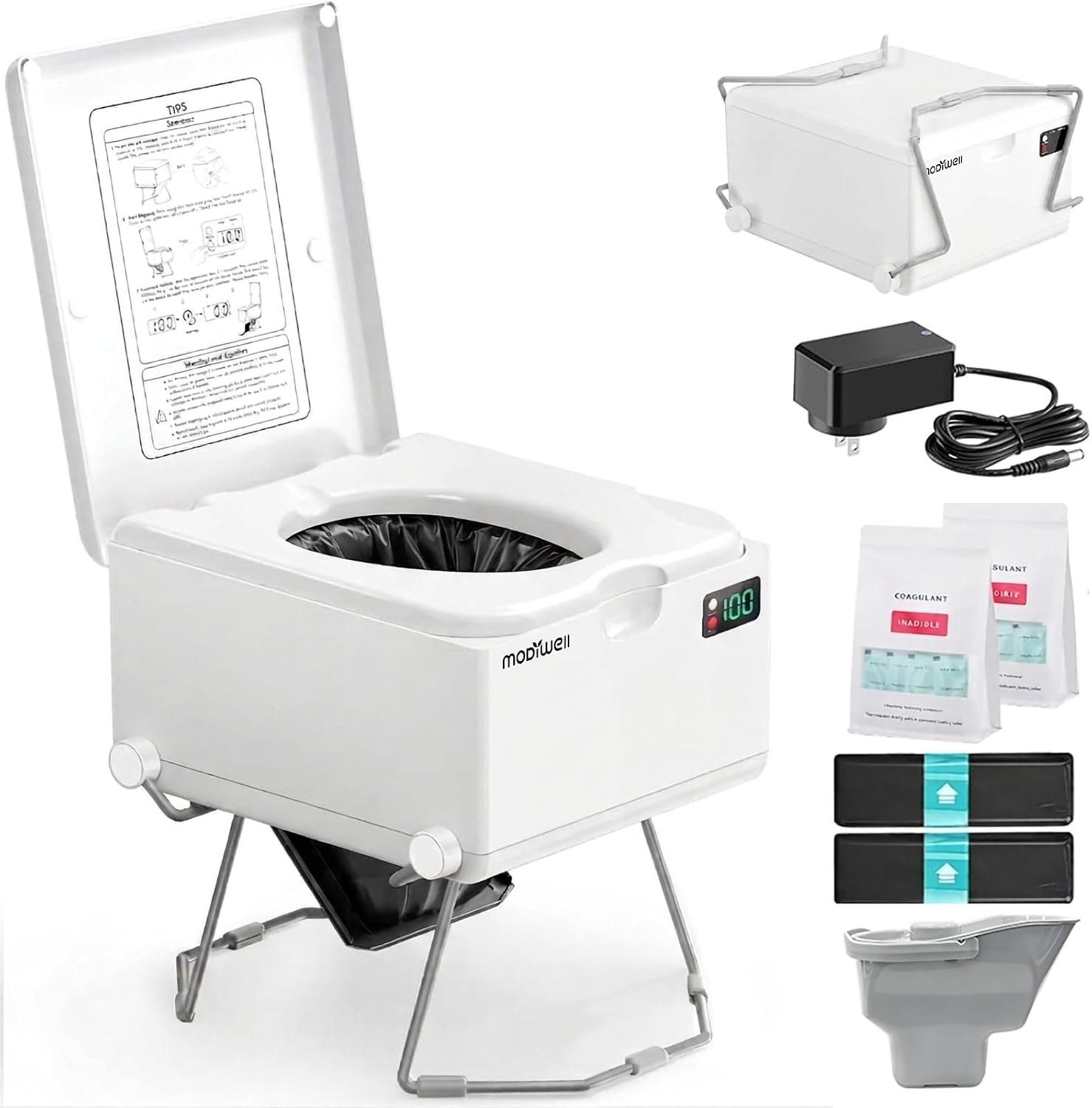
The listed specifications are a x x 11-inch body, a 17-pound weight, support for up to pounds, a 5200mAh rechargeable battery, and a claimed 70–100 uses per charge. The package is also described as including two 30-use bag rolls and coagulant pouches. Those figures suggest a practical vehicle toilet rather than something intended for carrying on foot.
On paper, this dry flush toilet is best suited to van life, boondocking, emergency sanitation, temporary facilities, and low-water properties. It could reduce the unpleasant handling associated with a liquid-filled cassette, although recurring bag costs and disposal rules will determine whether the convenience justifies the expense. This review uses the supplied specifications and listing information; no overall rating or review count was provided.
The central appeal of the dry flush toilet is not simply portability. It is the attempt to make waste handling a contained, button-operated task. Whether that works reliably over months of use cannot be established from the supplied material alone.
This image is property of Amazon.com.

How the LE-310 Dry Flush Toilet Works
The stated workflow is deliberately simple. After use, you press the Start button, allow the unit to complete its automatic sealing cycle, and then dispose of the sealed bag according to local sanitation rules. In principle, this dry flush toilet removes the need to tie an exposed waste bag manually after every use.
That process differs from several familiar alternatives. A cassette toilet stores waste in a removable tank, a bucket toilet normally relies on a liner and manual bag handling, and a composting toilet separates or processes waste over time. A conventional portable flush toilet uses water and usually has a flush tank plus a waste tank; the LE-310 is described instead as waterless, without a separate liquid tank.
The supplied coagulant pouches are intended to help manage liquid inside the bag and lower the risk of leakage. They do not turn the unit into a composting system, and they should be used exactly as directed. The product description also claims automatic thermal waste disposal and odor prevention, but the available information does not confirm cycle time, heating temperature, operating noise, or long-term bag performance.
For a first trip, use this sequence:
- Charge the unit fully before loading it into the vehicle.
- Install the bag roll and check that the bag path is seated correctly.
- Place a coagulant pouch as instructed in the manual.
- Check the lid, sealing area, and Start-button operation.
- Run a controlled test cycle before relying on it away from home.
Even if the listing uses “odor-free” language, no dry flush toilet can sensibly be treated as immune to every odor problem. Bag misalignment, an incomplete seal, hot storage, or delaying disposal may affect results. If a cycle looks abnormal, stop using the unit until you have checked the manual and the bag position.
The practical distinction is therefore convenience, not magic. The LE-310 may reduce direct contact with waste, but the quality of the seal and the discipline of handling and disposing of sealed bags still matter.
Key Features of This Dry Flush Toilet
The automatic sealing system is the main reason to consider this model. One-button operation could be useful at night, in a shared campsite, or for someone with limited mobility who would rather not handle an exposed liner. A completed seal also makes transport less unpleasant than carrying an open or liquid-filled container, provided the cycle has genuinely finished.
Odor management is another central claim. The listing describes rigorously tested waste bags and an included coagulant intended to limit odors and leaks, but no independent test results are supplied. Treat the performance as a design intention rather than a proven guarantee, particularly if the toilet will sit in a warm vehicle between uses.
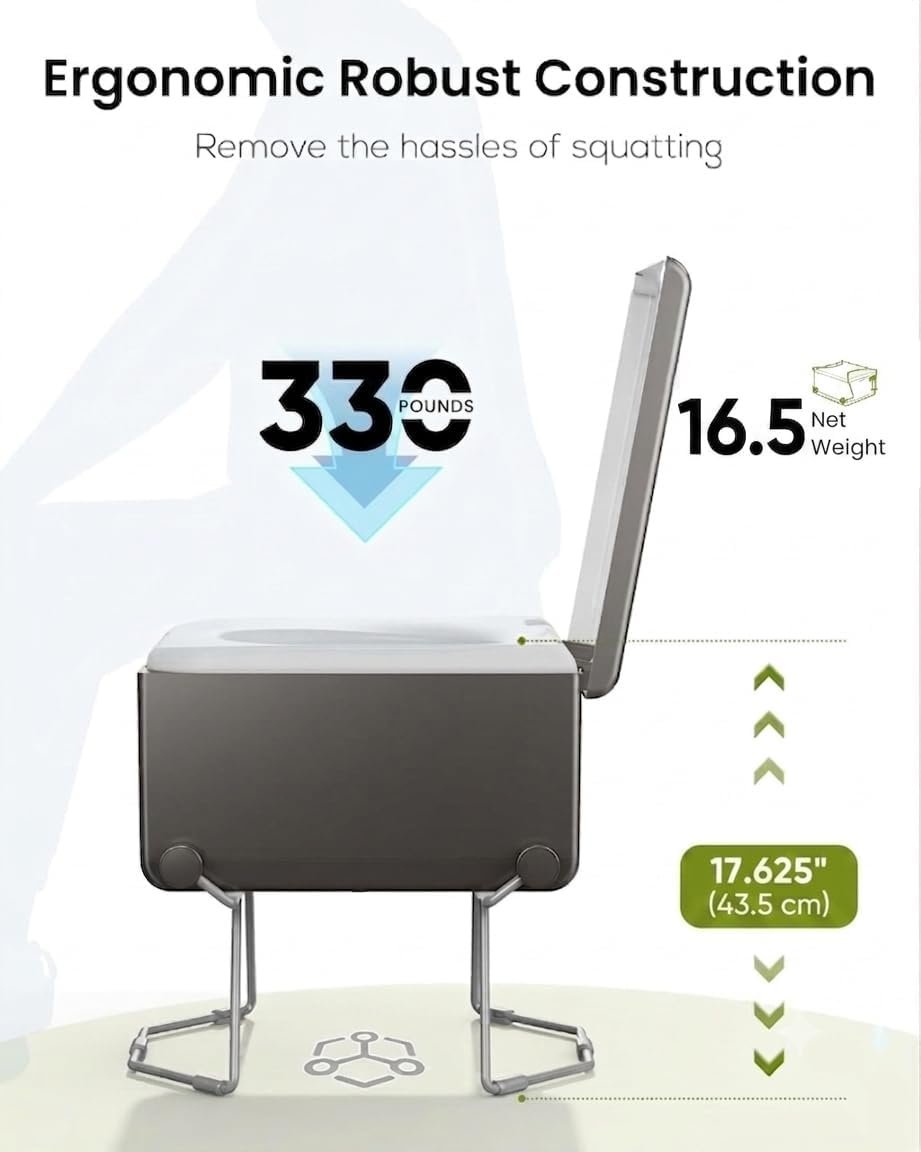
Stainless steel support legs and a stated 330-pound load rating should help with stability for adult users. That matters on an uneven campsite, in a moving van before the vehicle is secured, or in a temporary indoor room. Place the unit on a solid, level surface and avoid treating the load rating as proof that it will remain stable on soft ground.
The listed x x 11-inch footprint and 17-pound weight make the unit portable for vehicle-based travel, but those figures do not make it a backpacking product. You still need room for privacy, access, spare bags, and safe handling around the toilet.
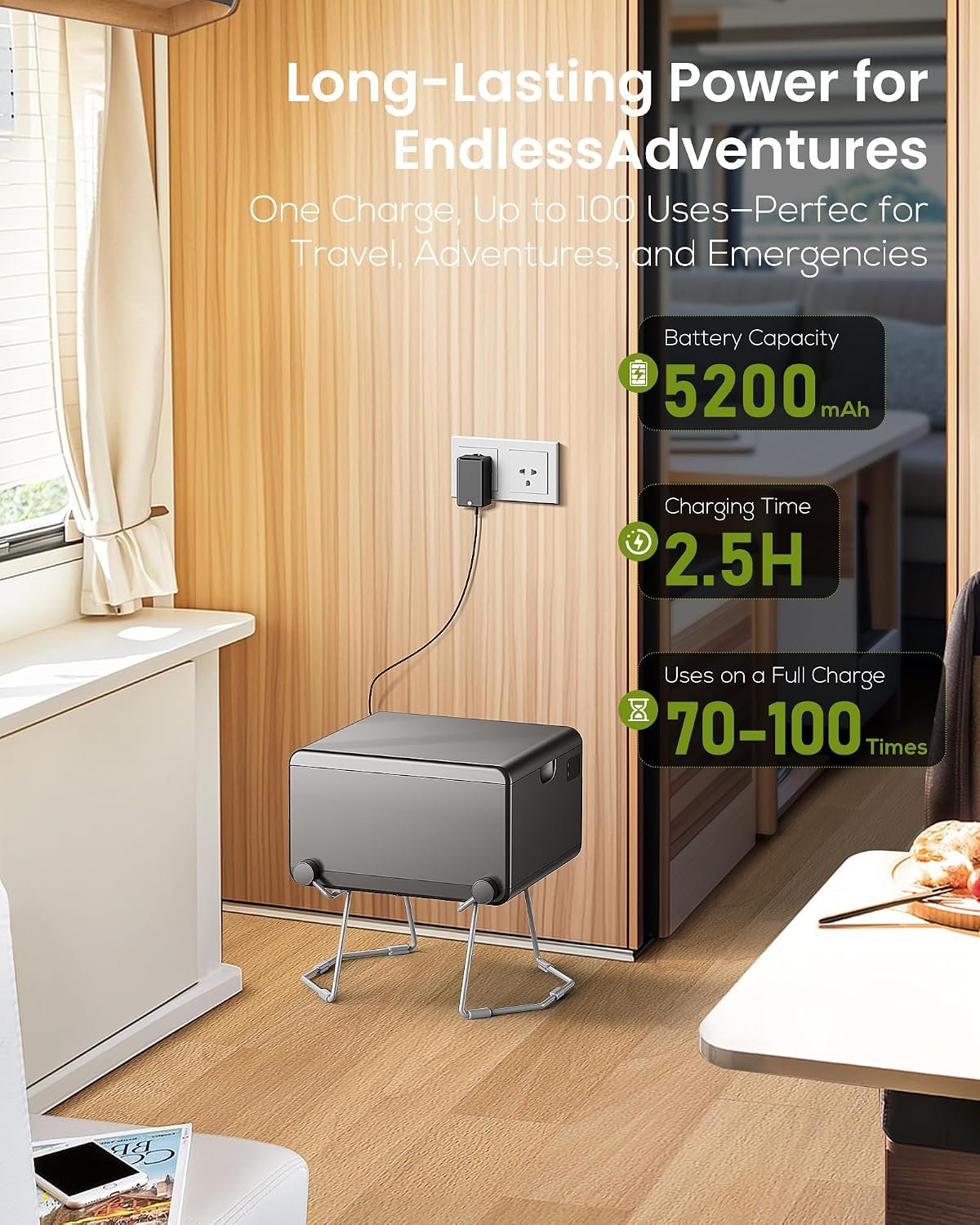
Power comes from a built-in 5200mAh rechargeable battery. The manufacturer claims 70–100 uses per full charge, while the supplied cable is rated at 14V/2A. Actual use counts may vary with temperature, battery age, cycle conditions, and whether the battery reaches a full charge.
| Included item | Listed quantity or detail |
|---|---|
| Electric toilet | 1 |
| Garbage-bag rolls | 2 rolls, uses per roll |
| Coagulant pouches | 60 |
| Charging cable | 14V/2A |
| Instructions | 1 manual |
Before ordering, verify replacement-bag pricing, battery replacement options, charge time, water-resistance rating, operating noise, warranty length, and disposal requirements. These missing details may matter more than the headline capacity if you plan to use the toilet regularly. In short, this dry flush toilet offers a well-defined basic package, but several ownership specifications remain unanswered.
The best feature assessment is consequently practical: automatic sealing and low-water operation are tangible advantages, while thermal performance, durability, and ongoing consumable supply still require confirmation.
This image is property of Amazon.com.

Setup, Charging, and Everyday Use
Set up the unit before your first trip rather than discovering a bag-installation problem at a campsite. Unpack it, inspect the legs and bag compartment, install one supplied roll, add a coagulant pouch according to the manual, charge the battery fully, and run a controlled test cycle. That sequence gives you a chance to spot an incorrectly seated liner before the dry flush toilet is carrying a real travel load.
Plan consumables separately from battery capacity. The package includes two rolls rated at uses each, which equals 60 listed uses, as well as coagulant pouches. Because the claimed battery range is 70–100 uses, the bags may run out before a full charge does. For a longer journey, calculate expected daily use and carry compatible replacement supplies rather than relying on the battery figure alone.
The 14V/2A charging cable creates a power-planning question for van and off-grid users. Confirm that your inverter, power station, or vehicle charging arrangement is suitable for that specification. Do not connect the cable to an unsuitable source simply because a plug physically fits, and allow charging time before departure even though the listing does not state how long a full charge takes.
During transport, secure the unit upright and keep loose equipment away from the Start button. Store unused bags in a dry place, and protect the charging cable from moisture, crushing, and abrasion. For cleaning, wipe the exterior and contact surfaces with an appropriate cleaner, avoid flooding electrical components, and follow the manual for the sealing chamber rather than improvising with excess liquid.
If a cycle fails, stop use first. Then check the manual, inspect the bag path for misalignment, look for an incomplete seal, and recharge the battery fully. An unexpected odor may point to a poor seal, unsuitable storage temperature, or delayed disposal; if the issue continues after those checks, contact the seller instead of repeatedly operating the dry flush toilet.
A sensible routine is to test the lid and Start button before each trip, check the remaining roll, and keep disposal bags or containers available where local rules permit. This dry flush toilet is designed to simplify daily use, but preparation still determines whether that simplicity holds up away from home.
What Customers Are Saying About the LE-310
No customer ratings, review count, or review text was included in the supplied product data. That means there is no responsible basis for saying that customer reviews indicate reliable odor control, that verified buyers report strong battery endurance, or that buyers commonly mention a particular problem with this dry flush toilet.
The absence of a supplied review record is especially significant for a product whose real performance depends on repeated cycles. Short-term setup impressions would not establish sealing durability, and a complaint about odor would need to be considered alongside bag placement, storage temperature, seal completion, and disposal timing. Without the live review record, those patterns cannot be separated.
Several useful questions remain unanswered by the available evidence. There is no supplied feedback about whether the 17-pound carrying weight feels manageable, whether the listed x x 11-inch form fits real vehicle layouts, how loud the sealing cycle is, or how the unit performs while charging. There is also no customer evidence showing whether the two 30-use rolls actually achieve their stated capacity in practice.
Likewise, the supplied information contains no verified pattern involving failed seals, unclear instructions, battery faults, replacement-bag shortages, or high consumable costs. Those are precisely the issues you should investigate in the current review record before ordering. Look for detailed accounts covering multiple weeks or months, not just a first-use statement.
For now, the automatic sealing, thermal disposal, odor prevention, and battery range remain product-description claims rather than customer consensus. This dry flush toilet may still suit your needs, but the lack of published review evidence lowers confidence in long-term ownership conclusions.
If you check the live listing later, prioritize reviews that mention a complete sealing cycle, bag installation, charging time, noise, storage in heat, and disposal after several days. Those details will tell you much more than a short comment saying the unit is convenient. Until that evidence is available, the dry flush toilet should be judged on its documented specifications and its unresolved ownership questions.
This image is property of Amazon.com.

LE-310 Dry Flush Toilet vs. Conventional Portable Toilets
The LE-310’s most direct advantage over a tank-style toilet is the absence of flush water. By comparison, the VEVOR Portable Toilet for Camping is described as having a 5.3-gallon waste tank, a 3.2-gallon flush tank, a push-button flush, a carry bag, and a leak-resistant design. The SereneLife 5.8 Gal Portable Camping Toilet is described with a self-contained waste tank, 120-plus flushes, a carry bag, level indicator, leak-resistant design, and hand sprayer.
Those alternatives may feel more familiar if you already have access to water and a suitable dump station. A tank toilet gives you a conventional flush and a stated liquid capacity, but you must eventually carry, clean, treat, and empty the tank. The LE-310 instead uses a sealed-bag workflow, which may be preferable when hauling water is difficult or when a liquid-filled container is undesirable.
Ownership costs extend beyond the displayed $0.00 reference price. This dry flush toilet requires bags and coagulant pouches as recurring consumables; tank models require water, tank-cleaning supplies, chemicals where appropriate, and access to an approved dumping method. Since none of those current costs were supplied, it would be misleading to call one system cheaper without doing the calculation for your own usage.
Portability also needs an honest comparison. The LE-310 is designed for vehicle use, while a tank toilet’s unloaded dimensions, carry bag, filled weight, and emptying method may matter more than its appearance in a product listing. A smaller empty toilet can become much less convenient once waste or flush water is added.
Use this decision rule: choose the dry flush toilet if low-water operation, contained bags, and button-operated disposal solve a real problem. Choose a conventional tank toilet if you prefer a water flush, want the stated capacity of a larger tank, or regularly use established dump-station routines.
Neither approach is universally better. The LE-310 trades water and tank dumping for consumable bags and questions about replacement supply, while VEVOR and SereneLife trade those bags for liquid handling and maintenance. Your infrastructure should decide the purchase.
Who Should Buy This Portable Dry Flush Toilet?
The strongest candidates are van-conversion owners, RV travelers who boondock, campers with limited water, emergency-preparedness households, and people using a property without a septic system. In those situations, a portable dry flush toilet can address a specific infrastructure problem rather than serving as a novelty. Automatic bag sealing is most valuable when you want to reduce direct waste handling in a confined space.
The listing also names hospitals, nursing homes, construction sites, and mobile testing cabins as possible settings. Those applications may benefit from a temporary, self-contained sanitation option, but you must confirm local sanitation rules, accessibility requirements, cleaning procedures, and approved waste disposal before using it in a public, medical, or commercial environment.
The stated 330-pound capacity and stainless steel legs may suit adults and heavier users. However, a load rating does not establish accessibility compliance, seat comfort, transfer safety, or suitability for every mobility need. If someone has balance or transfer limitations, assess the complete setup and obtain appropriate professional advice rather than relying on the number alone.
For vehicle installation, check the listed footprint against your intended storage compartment, privacy enclosure, floor space, and safe access path before buying. You should also account for space to open the lid, change the bag roll, store coagulant, and remove a sealed bag without obstructing another part of the vehicle.
Less suitable users include backpackers carrying equipment on foot, households seeking a permanently installed bathroom, people unwilling to buy proprietary or compatible bags, and buyers who require a fully silent appliance. The sealing process may produce noise, but the listing does not provide a decibel rating.
Before choosing this dry flush toilet, answer six practical questions: Do you have enough usable floor space? How many daily uses do you expect? Where will you charge it? What do replacement consumables cost? How will sealed waste be disposed of legally? Finally, does automatic sealing solve a meaningful problem for your household?
If the answers point toward low-water travel and contained disposal, the dry flush toilet has a sensible use case. If you already have easy access to water and dumping facilities, its extra consumables may offer less benefit.
This image is property of Amazon.com.
Value, Running Costs, and Buying Considerations
The supplied reference price is $0.00, but that is not enough to judge value. Before treating the LE-310 as a bargain, verify the current checkout price, included accessories, shipping, taxes, and any active coupon. A displayed price can change, and the real purchase total should be compared with the equipment you would otherwise need.
The included supplies give you a clear starting point. Two 30-use bag rolls equal stated uses, and coagulant pouches provide one pouch per listed use if used as directed. That is less than the claimed 70–100 battery uses from a full charge, so bag inventory—not battery capacity—may become the first practical limit.
Long-term value depends heavily on the price and availability of replacement bags and coagulant. Those figures were not supplied, so check the current cost of compatible consumables before ordering and estimate your likely monthly use. Do not assume the dry flush toilet is cheaper than a composting or tank toilet without verified prices for consumables, cleaning, maintenance, water, chemicals, and disposal.
Convenience has a separate value from simple arithmetic. No flush water, automatic sealing, and the claimed odor-control design could justify higher running costs for a van, emergency kit, or off-grid property where water and sanitation infrastructure are limited. For occasional use, the reduction in handling may matter more than the cost per cycle.
Before placing an order, confirm:
- How long is the warranty, and who handles a faulty unit?
- Are replacement bags proprietary or are compatible alternatives available?
- What happens if the built-in battery eventually fails?
- Is the 14V/2A charger suitable for your power system?
- What are the local disposal rules for sealed waste bags?
The purchase makes the most sense when low-water operation and reduced waste handling matter more than the lowest possible ongoing cost. In that situation, this dry flush toilet offers a clearly different ownership experience from a cassette or tank model, even though its missing cost and durability details prevent a confident value guarantee.
Until replacement pricing, warranty terms, and real-world review evidence are available, treat the LE-310 as a potentially useful specialist solution rather than an automatically economical bathroom replacement. Its convenience case is stronger than its proven long-term value case.
Pros and Cons
This image is property of Amazon.com.
Pros
- Waterless operation avoids carrying flush water and managing a separate liquid tank.
- One-button automatic bag sealing can reduce direct contact with waste.
- The 330-pound support rating and stainless steel legs are useful for adult users and temporary installations.
- The rechargeable 5200mAh battery is designed for 70–100 uses per full charge.
- The package includes two bag rolls, coagulant pouches, a charging cable, and an instruction manual.
Cons
- Replacement-bag pricing, battery replacement options, warranty length, charge time, noise level, and water-resistance rating are not provided.
- The advertised 70–100 uses per charge is a claim rather than an independently verified result.
- The two included bag rolls provide listed uses, so consumables may run out before the battery does.
- Automatic sealing still depends on correct bag placement, a complete cycle, suitable storage, and timely disposal.
- At pounds, it is better suited to vehicle-based travel than backpacking or long-distance carrying.
Final Verdict
Key Takeaways
- The LE-310 is designed for waterless, button-operated waste-bag sealing rather than tank flushing or composting.
- Its listed package includes bag uses and coagulant pouches, while the claimed battery range is 70–100 uses.
- No customer ratings, review count, or review text was supplied, so odor control, sealing reliability, and durability remain unverified.
- Check replacement consumable costs, warranty terms, charge time, noise, battery replacement, and disposal rules before ordering.
- It is most compelling for van life, boondocking, emergencies, and temporary low-water facilities—not backpacking or permanent bathroom installation.
Frequently Asked Questions
How long does the LE-310 battery last?
The supplied listing claims 70–100 uses from a full charge, but actual endurance can change with temperature, battery age, and cycle conditions. Treat that figure as a manufacturer claim rather than a guaranteed result.
How many bags and coagulant pouches are included?
The included package contains two 30-use bag rolls, giving listed uses, plus coagulant pouches. Replacement-bag pricing and availability were not supplied, so check those details before ordering.
Does the LE-310 completely eliminate odors?
The listing describes automatic bag sealing and odor prevention, but real-world results depend on correct bag installation, complete sealing, storage conditions, and timely disposal. The supplied information does not include independent odor-test results.
Does this toilet use water?
Unlike a conventional portable toilet, the LE-310 is designed to operate without flush water or a separate liquid waste tank. It may suit low-water travel, but you still need to follow local rules for disposing of sealed waste bags.
What should you confirm before buying?
You should verify the charge time, warranty, replacement-battery policy, compatible bag pricing, water-resistance rating, operating noise, and disposal requirements before purchase. Those details were not included in the supplied listing information.