RoundUp gel weed killer: product overview
Weeds growing beside flowers, vegetables, edging, or paving are difficult to treat with a conventional spray because a wide pattern can reach plants you want to keep. RoundUp gel weed killer takes a more targeted approach: you touch the gel to the unwanted weed leaves rather than broadly coating the surrounding area. That makes it worth considering for confined garden spaces, although it isn’t presented as a solution for clearing large expanses quickly.
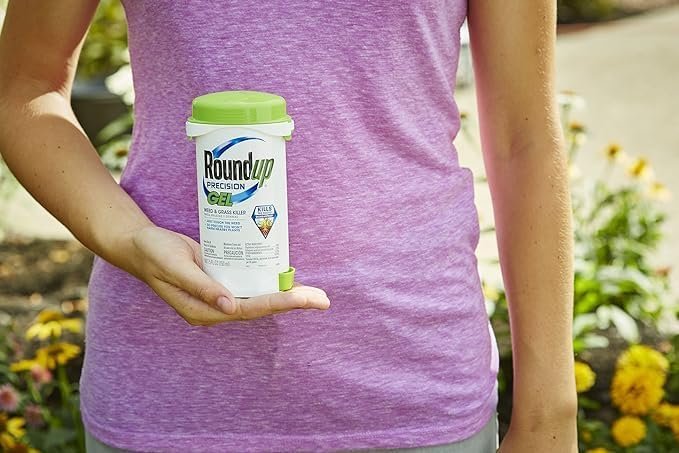
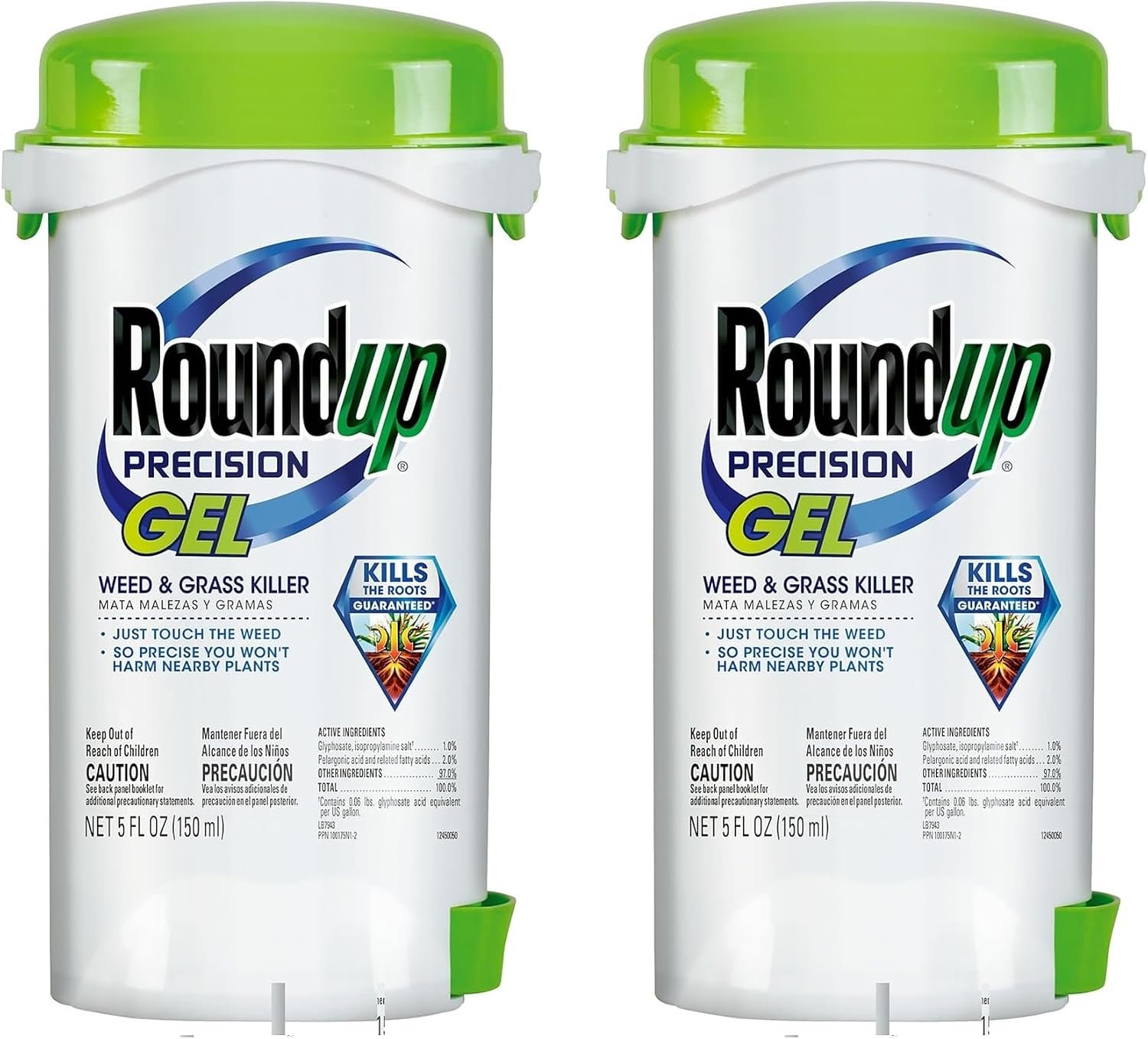
The product is listed as RoundUp Precision Gel Weed & Grass Killer OZ (2), supplied as two 5-ounce containers. The current listed price is $19.99, and the item is shown as in stock. For a shopper comparing targeted weed-control formats in 2026, the central question is whether leaf-by-leaf application is more useful than the speed and reach of a ready-to-use spray.
The description says the gel kills weeds and grass when it touches the weed leaves, is designed for precise application, reaches hard-to-access spots, and becomes rainproof in two hours. It does not provide an active ingredient, coverage estimate, exact kill time, or treatment-area measurement. In other words, RoundUp gel weed killer has a clear format advantage, but the available information doesn’t support broader promises about ingredients, speed, or how much ground one container will cover.
If your priority is limiting application around desirable plants, RoundUp gel weed killer is a sensible product to investigate. You should still check the live label for approved uses and restrictions before treating a garden or lawn.
This image is property of Amazon.com.

How the precision gel application works
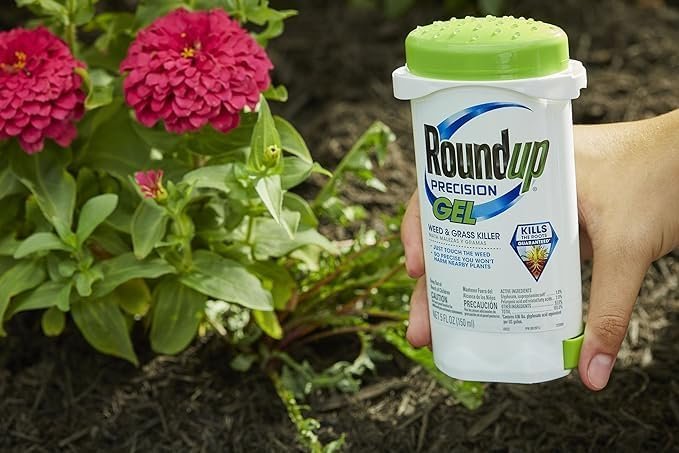
A gel suits spot treatment because you can direct it onto individual weed leaves instead of relying on a spray plume. With RoundUp gel weed killer, the practical routine is to identify the unwanted plant, isolate nearby foliage that you want to preserve, and apply only to the weed leaves according to the package directions. The point is controlled contact, not saturation of the surrounding soil.
That approach may be useful along narrow borders, between paving or garden gaps, beside fences, and around small clusters where a conventional nozzle would be awkward to control. The product description presents nearby-plant protection as a benefit of precise application, but it isn’t a guarantee against every mistake. Gel that drips, transfers from your hand or applicator, or touches desirable foliage can still create unwanted contact.
Wind is less likely to spread a gel than a fine spray, but careful handling remains necessary. Avoid overapplication, keep the container controlled, and don’t rush when weeds are intertwined with plants you want to retain. RoundUp gel weed killer should be judged by its access and placement advantage, not by an assumed treatment speed, because the supplied information gives no specific kill-time claim.
For small, isolated weeds, RoundUp gel weed killer offers a more deliberate workflow than broad-area spraying. Read the label first, then treat one clearly identified weed at a time.
Key features of RoundUp Precision Gel Weed & Grass Killer
The defining feature of RoundUp gel weed killer is its leaf-contact design. A broad-area treatment distributes product over a wider zone, while this format is intended to place gel directly on unwanted leaves. That distinction matters when weeds appear inside tight borders or close to ornamental plants, although careful placement remains the user’s responsibility.
Nearby-plant positioning is another stated benefit. The description says precise application protects nearby plants, which makes the product appealing for edges, narrow beds, cracks, gaps, and other spots where a spray nozzle may be difficult to aim. RoundUp gel weed killer is therefore best understood as a targeted applicator rather than a substitute for a product selected specifically for large-area coverage.
The listing also says the product becomes rainproof in hours. Plan treatment when you can provide that weather window before expected rain or irrigation. This is a planning specification, not a promise about how quickly visible weeds will die.
The pack contains two 5-ounce containers, giving you separate containers for different areas or a spare for another treatment session. The available product data does not specify active ingredients, coverage area, child or pet restrictions, storage requirements, or exact application rate. Those details require label verification before use. For shoppers who value controlled placement, RoundUp gel weed killer has a focused feature set, but the unknowns should temper assumptions about overall performance.
Applying the gel safely and effectively
Use RoundUp gel weed killer as a careful spot-treatment product rather than something to spread casually. Start by inspecting the weed and identifying every nearby plant you want to keep. Separate or shield desirable foliage where practical, then place the gel on the unwanted weed leaves only. Let the treated area remain undisturbed and avoid trying to improve results by coating surrounding soil unless the label specifically instructs you to do so.
- Read the complete label before opening the container.
- Confirm the approved location and any required protective equipment.
- Choose a dry period and plan around the stated two-hour rainproof interval.
- Apply to the target leaves while keeping the container and your hands controlled.
- Follow the label’s re-entry, disposal, storage, and cleanup directions.
The label should also settle questions about edible crops, children, pets, lawns, and ornamental plants. Don’t infer safety rules from the word “precision”; precision describes placement, not permission to ignore restrictions. RoundUp gel weed killer may help you reach a weed in a tight spot, but it doesn’t justify bending across unstable ground or stretching into an unsafe position.
If you’re treating several small patches, photograph or mark each area so you can track what has already been handled. Keep those records separate from assumptions about repeat-treatment timing, since no repeat schedule is supplied here. Apply RoundUp gel weed killer methodically and use the label as the final authority.
This image is property of Amazon.com.

What Customers Are Saying
There is a significant limitation in the supplied listing information: no current Amazon star rating or review count was provided. That means a responsible review cannot claim that RoundUp gel weed killer is rated a particular number of stars, cannot describe a review total, and should not invent quotations or recurring verified-buyer experiences.
The product description supports expectations about precision, individual-leaf application, and access to difficult locations, but those are listing claims rather than a demonstrated customer-review pattern. The same applies to the two-hour rainproof statement. A buyer may report success after rain, but an isolated weather experience would be anecdotal and shouldn’t be treated as proof of performance in every garden.
When the live review record is available, look for repeated comments about whether the gel is easy to dispense, whether it stays on individual leaves, and whether users found it manageable around plants they wanted to keep. Also separate access comments from claims about killing speed: the supplied details provide no treatment timeline. Complaints about packaging, unclear directions, disappointing results, or accidental contact should count more heavily when multiple reviewers describe the same issue.
For your own buyer check, prioritize recent reviews that identify the weed setting, explain whether the label was followed, and describe weather after application. RoundUp gel weed killer is a better fit when those reports repeatedly support controlled spot treatment, while a conventional weed killer may be preferable if reviews emphasize coverage or faster large-area work. Treat isolated extreme praise or criticism cautiously, especially without a supplied rating baseline.
RoundUp gel weed killer compared with alternatives
RoundUp gel weed killer differs from Roundup Ready-To-Use Weed & Grass Killer primarily in application format: the reviewed product is a precision gel, while the alternative is identified by name as a ready-to-use spray. That makes the gel more naturally suited to touching individual leaves in confined spaces, whereas a spray may be more convenient when you need to distribute product across a wider patch. It does not establish that either option is universally more effective.
Ortho GroundClear Weed & Grass Killer is another named alternative to check when you are deciding between narrow spot application and broader treatment. Current price, rating, package size, active ingredients, approved uses, and coverage must be confirmed on each live listing; those details were not supplied here, so inventing a side-by-side specification would mislead you.
Compare the listings in this order:
- Confirm the exact package size and application method.
- Check active ingredients and approved use locations on the label.
- Read recent buyer feedback for dispensing, plant contact, weather, and coverage.
- Compare package price and calculate cost against the area you need to treat.
Also check weather requirements and customer ratings rather than assuming a spray or gel will perform the same way. RoundUp gel weed killer has the strongest positional case when precision and access matter most. Comparative kill speed, ingredient safety, total coverage, and long-term control remain unverified here, so RoundUp gel weed killer should be selected for format fit—not an unsupported performance claim.
Who should buy this two-pack?
RoundUp gel weed killer is aimed at gardeners and homeowners dealing with individual weeds near desirable plants, inside narrow beds, along borders, or in awkward locations. If your main problem is avoiding a wide spray pattern, the format makes logical sense. If you need to treat a large open area, the careful leaf-by-leaf process may be less practical.
The two-container pack can appeal when you want one container for a front garden and another for a rear area, or when keeping a spare is more convenient than buying again for a later session. At the listed $19.99 total, the arithmetic is $9.995 per 5-ounce container, which rounds to about $10.00 each. Across the two containers, the total quantity is ounces, or about $2 per ounce.
That calculation doesn’t establish coverage. Shoppers who require documented treatment area, published timing, or rapid results with a stated schedule should look for a format whose label supplies those details. Suitability also depends on approved use around edible gardens, lawns, pets, children, and ornamental plants, so check the label rather than relying on the product name.
Use this decision test: choose RoundUp gel weed killer if application precision is more valuable to you than broad coverage and you can monitor the treated location during the two-hour rainproof period. Otherwise, RoundUp gel weed killer may not be the most efficient format for your job.
This image is property of Amazon.com.

Price, package value, and buying considerations
The current listed price for RoundUp gel weed killer is $19.99 for two 5-ounce containers, and the item is shown as in stock. Prices and availability can change, so treat that figure as a current listing snapshot rather than a permanent guarantee. The pack contains ounces in total, but no manufacturer coverage figure is supplied, so you can’t fairly estimate how many weeds or square feet it will handle per container.
Value here comes from the targeted gel format as much as from the volume. Comparing ounces alone with a broad spray could make the pack look expensive or inexpensive without answering the practical question: how much is controlled placement worth for your garden? For a few small treatment areas beside valuable plants, the precision may justify the price. For large-scale clearing, a competing spray could be more economical if its label provides suitable coverage.
Before checkout, confirm the seller, package count, container size, delivery timing, and return terms. Similarly named listings can differ in quantity or format. Then compare the current price per ounce and application method with one or two alternatives, while checking the live label for ingredients and approved uses.
RoundUp gel weed killer is easier to justify at $19.99 when your task involves precision work, awkward access, and small weed patches. RoundUp gel weed killer is harder to justify if your priority is treating a broad area and the listing cannot document the coverage you need.
Final buying guidance for garden weed control
The strongest evidence-supported case for RoundUp gel weed killer is straightforward: it uses leaf-by-leaf gel application, is intended to reach difficult spots, presents precision as a way to reduce contact with nearby plants, includes two containers, and is described as rainproof after two hours. Those features address a specific problem—removing isolated weeds where a broad spray would be difficult to control.
Several purchase questions remain open. The supplied information does not identify active ingredients, exact directions, coverage, treatment speed, storage requirements, or restrictions involving children, pets, edible crops, lawns, and ornamental plants. Check the live listing and complete product label for those details before deciding that the format suits your property.
Your final action plan is simple:
- Compare the current $19.99 price with the exact two-pack quantity.
- Read the complete label, including approved locations and safety directions.
- Inspect recent customer feedback for dispensing, precision, weather, and results.
- Decide whether your weeds call for spot treatment or broad spraying.
RoundUp gel weed killer is worth considering when control and access matter more than clearing a large area quickly. It isn’t a universal answer to every weed problem, but RoundUp gel weed killer has a credible use case for confined, carefully managed applications.
Pros and Cons
This image is property of Amazon.com.
Pros
- Precise leaf-contact gel format can suit isolated weeds near desirable plants.
- Designed for narrow borders, gaps, cracks, and other hard-to-reach areas.
- Two 5-ounce containers provide a total of ounces.
- Listed as rainproof in hours.
- Current listed price of $19.99 offers a practical two-container option for targeted work.
Cons
- No active ingredient, coverage area, or exact application rate is provided in the supplied product data.
- No specific weed-killing speed or treatment timeline is stated.
- Current Amazon star rating and review count were not supplied, preventing a reliable review-pattern analysis.
- Leaf-by-leaf application may be inefficient for large open areas.
- Safety restrictions involving children, pets, edible crops, and desirable plants require label verification.
Final Verdict
Key Takeaways
- The product is designed for precise gel application to individual weed leaves in confined or hard-to-reach spaces.
- The pack contains two 5-ounce containers and is currently listed at $19.99, but coverage is not provided.
- The description says it becomes rainproof in hours; this does not specify how quickly weeds will die.
- No current star rating, review count, active ingredient, treatment timeline, or coverage figure was supplied, so verify those details on the live listing and label.
- It is most suitable when targeted placement matters more than broad-area coverage.
Frequently Asked Questions
What is the best thing to kill roots?
The best choice depends on the plant, location, and whether you need to preserve nearby vegetation. This product is described as a leaf-contact weed and grass killer, but the supplied information does not establish that it is specifically a root killer or provide root-control performance data.
What is the most effective root killer for plants?
There is no single best root killer for every plant or setting. Check the product label for active ingredients, approved uses, and restrictions, and avoid assuming that a precision leaf gel provides a particular level of root control when the available listing does not state one.
Does Root Kill really work?
Products marketed for root control can work when their active ingredients and application directions match the target problem, but results vary by plant and use site. The supplied information for this item supports discussion of weed-leaf contact, not a verified claim about a product called Root Kill.
How quickly does root killer work?
Timing depends on the product, plant, conditions, and application method. No root-killing timeline is supplied for this item, so you should not assume a specific result time; follow the label and distinguish its two-hour rainproof interval from the time required for visible weed control.



)