FireHawk Bioherbicide Review: Fast Spot Treatment Without Mixing
Weeds in driveway cracks and along fence lines can make a property look untidy, but mixing concentrate for a small patch often feels like more work than the problem deserves. FireHawk bioherbicide is a $22, in-stock, ready-to-use contact herbicide designed for targeted outdoor applications, so you can pick up the trigger bottle and spray without measuring or preparing a larger tank.
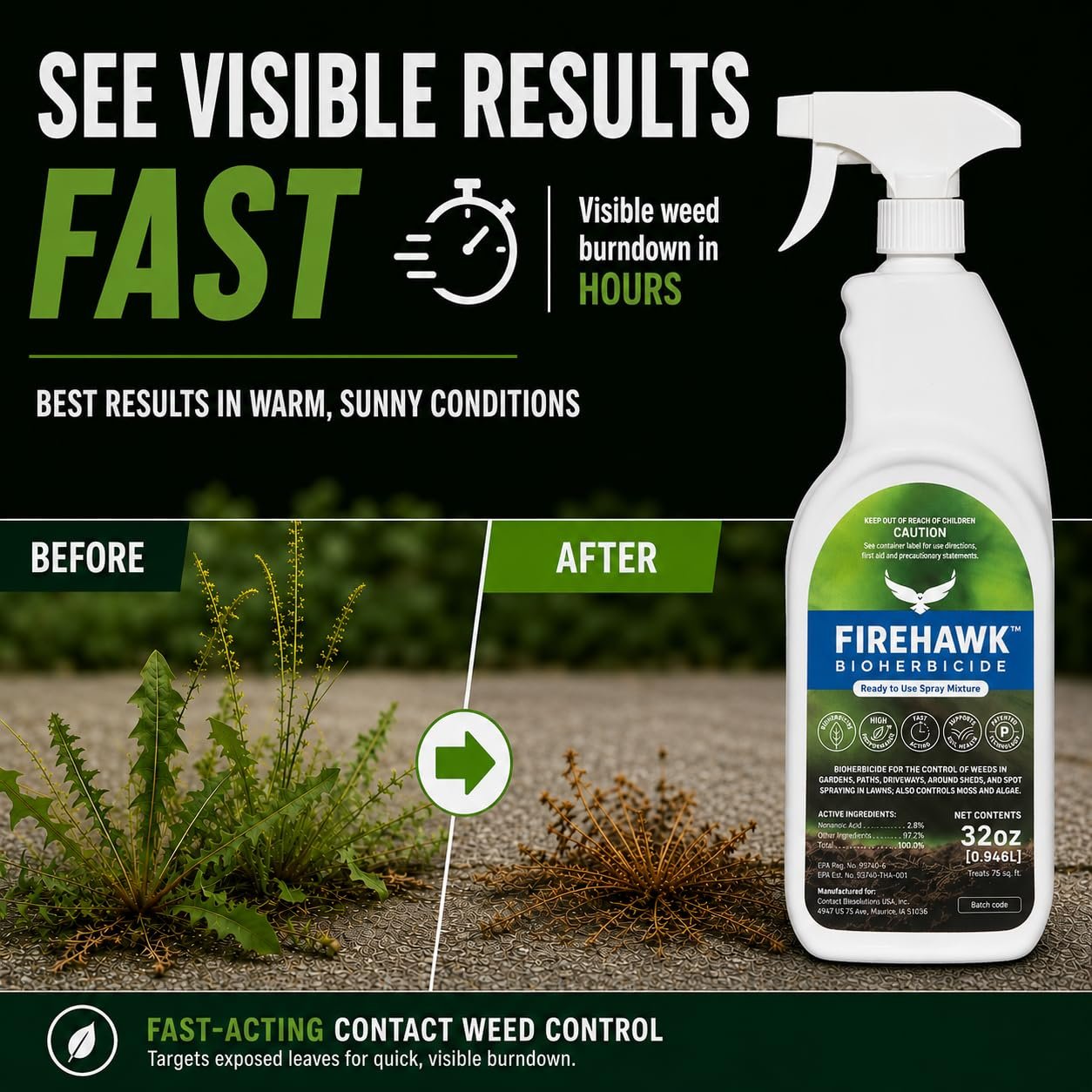
That convenience makes FireHawk bioherbicide worth considering for visible weeds around paths, patios, mulch beds, garden edges, and similar maintenance zones. It isn’t the right choice for selective lawn treatment or dependable removal of mature weeds with deep, established roots.
This review examines its nonanoic acid formula, claimed visible results in as little as one hour, coverage, repeat-treatment expectations, plant-safety limitations, and value in 2026. The short version is straightforward: it suits careful spot treatment, but you should view it as a fast surface-control product rather than a permanent weed solution.
This image is property of Amazon.com.

FireHawk Bioherbicide at a Glance
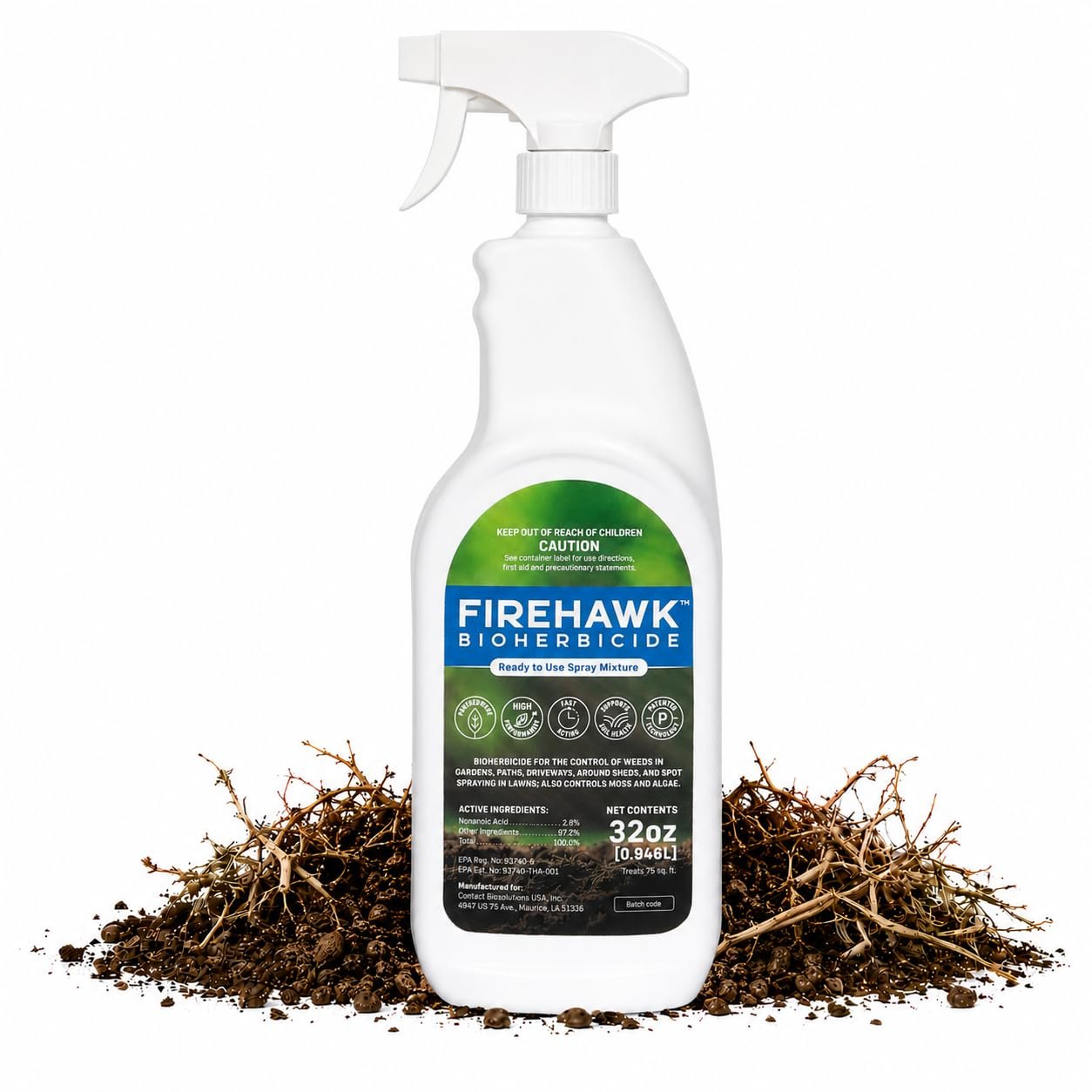
FireHawk bioherbicide is a oz trigger-spray bottle intended for small, targeted jobs. The key specifications are below.
| Specification | Details |
|---|---|
| Format | 32 oz ready-to-use bottle |
| Price | $22 |
| Application | Trigger sprayer; no mixing required |
| Stated coverage | Up to sq. ft. of active weeds |
| Availability | In stock |
The formula contains nonanoic acid and works by contact with exposed plant growth. Unlike a systemic herbicide, it is not described as moving through the plant or soil, so its role is surface weed control and routine maintenance rather than root-system treatment.
FireHawk bioherbicide is intended for driveways, patios, sidewalks, fence lines, mulch beds, garden borders, and landscaped areas. Those applications are quite different from treating a whole lawn or trying to eliminate a mature perennial permanently. Check the current label for the complete use directions before you spray.
How the Nonanoic Acid Contact Formula Works
Contact control is simple in principle: the liquid must thoroughly cover the visible green surfaces you want to damage. FireHawk bioherbicide can therefore produce noticeable damage on exposed leaves and stems, while a systemic product is designed to move within the plant. That distinction explains both the speed and the limitation of this type of treatment.
With FireHawk bioherbicide, young, actively growing weeds in warm, sunny conditions are the most favorable target. Mature plants, shaded growth, incomplete leaf coverage, or rain shortly after application can all reduce the visible effect. A plant may look badly burned above ground and still regrow if its established roots remain viable.
Use this sequence:
- Shake the bottle before spraying.
- Identify only the unwanted green growth.
- Coat the foliage fully without unnecessary runoff.
- Let the treated area dry.
- Monitor the plant before deciding whether another application is needed.
This approach gives the product the exposure it needs while limiting wasted spray and accidental contact with desirable plants.
Key Features and Real-World Use
The ready-to-use trigger bottle is the main practical advantage. For a few weeds beside a path, carrying a backpack sprayer, measuring concentrate, and cleaning equipment would be excessive. FireHawk bioherbicide removes those setup steps, making occasional maintenance more approachable for homeowners, renters, and anyone without a dedicated spraying kit.
The trade-off is scale. One oz bottle is stated to treat up to sq. ft. of active weeds, and dense foliage may require more product than sparse weeds. If you expect repeated treatments or a larger area, the manufacturer describes a gallon refill with additional coverage, which may be more practical than relying on several small bottles.
FireHawk bioherbicide is described as controlling a broad range of weeds and grasses, including crabgrass, chickweed, pigweed, lambsquarters, dandelion, moss, algae, and other weeds listed on the label. Treat that list as a starting point, not a substitute for reading the complete label. Shake the contents before every use because they can separate, and make that a normal part of your preparation routine.
Visible Results: How Fast Does FireHawk Work?
The claim of visible weed control in as little as one hour is best understood as a favorable-condition result, not a promise that every weed will collapse on that schedule. FireHawk bioherbicide is most likely to show quick surface damage when the weather is warm and sunny, the plant is actively growing, and the foliage receives thorough coverage.
After treatment, look for discoloration, wilting, or damage on the exposed leaves and stems. FireHawk bioherbicide may produce rapid burndown without delivering permanent control, especially when the target is mature, persistent, or supported by established roots. A fast brown appearance can therefore be useful for improving the look of a hardscape while still requiring later monitoring.
Weather, weed age, plant type, and coverage quality are more useful predictors than the one-hour statement by itself. Inspect the area after the initial treatment period, then follow the label if repeat applications are permitted or needed. Don’t spray again simply because the top growth looks unchanged immediately; give the treatment reasonable time and account for conditions.

This image is property of Amazon.com.

Non-Selective Use: Plants and Areas to Protect
The central safety limitation is that FireHawk bioherbicide can affect any green plant it contacts. That includes lawn grass, flowers, vegetables, ornamental plants, and desirable grasses, not just the weed you intended to target. FireHawk bioherbicide is therefore better suited to precise hardscape and maintenance zones than to careless broadcast use around planted areas.
For better control, spray on a calm day, keep the nozzle close to the target, and use a shield when a valued plant is nearby. Avoid windy or highly exposed locations where droplets could drift. Driveways, cracks, sidewalks, gravel edges, and isolated fence-line weeds are generally easier to treat precisely than lawns or densely planted beds.
Keep children and pets away while spraying and until the treated area has completely dried. People and pets may re-enter after drying only when the product has been used as directed. Read the current label before application, including any restrictions for the specific surface or setting, and don’t assume that a bioherbicide is harmless to desirable foliage.
What Customers Are Saying About FireHawk Bioherbicide
The supplied product information does not include a verified star rating, review count, or a set of customer comments, so it would be misleading to invent a consensus about performance. FireHawk bioherbicide should be judged from the documented formula and intended use rather than from unsupported claims about what buyers supposedly experienced.
When you inspect the live listing, separate convenience feedback from performance feedback. Comments about the trigger sprayer, bottle handling, odor, and no-mix setup address usability; comments about young weeds, visible speed, repeat applications, or returning mature growth address effectiveness. A buyer can reasonably like the bottle even if a persistent weed later regrows.
Pay particular attention to reports of accidental damage to nearby plants because the non-selective formula makes precision a major ownership issue. If reviews conflict, compare the details: warm or cool weather, young or mature weeds, complete or partial coverage, rainfall after spraying, and how long the reviewer waited before judging the result. Those factors explain more than a brief statement that a product either “worked” or “failed.”
Who Should Buy FireHawk Bioherbicide?
FireHawk bioherbicide is aimed at homeowners who need occasional spot treatment on driveways, sidewalks, patios, fence lines, gravel, mulch edges, and other high-visibility maintenance areas. The oz format is especially suitable for smaller jobs or for testing a contact herbicide before committing to a larger refill.
The best match is someone who values a ready-to-use trigger bottle, accepts that repeat treatment may be necessary, and can isolate unwanted weeds from desirable plants. FireHawk bioherbicide is a poor match if you need lawn-safe selective control, permanent root elimination, broad-acre treatment, or a spray that can be used casually around flowers and vegetables.
Before choosing, apply this decision test:
- Estimate the target area and compare it with the bottle’s stated capacity.
- Check whether the weeds are young and actively growing or mature and established.
- Identify nearby desirable plants and decide whether you can shield them from spray.
If those answers point to a small, exposed, isolated patch, the format makes sense. If they point to a lawn or a persistent root problem, look for a product whose label specifically addresses that situation.
FireHawk Bioherbicide vs. Other Weed Killers
Compared with Roundup Weed & Grass Killer, FireHawk bioherbicide is positioned around nonanoic acid contact action and ready-to-use spot treatment. You should verify the competing formula, whether it behaves systemically, its timing, and its label restrictions rather than choosing from brand reputation alone. Formulations and bottle sizes can vary between listings.
Ortho GroundClear is another Amazon-available alternative, but the relevant differences are its stated intended use, any residual or systemic claims, application areas, and available formats. FireHawk bioherbicide makes more sense when your priority is quick surface burndown in an isolated spot; a competing product may suit you better when the label supports longer-lasting or different types of control.
Use this comparison framework before buying:
- Price per area you realistically need to treat.
- Ready-to-use convenience versus mixing or equipment.
- Expected speed of visible damage.
- Likelihood of repeat treatment.
- Risk to non-target plants.
- Suitability for lawns, planted beds, or hard surfaces.
Read each competing label for the exact plant and surface situation. No brand name can replace those directions.
This image is property of Amazon.com.

Is the $22 Price Good Value?
At $22, FireHawk bioherbicide costs more to use over a large area than a concentrated product may, but the comparison isn’t only about liquid volume. The stated maximum is up to sq. ft. of active weeds, while actual coverage depends on weed density and how heavily you need to coat the foliage.
The strongest value comes from convenience and targeted maintenance. FireHawk bioherbicide can make sense for a small job, an occasional user, a renter, or anyone who doesn’t want to store concentrate or mix chemicals. If you expect to treat more than sq. ft. or repeat applications, compare the total cost of multiple bottles with the manufacturer’s gallon refill and its stated additional sq. ft. coverage.
To calculate your own value, divide $22 by the area you realistically expect to treat, then compare that figure with a competing ready-to-use spray. Add the setup time and equipment cost of alternatives, not just their shelf price. The listing is currently in stock, which supports the convenience argument at the time of this review, though availability and pricing can change.
How to Get Better Results From FireHawk
Start by choosing a warm, sunny, calm period. Shake FireHawk bioherbicide, clear away obstructions, and identify the exact unwanted plants before you pull the trigger. Good visibility matters because a non-selective contact spray has little margin for an imprecise application.
Apply enough product to cover the leaves and exposed green growth, but don’t direct spray toward lawns, flowers, vegetables, or ornamental plants. Avoid treating wet, dormant, stressed, or poorly visible weeds when possible, since the formula is intended for actively growing foliage that the spray can contact directly.
After application, allow the area to dry before people or pets re-enter, and follow the label for any additional precautions. Inspect the treated patch after the initial burndown period; if mature or persistent weeds return, repeat only as the label directs. Store the bottle securely, keep the trigger locked or otherwise inaccessible when not in use, and follow the packaging instructions for storage.
FireHawk bioherbicide rewards deliberate spraying more than heavy-handed application. Taking a few seconds to shield a nearby plant can prevent the most avoidable ownership mistake.
FireHawk Bioherbicide: Final Buying Perspective
FireHawk bioherbicide is best viewed as a fast, convenient contact spray for targeted maintenance, not a universal or permanent weed solution. At $22, its main attractions are the no-mix format, trigger sprayer, stated visible results in as little as one hour under favorable conditions, and up to sq. ft. of coverage.
The limitations are just as clear. FireHawk bioherbicide is non-selective, depends on thorough coverage of exposed foliage, performs better in suitable weather, and may need repeat applications when weeds are mature or persistent. The available product information also doesn’t provide a verified customer rating or review count, so you should avoid treating unconfirmed buyer impressions as established evidence.
Before purchasing, check the treatment area, read the current label, compare your expected coverage with the oz bottle, and decide whether nearby plants can be protected. Choose a different product if lawn-safe selectivity, broad-area use, or long-term systemic root control is your priority. For isolated weeds where speed and a simple trigger bottle matter most, this is a sensible product to consider.
Pros and Cons
This image is property of Amazon.com.
Pros
- Ready-to-use oz trigger bottle requires no mixing or measuring.
- Nonanoic acid contact formula is designed for rapid visible burndown on exposed, actively growing weeds.
- Suitable for targeted applications on driveways, patios, sidewalks, fence lines, mulch beds, and garden edges.
- Stated coverage of up to sq. ft. fits many small maintenance jobs.
- Product is listed as in stock at the time of review.
Cons
- Non-selective formula can damage lawns, flowers, vegetables, ornamental plants, and desirable grasses it contacts.
- Contact action may leave mature or persistent weeds able to regrow from established roots.
- Best performance depends on warm, sunny conditions and complete leaf coverage.
- The oz bottle may offer poor economics for large areas or repeated treatments.
- The supplied product data does not include a verified star rating, review count, or specific customer-review evidence.
Final Verdict
Key Takeaways
- A $22 ready-to-use trigger bottle makes FireHawk suitable for small, precise outdoor weed treatments without mixing.
- Its nonanoic acid contact action can damage exposed foliage quickly, but it does not promise systemic movement or permanent root control.
- The bottle is stated to cover up to sq. ft. of active weeds, so larger or repeatedly treated areas may need a refill format.
- Because the formula is non-selective, you must protect lawns, flowers, vegetables, and desirable grasses from spray and drift.
- Choose it for isolated maintenance weeds, not lawn-safe selective treatment or broad-area root elimination.
Frequently Asked Questions
What is the best thing to kill roots?
There isn’t one best root killer for every plant or setting. FireHawk uses nonanoic acid for contact damage and isn’t described as moving systemically through plants or soil, so it may burn visible growth without reliably eliminating established roots. For root control, compare products whose current labels specifically address the target plant and root system.
What is the most effective root killer for plants?
Effectiveness depends on the plant, its maturity, the application site, and whether the product is labelled for systemic root control. FireHawk is intended for exposed surface growth and routine maintenance, not guaranteed deep-root removal. Follow the current label and choose a product approved for the specific weed and location.
Does Root Kill really work?
Root-killer products can work when they are correctly matched to the target plant and used exactly as directed, but results vary with root depth, plant type, and treatment conditions. A contact spray such as FireHawk can produce visible top-growth damage while regrowth remains possible from established roots.
How quickly does root killer work?
Visible top-growth damage can appear quickly with a contact herbicide, and FireHawk claims results in as little as one hour under warm, sunny conditions. That timing does not prove that roots have been eliminated. Deep or persistent weeds may require monitoring and label-directed repeat treatment.