Rid-X Platinum Liquid Septic Tank Treatment overview
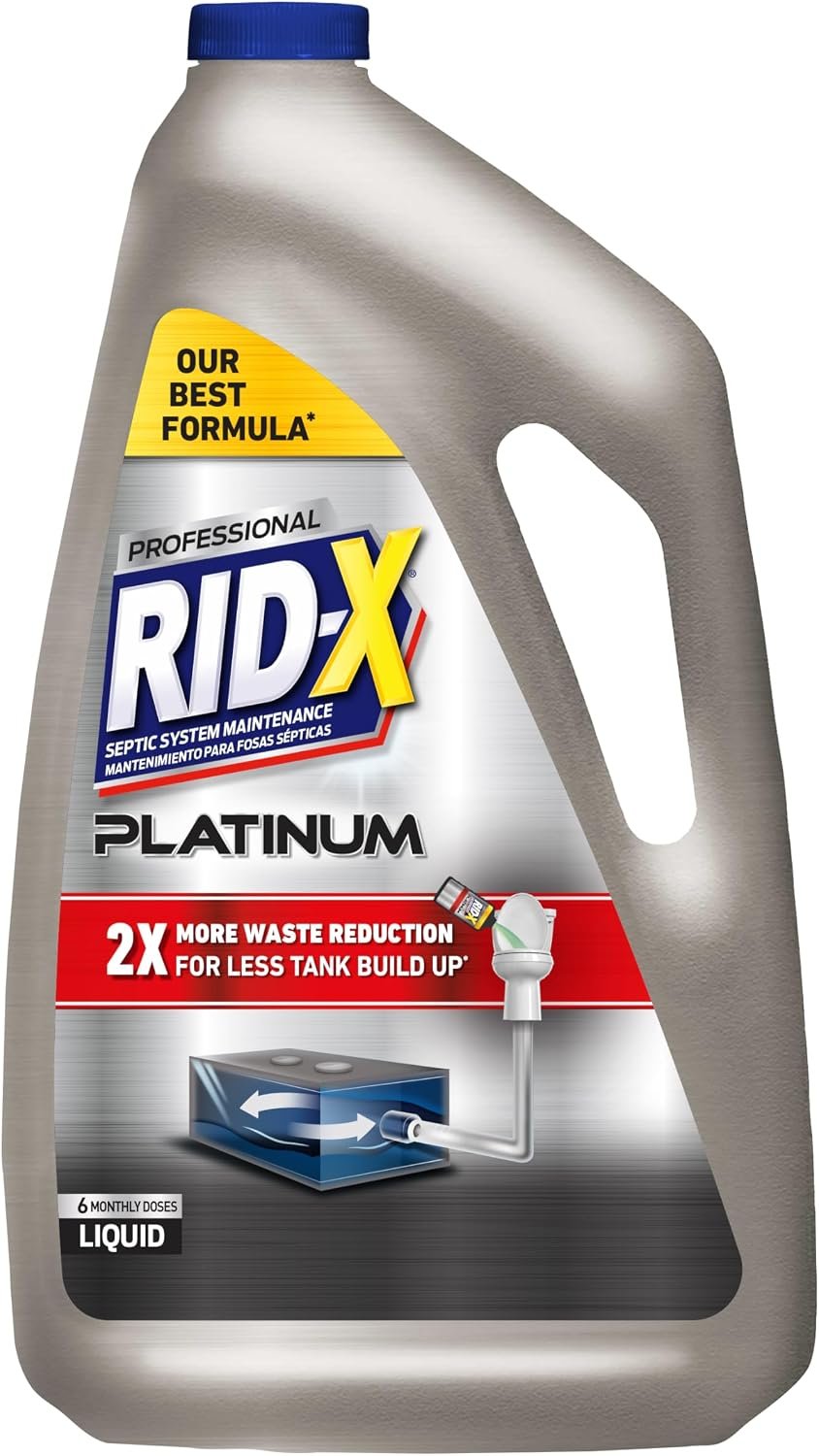
Can a $24.99 maintenance product reduce septic waste buildup without measuring powder or cleaning up a messy application? The Rid-X septic tank treatment is a six-month liquid supply priced at $24.99 and listed as In Stock, which works out to approximately $4.17 per monthly treatment. That makes it a reasonably accessible routine-maintenance option for buyers, provided you view it as support for a healthy system rather than a repair product.
The formula is intended for monthly use in septic tanks up to 1,500 gallons. You pour the recommended dose into a toilet and flush, so the process is simpler than products that require separate measuring. This review examines the formula claims, application, system compatibility, customer-feedback evidence, alternatives, safety boundaries, and overall value.
The Rid-X septic tank treatment shouldn’t replace scheduled pumping, inspections, responsible waste disposal, effluent-filter care, or professional repairs. A biological additive may support organic-waste breakdown, but it can’t correct a damaged pipe, failing drain field, blocked filter, or tank that already needs service.
This image is property of Amazon.com.

What is Rid-X septic tank treatment?
Rid-X Platinum is a flushable liquid septic-maintenance product supplied for six monthly applications. Its recommended schedule is straightforward: apply one dose each month according to the package directions, then flush it through a toilet into the household septic system.
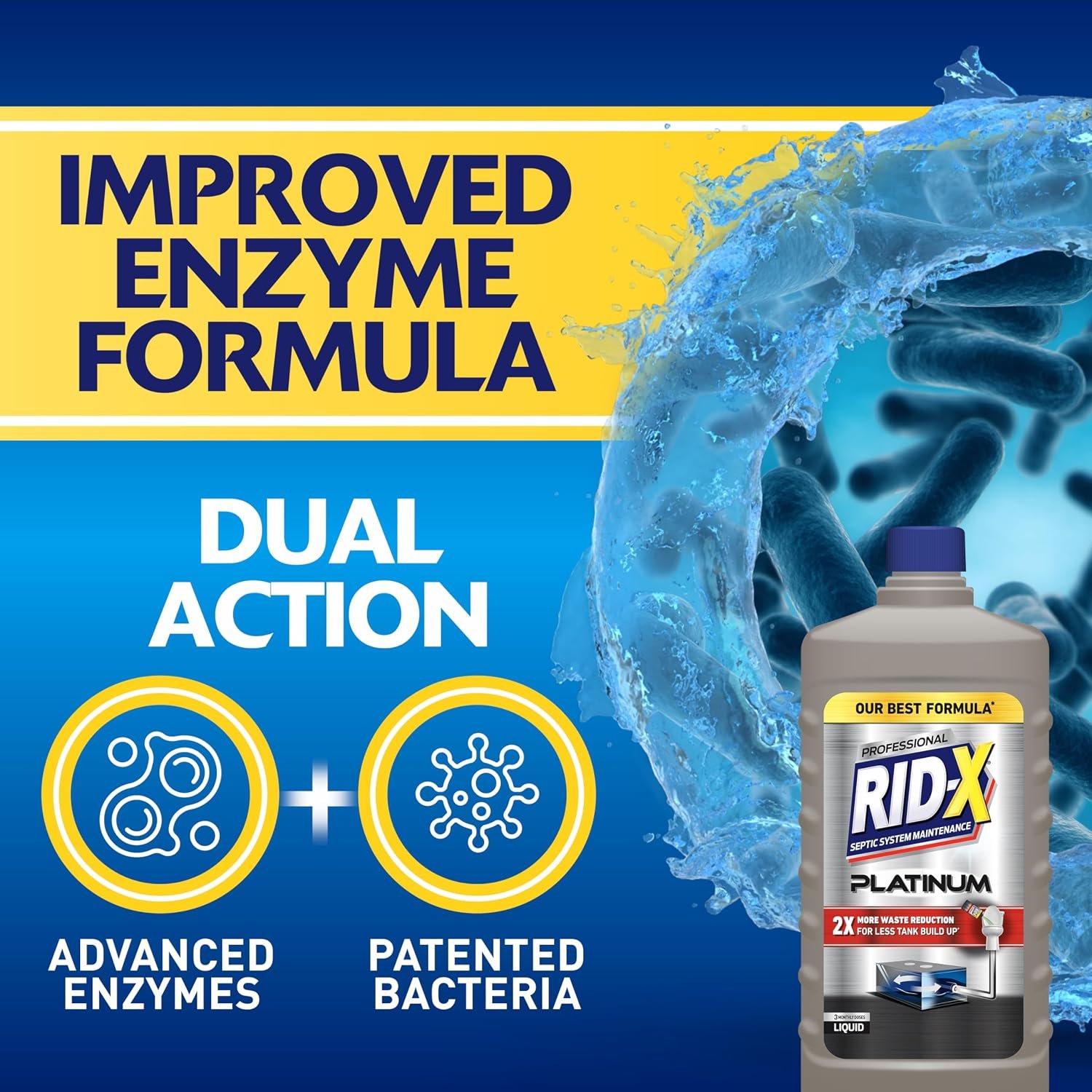
The manufacturer describes a dual-action formula that provides 2x more waste reduction than the brand’s previous formula. That is a manufacturer claim, not an independently verified result for every household. The stated targets include toilet paper, fats, oils, grease, sugar, starch, and proteins, all of which can enter a septic tank through normal household use.
In practical terms, breaking down some organic material may support smoother tank operation and help limit accumulation over time. It doesn’t mean the Rid-X septic tank treatment can clear every clog, prevent every backup, or extend every pumping interval. The product is also described as using 100% natural ingredients, but ingredient positioning alone isn’t proof of performance in your particular tank.
For that reason, treat the Rid-X septic tank treatment as a maintenance aid. Your results will depend on tank condition, household loading, plumbing habits, pumping history, and whether the system is aerobic or anaerobic.
Rid-X septic tank treatment features and specifications
The core specifications are easy to understand, which helps you judge whether the package fits your system before purchasing.
| Specification | Details |
|---|---|
| Price | $24.99 |
| Supply length | Six months |
| Application frequency | Monthly |
| Recommended tank capacity | Up to 1,500 gallons |
| Product form | Liquid |
| Availability | In Stock |
The main convenience feature is the no-measuring application. Pour the recommended dose into the toilet and flush; follow the package directions for the exact amount rather than estimating. The stated dual purpose is to reduce waste and limit tank buildup, although the listing doesn’t provide a household-specific measurement of sludge reduction.
The Rid-X septic tank treatment is described as safe for standard household toilets and plumbing, RVs, boats, and both aerobic and anaerobic septic systems. Those are broad compatibility claims, not a reason to ignore your system manufacturer’s instructions. If your tank exceeds 1,500 gallons, confirm suitability before use instead of assuming the listed maintenance dose is appropriate.
For a normal residential installation within the stated capacity, the Rid-X septic tank treatment offers a simple monthly format. The limitation is that the product description doesn’t provide a detailed dosing chart for larger or unusual systems.
How Rid-X Platinum works in a septic system
Wastewater enters a septic tank, where heavier solids settle toward the bottom and lighter materials form a floating scum layer. Bacteria already present in the tank begin breaking down organic matter, while partially treated liquid moves through the outlet system toward the drain field. This separation process is why a properly maintained tank still needs periodic pumping.
A biological treatment product is intended to support the breakdown of organic material before it contributes to sludge or scum accumulation. The listed targets—paper, grease, oils, sugars, starches, and proteins—represent common household waste streams, although the product should not be treated as a guaranteed solution for any one problem.
The Rid-X septic tank treatment cannot repair damaged pipes, restore a failing drain field, open a blocked effluent filter, or replace pumping when solids have accumulated. If several fixtures drain slowly or wastewater surfaces outdoors, service is more appropriate than another dose.
- Check that your tank falls within the product’s capacity guidance.
- Use the recommended monthly dose from the package.
- Pour it into the toilet and flush.
- Record the application date in a household maintenance log.
That routine keeps the Rid-X septic tank treatment in its proper role: a recurring biological-maintenance step, not emergency plumbing treatment.
Using Rid-X Platinum for monthly septic maintenance
First, confirm that your property uses a septic system rather than a municipal sewer connection. Then read the package instructions, apply the recommended monthly dose, flush the toilet, and write down the date so you don’t accidentally double-dose or forget the next application.
The liquid format is convenient for people who dislike powders, scoops, or separate measuring cups. You can complete the application through a toilet in a few seconds, and the six-month supply reduces the need to reorder every month. That convenience is the strongest everyday reason to consider it.
The Rid-X septic tank treatment works best alongside sensible septic habits. Keep excessive grease and cooking oil out of drains, avoid unnecessary harsh chemical discharge, and never flush wipes, paper towels, feminine products, or other non-flushable items. Spread laundry loads where possible so the system isn’t hit with unusually large volumes of water at once.
Don’t pour in extra product to accelerate results. The Rid-X septic tank treatment should remain one part of a maintenance plan that includes professional inspections and pumping based on household size, tank size, system condition, and local guidance.
Call a qualified professional for persistent odors, sewage surfacing, slow drains, or repeated backups. Those symptoms require diagnosis rather than more routine additive.
This image is property of Amazon.com.

Rid-X Platinum safety and system compatibility
The product description states compatibility with household septic plumbing, RVs, boats, aerobic systems, and anaerobic systems. That broad range may make the Rid-X septic tank treatment appealing if you manage a nonstandard installation, but compatibility language still needs context. System manufacturers, local regulations, and septic professionals may recommend different maintenance practices.
The listing also positions the formula as made with 100% natural ingredients. Natural ingredients may sound reassuring, but that description doesn’t automatically establish suitability for every tank condition or guarantee measurable septic performance. Read the label before use, follow its directions, store the container as instructed, and keep it away from children and pets.
The Rid-X septic tank treatment isn’t the right response to sewage odors inside the home, wastewater pooling outdoors, an alarm condition, unusually slow drains, or suspected structural failure. Those signs can point to a blocked filter, overloaded tank, drain-field issue, or plumbing defect.
If you own an RV or boat, check the equipment manufacturer’s guidance before adding any treatment. Likewise, owners of aerobic systems should confirm that an additive fits their service provider’s recommendations, since aerobic units can have different operating requirements from conventional anaerobic tanks.
What customers are saying about Rid-X Platinum
The supplied product data identifies the price and availability but does not include a current displayed star rating, review count, or review text. Because those figures weren’t provided and a live listing cannot be verified here, it would be misleading to report a rating or invent repeated buyer themes. That limitation matters: claims about ease of use, odor changes, drain performance, packaging, and long-term tank effects should come from the current review panel rather than assumption.
When you inspect the listing, look for recurring comments about whether the liquid is genuinely easier than powder, whether the monthly routine is easy to remember, and whether the six-month supply arrives intact. Separate those subjective observations from measurable evidence. A buyer saying the Rid-X septic tank treatment is simple to use demonstrates convenience, not proof of reduced sludge or longer pumping intervals.
Pay attention to negative patterns as well. Some purchasers may report no obvious short-term difference, uncertainty about long-term effects, packaging concerns, or confusion about the recommended dose. An isolated anecdote shouldn’t outweigh consistent feedback, but several similar comments deserve attention.
Interpret reviews alongside tank size, system age, occupancy, water use, pumping history, and existing faults. Those factors can strongly affect results, so no review should be read as proof that the Rid-X septic tank treatment prevents backups or saves a specific amount of money.
Rid-X septic tank treatment compared with alternatives
GreenPig Live Septic Tank Treatment and Cabin Obsession Septic Tank Treatment are two competing product names you may encounter on the same marketplace. The supplied information does not include their current prices, formats, supply lengths, tank-capacity recommendations, ratings, or review counts, so a precise comparison table would risk presenting outdated or invented figures.
| Comparison point | Rid-X Platinum | GreenPig Live | Cabin Obsession |
|---|---|---|---|
| Format | Liquid | Verify current listing | Verify current listing |
| Supply length | Six months | Verify current listing | Verify current listing |
| Application schedule | Monthly | Verify current listing | Verify current listing |
| Cost per treatment | Approximately $4.17 | Calculate from current price | Calculate from current price |
| Tank capacity | Up to 1,500 gallons | Verify current listing | Verify current listing |
| Ratings and reviews | Not supplied | Verify current listing | Verify current listing |
The Rid-X septic tank treatment may suit you if you want a recognizable brand, monthly flushing, no measuring, and stated compatibility across several system types. An alternative deserves consideration if it offers a lower verified cost per dose, a different bacterial or enzyme formulation, a longer supply, or stronger current customer feedback.
Don’t choose solely by the largest package or strongest marketing statement. Divide the purchase price by the number of recommended applications, then check whether the schedule and tank-capacity guidance match your household.
Who should buy Rid-X Platinum Liquid Treatment?
The best fit is a homeowner with a septic tank up to 1,500 gallons who wants a simple monthly routine and prefers a liquid that goes through a toilet. It may also appeal if you dislike powders, scoops, and messy applications.
RV, boat, aerobic-system, and anaerobic-system owners are potential users because the product description states compatibility with those settings. However, you should confirm system-specific guidance before use, especially where a manufacturer or service professional has prescribed a particular maintenance routine.
The Rid-X septic tank treatment is a poor fit for a property connected to municipal sewer, a tank larger than the stated capacity, or a system showing active backups. It also isn’t suitable as a substitute for pumping, inspection, effluent-filter cleaning, or repair.
- Confirm that the property uses septic service.
- Check the tank capacity against the product guidance.
- Identify whether odors, slow drains, alarms, or backups are already present.
- Compare the monthly cost with alternatives.
- Read the label directions and confirm system compatibility.
- Decide whether routine treatment fits your broader maintenance plan.
That sequence helps you judge the Rid-X septic tank treatment on suitability rather than brand familiarity alone.
This image is property of Amazon.com.

Is Rid-X Platinum worth $24.99?
At the listed $24.99 price, six monthly applications cost approximately $4.17 each. That is a modest recurring expense, but value depends on whether the convenience of liquid, no-measuring application matters to you and whether your system is suitable for routine treatment.
The product combines monthly dosing with coverage guidance for tanks up to 1,500 gallons and stated compatibility with household plumbing, RVs, boats, aerobic systems, and anaerobic systems. Those are concrete reasons to consider it, particularly if you want a recognizable product that takes little time to apply.
The Rid-X septic tank treatment may offer preventive value as part of sensible care, but guaranteed savings aren’t established by the supplied listing. The description suggests reduced buildup and fewer costly service calls; it doesn’t provide a specific dollar saving or promise that repairs and pumping will be avoided.
Before purchase, verify the current $24.99 price, package quantity, exact dose, displayed customer rating, review count, and tank-capacity recommendation. The Rid-X septic tank treatment is most compelling for convenience-focused septic owners who understand that a treatment complements professional maintenance rather than replacing it.
How to get the best results from a septic treatment routine
A monthly additive can’t compensate for overloaded plumbing or neglected maintenance. Flush only human waste and toilet paper, keep grease and oils out of drains, avoid unnecessary harsh chemicals, and spread laundry loads when possible to reduce sudden water surges.
Keep a simple record containing application dates, pumping dates, unusual odors, slow drains, and outdoor wet spots. When you speak with a septic professional, those details can help distinguish a normal maintenance question from a developing system problem.
The Rid-X septic tank treatment is not a substitute for removing accumulated solids, cleaning a neglected effluent filter, repairing damaged plumbing, correcting insufficient drain-field capacity, or scheduling missed pumping. If wastewater backs up, sewage appears above ground, or multiple fixtures drain slowly, contact a qualified septic professional promptly.
For an otherwise suitable system, the Rid-X septic tank treatment can be a convenient monthly biological-maintenance step. Use the package directions, avoid extra dosing, and judge its role by how well it fits your maintenance plan—not as a cure-all for septic failures.
Effluent filters and septic-system maintenance basics
An effluent filter is a screen or filtering device installed near the septic tank outlet. It helps keep suspended solids from leaving the tank and entering the drain field, where they could contribute to clogging. Whether one is required depends on the tank design, local rules, and installation requirements.
There isn’t one universally best effluent filter for every property. The correct choice depends on outlet configuration, flow requirements, access, mesh or slot design, replacement availability, and compatibility with the existing tank. A septic professional should identify the appropriate model rather than selecting solely by price or marketing.
Cleaning frequency also varies. Some systems need inspection and cleaning during routine servicing, while others may require attention more often if the household produces heavy solids or the filter shows signs of restriction. Follow the installation guidance and local maintenance schedule.
An effluent filter and a liquid treatment serve different purposes. The filter physically screens outgoing solids; a biological additive is intended to support organic breakdown inside the tank. Neither one replaces pumping, inspection, or professional diagnosis when symptoms appear.
Pros and Cons
This image is property of Amazon.com.
Pros
- Six-month supply at a listed $24.99 price, or approximately $4.17 per monthly application.
- Liquid format is designed for a simple pour-and-flush application without separate measuring.
- Stated compatibility includes household plumbing, RVs, boats, aerobic systems, and anaerobic systems.
- Targets several common organic waste materials, including toilet paper, fats, oils, grease, sugar, starch, and proteins.
Cons
- The supplied product information does not include a current star rating or review count, so buyer sentiment cannot be independently summarized here.
- The stated 2x waste-reduction performance is a manufacturer claim and is not presented as an independently verified household result.
- It is recommended only for tanks up to 1,500 gallons, limiting suitability for larger systems unless confirmed.
- It cannot replace pumping, inspections, effluent-filter care, or repairs for active septic problems.
Final Verdict
Key Takeaways
- The $24.99 package provides six monthly liquid applications, or approximately $4.17 per treatment.
- Its no-measuring toilet-flush format is the main convenience advantage.
- The product is intended for septic tanks up to 1,500 gallons and carries stated compatibility claims for several system types.
- The 2x waste-reduction, natural-ingredient, and repair-avoidance statements are product claims rather than guarantees for every household.
- Use it only as a maintenance aid alongside responsible waste disposal, inspections, pumping, and professional repairs when symptoms occur.
Frequently Asked Questions
Is an effluent filter necessary for a septic system?
Not every septic system has the same legal or installation requirements, but an effluent filter can help keep suspended solids from reaching the drain field. Check your tank design, local regulations, and service professional’s recommendation before adding or replacing one.
What is the best effluent filter for a septic tank?
The best filter is the model that matches your tank outlet, flow needs, access arrangement, and local requirements. A qualified septic professional can identify the correct size and design instead of relying on a general-purpose choice.
What is an effluent filter on a septic tank?
An effluent filter is a screen or filtering device fitted near the tank outlet. It helps prevent suspended solids from leaving the tank and entering the drain field, but it still needs inspection and cleaning according to the system’s maintenance guidance.
How often do you need to clean an effluent filter?
Cleaning intervals vary with tank design, household usage, solids loading, and local guidance. Have the filter checked during routine septic servicing and clean it sooner if you notice slow drains, alarms, or other signs of restricted flow.