Product Overview: What You Get for $10.49
A stump can remain an eyesore long after a tree has been cut down, but not every yard needs a grinder or excavator. This kit takes a slower, hardware-based approach: the 15 Pcs Copper Nails for Killing Trees Stumps & Roots package supplies nails, a drill bit, and a storage box for $10.49. The product is worth considering if you have a small, accessible stump and can wait for gradual weakening rather than expecting same-day clearance.
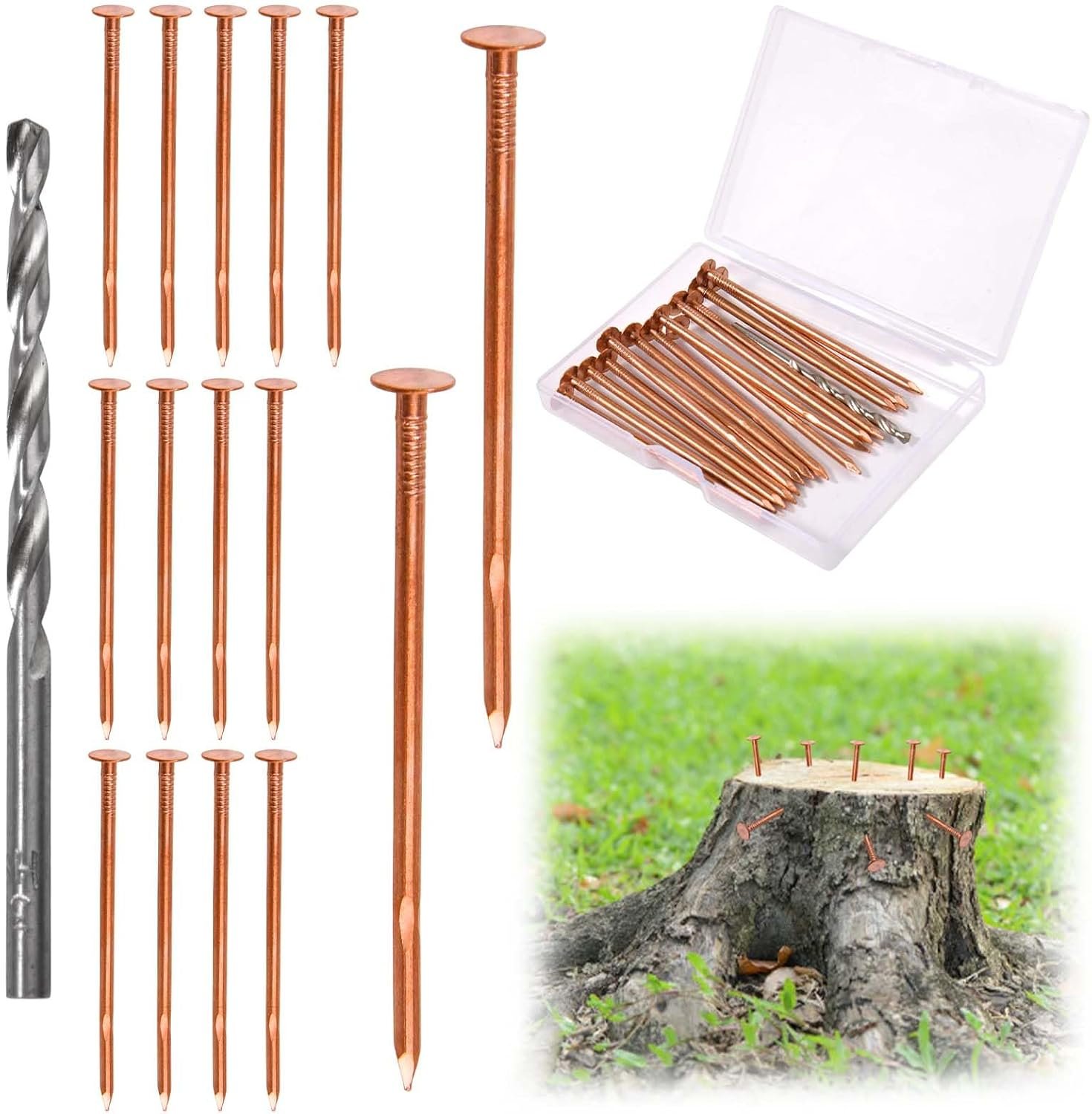
For shoppers comparing copper nails for tree stumps, the package includes pure-copper stump-treatment nails, one cobalt-containing high-speed-steel drill bit, and a compact storage box. It is a physical treatment method, not a chemical granule, foaming root killer, saw, grinder, or extraction system. You are buying the hardware needed to create guide holes and insert the spikes, but the listing does not promise instant removal.
The product description positions these copper nails for tree stumps for small-to-medium trees, unwanted roots, and regrowth in gardens and yards. Its intended action is gradual disruption of remaining growth, so the woody mass may still need to be removed separately once it has weakened. That distinction matters: a nail can affect living tissue, but it does not lift a stump out of the soil.
The listed price is $10.49, with only units shown as available when the product information was supplied. Price and stock can change during 2026, so check the live listing before ordering. As a starter kit, these copper nails for tree stumps offer a low-equipment experiment, provided your expectations match the slow and uncertain nature of the method.
This image is property of Amazon.com.

Copper Nails for Tree Stumps: How the Method Is Supposed to Work
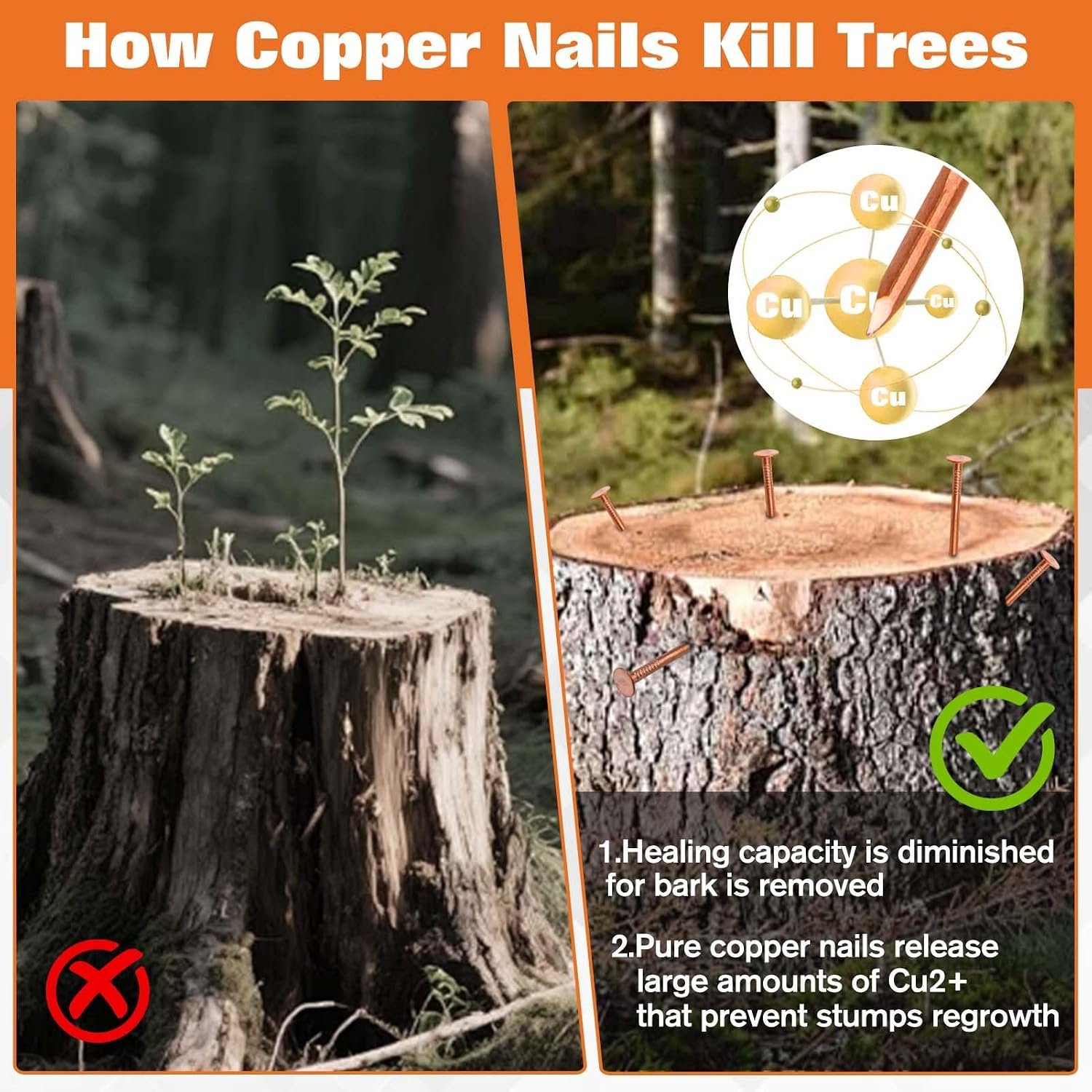
The product description claims that pure copper spikes release excess copper ions after installation, with the intended effect of disrupting tree growth. That is a product claim rather than a guaranteed outcome. In practical terms, the nails are meant to contact wood and remaining living tissue so the stump or roots gradually lose vigor.
When you assess copper nails for tree stumps, separate “weakening growth” from “removing a stump.” This kit contains no grinder, saw, excavator, winch, or extraction tool. Even if the treatment reduces shoots, the woody stump and underground roots can remain in place for a considerable period, particularly when the stump is thick or still connected to vigorous roots.
Results from copper nails for tree stumps can vary with species, stump age, moisture, diameter, root spread, and whether the tree is actively growing. A fresh stump with live regrowth may behave differently from an old, dry stump. Drilling angle and contact with living wood also affect how much of the nail enters useful material.
The listing describes the method as safe for surrounding plants, but that should be read carefully rather than treated as a blanket guarantee. Placement, the number of nails, soil movement, and runoff all matter. Keep the hardware confined to the intended stump or root material, and check local guidance before treating unwanted growth near valuable plants, waterways, or neighboring vegetation.
The attraction is clear: you need a drill, hammer, and basic protective equipment rather than heavy machinery. The trade-off is patience. If you need a clear planting bed or walkway quickly, copper nails for tree stumps are unlikely to match mechanical removal for speed or certainty.
Key Features and Materials Examined
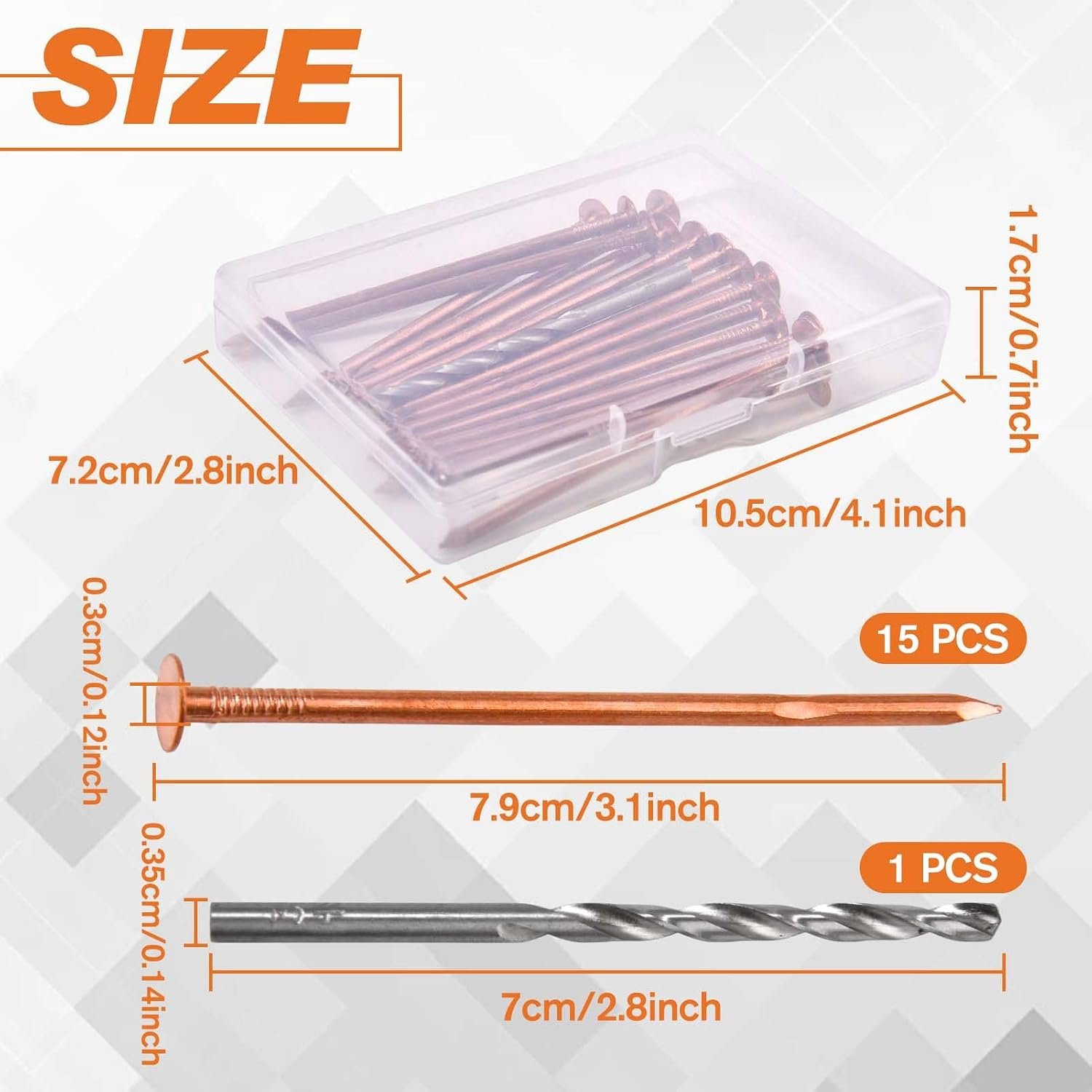
The nails are listed at 3.1 inches long, a size that should provide useful grip in accessible sections of a small-to-medium stump. Length alone does not determine effectiveness, however. A thick stump, irregular surface, or shallow drilling angle can leave less of the nail embedded than you expect. The listing does not state the nail diameter, so you cannot calculate exact hole clearance from the supplied information.
The product identifies the spikes as pure copper and highlights rust resistance for damp-soil use. Copper is softer than hardened steel, which explains why the instructions call for a guide hole before hammering. For copper nails for tree stumps, that softer construction may be practical for removal later, but it also means aggressive direct hammering can bend or deform the hardware.
The included bit is described as cobalt-containing high-speed steel. The listing says this material resists high temperature, abrasion, and deformation, but it does not provide the bit diameter, flute length, shank specification, or a performance rating. You should therefore treat the material description as useful context, not proof that the bit will suit every drill or stump.
The storage box has a simple but worthwhile role. Fifteen small nails and one loose bit are easy to misplace between garden projects, so keeping them together makes occasional use more convenient. The kit does not specify packaging dimensions or warranty coverage, and it does not identify a recommended hammer type or state the copper purity percentage beyond the “pure copper” description.
Overall, the materials make copper nails for tree stumps a straightforward starter package, but several missing measurements limit precise planning. If the supplied bit does not match the hole size you need, you may have to use another bit, which reduces the all-in-one convenience.
How to Install the Copper Nails Correctly
Installation is simple, but careful preparation matters more than speed. First, expose the stump base enough to remove loose soil, bark, and debris. Then inspect the work area for irrigation pipes, buried utility lines, edging, cables, and other hidden structures before drilling.
- Secure the area: Put on eye protection and gloves, keep children and pets away, and make sure the stump is stable enough to drill.
- Choose drilling points: Mark positions around the base so the nails can be distributed rather than concentrated on one side.
- Drill guide holes: Use the supplied bit if its size is appropriate, keeping the drill controlled and aligned with the chosen points.
- Insert the nails: Drive the copper spikes into the prepared holes with measured hammer blows instead of striking them directly into hard wood.
- Inspect the work: Confirm that the nails are seated securely and that no sharp hardware is exposed where people or animals may contact it.
Guide holes are central to using copper nails for tree stumps properly. They reduce resistance, lower the chance of bending the softer copper, and make insertion easier than hammering directly into dense timber. Do not force a nail if the hole is too small or the stump surface is splitting.
For copper nails for tree stumps, the product guidance says stumps wider than feet may require or more nails. The 15-piece quantity gives you some flexibility: you can distribute most around a larger base while retaining a few for a replacement or an accessible root. Check the installation periodically rather than adding nails repeatedly without assessing regrowth, nail condition, and soil movement.
Correct spacing improves access and makes the treatment more even, but it cannot guarantee a result. With copper nails for tree stumps, work slowly and stop immediately if drilling encounters unexpected resistance that could indicate a pipe, cable, stone, or structural material.
This image is property of Amazon.com.

Sizing, Coverage, and Practical Limitations
The listing’s clearest sizing reference is its advice that a stump wider than feet may need or more nails. That does not mean nails will reliably cover every broad stump. Dense wood, multiple stems, limited drilling access, extensive roots, and active regrowth can all make the supplied quantity feel inadequate.
Nail count is only one part of coverage. You also need enough usable surface for evenly spaced holes, sufficient wood thickness for the nails to grip, and access to the areas where growth is still active. The listed 3.1-inch length may not reach deeply through thick wood, especially where the surface is uneven or your drilling angle must remain shallow.
Before purchase, measure the stump at its widest point and consider its surroundings. If it is close to a building, fence, paving, retaining wall, drain, or underground service, mechanical or professional assessment is a safer choice than experimenting with limited hardware.
This kit suits gradual treatment, not an urgent landscaping deadline. If you need to lay paving, remove a trip hazard, or regrade the area immediately, digging, cutting, grinding, or professional extraction will usually address the physical obstruction more directly than copper nails for tree stumps.
What Customers Are Saying
The supplied product information does not include a star rating, review count, or usable buyer quotations, so it would be misleading to claim that customers have confirmed a particular success rate. At publication time, you should open the current listing and record the displayed rating and review total rather than presenting unavailable figures as fact.
For copper nails for tree stumps, the most useful reviews will describe the stump’s width, tree species, number of nails installed, treatment duration, and visible regrowth. A dated review with photographs or measurements is stronger evidence than a one-line statement that the product “worked” or “failed.” Look for observations made after weeks or months, not only on the day of delivery.
When examining copper nails for tree stumps feedback, separate first impressions from confirmed outcomes. Comments about tidy packaging, the storage box, fast delivery, or easy drilling can tell you about convenience, but they do not prove that a stump was eliminated. Pay special attention to reports of bent copper, drill-bit wear, difficult installation, and whether surrounding plants changed after treatment.
Contradictory experiences are possible because stump conditions differ. Give more weight to detailed reviews that identify dimensions and elapsed time, and less weight to claims of instant removal or immediate failure that provide no context. Also check whether reviewers used guide holes and whether they removed the nails later.
The current listing should be checked for review updates before publication and before purchase. For copper nails for tree stumps, the absence of supplied review statistics means your decision should rest on the verified specifications, the installation demands, and the newest detailed customer evidence you can find.
Safety, Environmental Considerations, and Responsible Use
Pure copper is described as rust-resistant, which is useful in damp soil, but rust resistance does not make the material environmentally neutral. Copper ions can affect plants and soil organisms at sufficient concentrations. Place the nails only in the intended stump or root material, avoid unnecessary soil disturbance, and prevent loose hardware or contaminated runoff from moving toward valuable vegetation or water.
Wear gloves and eye protection while drilling and hammering. Secure the work area so the drill cannot snag loose material, and keep children and pets away from the nails, drill bit, and stump until the job is complete. With copper nails for tree stumps, a small kit still contains sharp metal and drilling creates chips, dust, and fragments that should not be left on the surface.
Do not burn, grind, chip, or mechanically disturb a treated stump until you have located and removed every nail. Metal left in the wood can damage cutting equipment or become a dangerous projectile. If you later remove the copper nails for tree stumps, use pliers or another controlled method, inspect each one for bending or damage, and place usable pieces in the storage box rather than leaving them in the soil.
Check municipal rules or local arborist guidance when the growth is invasive, near a waterway, protected, or potentially connected to roots on neighboring property. A professional assessment is warranted if roots threaten a foundation, drain, retaining wall, or utility infrastructure.
Responsible use means treating the product’s safety language as limited to sensible placement and handling, not as permission to use it anywhere. The copper nails for tree stumps should never replace expert advice where structural or environmental consequences could be serious.
This image is property of Amazon.com.

Who Should Buy This Kit—and Who Should Choose Another Method
The best match is a homeowner or gardener dealing with a small-to-medium unwanted stump in an accessible yard. You should be comfortable operating a drill, using a hammer, wearing protective equipment, and waiting for gradual changes. The nails, included drill bit, and storage box create a convenient occasional-use package rather than a professional landscaping system.
Choose another method if you need same-day removal, have a very broad or multi-stemmed stump, or are working beside a structure or buried service. Copper nails for tree stumps require less equipment and create less noise than grinding, but they also provide less predictable timing and do not remove the physical stump from the ground.
Manual digging can be inexpensive when the stump is small, but it demands substantial labor and may expose a wide root network. Cutting and levering can speed up removal but require suitable tools and room to work. Stump grinding is faster for clearing the visible obstruction and produces cleanup material, while professional extraction adds cost but can be more appropriate for large or structurally sensitive locations.
Chemical products serve different purposes. Bonide Stump-Out Granules are marketed as a chemical stump-treatment product, while Roebic K-77 Root Killer is intended for root control in sewer and drain systems; neither should be presented as a direct substitute without checking the label and application. The right choice depends on whether you want gradual growth suppression, stump breakdown, drain protection, or complete physical removal.
Use this decision path: select copper nails for tree stumps for a low-cost, hardware-based experiment on a small accessible stump; choose grinding or professional removal when speed, clearance, or safety matters more than minimal equipment. Do not assume the cheapest initial method is the most economical if it leaves you needing another treatment later.
Value Assessment at the Listed Price
At the listed $10.49, the package offers more than nails alone: you receive spikes, one cobalt-containing HSS drill bit, and a storage box. That complete starter setup can be useful if you do not already have a suitable bit or want a contained kit for occasional garden work.
The dedicated bit adds convenience, but its value cannot be judged fully because the listing does not provide its diameter or detailed dimensions. Compatibility with your drill and the correct hole size therefore remain practical questions. Before ordering copper nails for tree stumps, check whether the seller supplies those measurements or be prepared to use another bit.
Reusable nails could improve long-term value if you can remove them without bending and if they remain in usable condition. That benefit depends on the treatment outcome, the condition of the copper, and whether you have another suitable stump or root project. It should not be counted as guaranteed savings.
Compared with digging or grinding, the purchase price is low, and the kit avoids hiring equipment or paying immediately for labor. However, a low upfront cost does not establish effectiveness. If the stump remains hazardous or blocks a planned project, you may still pay for mechanical removal later.
Check the current price, stock status, quantity, and newest customer feedback immediately before checkout; the supplied listing showed only units available. For copper nails for tree stumps, the value is strongest when your priority is simple equipment and a small initial spend, not a guaranteed timetable. At $10.49, it is a reasonable low-risk trial for the right project, with clear limits for large stumps.
Copper Nails for Tree Stumps: Buying Checklist Before Ordering
Before ordering, make a short project assessment rather than relying on the product title alone. Confirm the stump’s width, location, surface access, and distance from utilities. The listing’s guidance about or more nails for stumps wider than feet is only a starting point, not a coverage guarantee.
- Inspect the listing: Look for the nail diameter and drill-bit diameter. If either measurement is absent, contact the seller or assume you may need another bit to achieve a suitable guide hole.
- Read recent detailed reviews: Search for reports covering installation, bent copper nails, bit wear, regrowth, treatment duration, stump size, and photographs.
- Choose the correct goal: Decide whether gradual growth suppression is acceptable or whether you need grinding, digging, professional help, or a product intended for a different root problem.
- Verify checkout details: Recheck the current $10.49 price, availability, included quantity, and delivery information because listing details can change.
- Plan storage and inspection: Keep the box and spare nails so you can inspect the installation later and replace damaged hardware responsibly.
For a small, accessible stump and a patient DIY user, copper nails for tree stumps are worth considering as an inexpensive experiment. They are not a guaranteed or instant stump-removal solution, and the method is a poor fit where timing, structural safety, or complete physical clearance is the main priority.
Ultimately, copper nails for tree stumps make sense when you accept uncertain timing in exchange for low equipment demands. If the location is complicated or the stump is large, choose a method designed to remove the obstruction rather than merely attempt to weaken remaining growth.
Keep your expectations grounded: copper nails for tree stumps may suit gradual treatment, but the supplied information cannot establish a universal success rate. The most responsible purchase is one made after checking the current listing, assessing the site, and deciding whether waiting is genuinely acceptable.
This image is property of Amazon.com.
Pros and Cons
Pros
- Low listed price of $10.49 for a kit containing nails, drill bit, and storage box
- Pure-copper construction is described as rust-resistant for damp-soil use
- Guide-hole installation can reduce effort and the risk of bending the nails
- Compact storage box is useful for occasional DIY projects
- Nails are described as removable and reusable after treatment
Cons
- No guaranteed timeframe or evidence of instant stump removal
- Nail diameter and drill-bit diameter are not specified
- The 3.1-inch nails and 15-piece quantity may be limiting for broad or dense stumps
- Copper nails can bend if driven without suitable guide holes
- The supplied information includes no customer rating or review count, so effectiveness cannot be independently summarized
Final Verdict
Key Takeaways
- The $10.49 kit includes pure-copper nails, one cobalt-containing HSS drill bit, and a storage box.
- It is intended for gradual disruption of stump or root growth, not instant physical stump removal.
- Guide holes, protective equipment, careful spacing, and checks for buried services are essential during installation.
- The supplied product information does not include a rating, review count, nail diameter, drill-bit diameter, or guaranteed treatment time.
- This kit is best suited to a small, accessible stump where you can wait; large, hazardous, or urgent projects call for grinding or professional removal.
Frequently Asked Questions
What is the best thing to kill roots?
The best option depends on the root’s location and your goal. For roots threatening drains, use a product specifically labelled for sewer or drain root control, such as Roebic K-77 Root Killer; for a stump in an open yard, mechanical removal is generally more direct than waiting for a hardware or chemical treatment.
What is the most effective root killer for plants?
There is no single safest or most effective product for every plant and situation. You should identify the species, follow the product label, protect desirable vegetation, and seek professional advice when roots are near utilities, foundations, waterways, or neighboring property.
Does Root Kill really work?
Root-killer products can work for their labelled purpose, but results depend on the product, root species, application, and time allowed. A sewer-line treatment should not be assumed to remove a garden stump, and copper spikes should be viewed as a gradual growth-disruption method rather than a guaranteed extraction solution.
How quickly does root killer work?
Timing varies from product to product and from one root system to another. The copper-nail kit does not provide a guaranteed treatment period, so you should expect gradual results rather than same-day stump removal and inspect the site periodically.