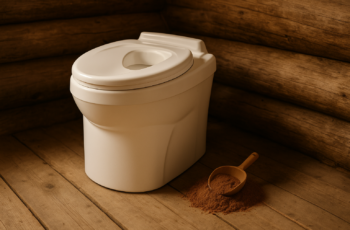
Separett Villa Urine-Separating Compost Toilet: Overview and Quick Take
Can a $989 waterless toilet make daily sanitation easier in a cabin, homestead, school-bus conversion, or other off-grid space? The Separett Villa toilet is designed to operate without water, plumbing connections, chemical additives, or manual mixing, which makes it notably different from a flush toilet and many self-contained composting models. For 2026, it remains most interesting as a residential-style installation rather than a grab-and-go camping product.
The Separett Villa toilet is listed in stock and uses urine diversion with a high-capacity design intended for extended use between emptying cycles. That can reduce water consumption and some recurring consumables, but it does not remove the need to route liquid, access solid waste, clean contact areas, and follow safe disposal practices.
The Separett Villa toilet is strongest for a permanent or semi-permanent off-grid bathroom. If you only need sanitation for occasional camping, its installation work and $989 price are likely harder to justify than a portable toilet. This review weighs whether the lower-water routine and simpler separation process earn that premium over portable toilets and competing self-contained units.

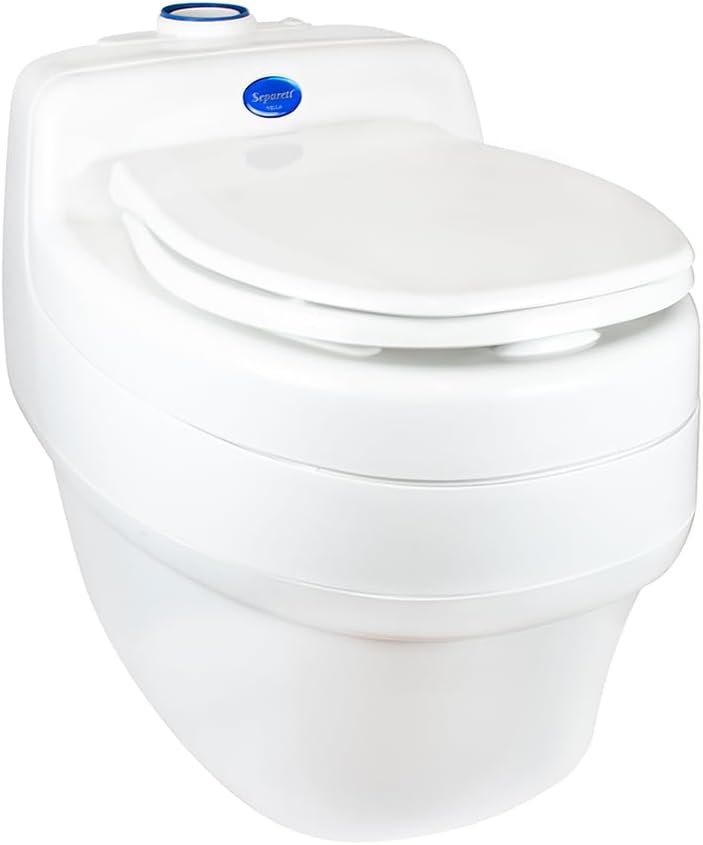
How the Separett Villa Urine-Separating Compost Toilet Works
The Separett Villa toilet separates liquid waste from solid waste at the bowl. Urine is diverted away from the solids, leaving the solid chamber drier and reducing the moisture that can contribute to odor or make later handling more difficult. The supplied description says the system is waterless and requires no additives or mixing.
In normal use, you sit on the unit, liquid follows the urine-diversion route, and solids remain in a separate collection area. Eventually, you empty the collected waste according to the manual and applicable local guidance. The available product information does not confirm chamber volumes or an exact emptying schedule, so your household size, occupancy, and installation arrangement will determine the practical interval.
This is not a conventional flush toilet, because it does not send waste through a water-filled sewer or septic connection. It is also not a chemical cassette toilet, which normally depends on a removable liquid-and-solid cassette and chemical treatment. Compared with a basic bucket toilet, it offers a purpose-built separation system, but still requires thoughtful waste handling.
Before installation, choose the room, plan the urine outlet, and preserve access to the solid-waste area. Confirm adequate ventilation and check whether the intended installation needs a power connection. Test the separation path before regular use rather than discovering a routing problem after the room is finished.
The Separett Villa toilet therefore works best when treated as part of a sanitation system, not as an isolated appliance. The Separett Villa toilet can simplify the user routine, but correct alignment and accessible waste paths remain central to performance.
Key Features of the Separett Villa Compost Toilet
The Separett Villa toilet combines five listed selling points: waterless operation, urine diversion, high capacity, flexible off-grid installation, and low-maintenance use. These features support a residential installation, but each one shifts some responsibility to you during planning and ownership.
Waterless, Additive-Free Operation
The Separett Villa toilet needs no flush water, so a remote property does not need a pressurized water supply simply to operate the toilet. The description also states that no chemical additives or mixing are required, reducing the number of consumables and avoiding a routine that involves manually stirring waste.
That convenience has limits. Waterless does not mean maintenance-free: you still need a liquid route, a solid-waste removal plan, cleaning supplies, and an approach to odor and moisture control. A sensible setup sequence is to choose a stable location, arrange the outlets, test the separation path with a small amount of water, and keep the manufacturer’s care instructions nearby.
Urine Diversion and Odor Management
Separating urine can reduce wet accumulation in the solid area and may make handling cleaner than managing one mixed container. It also makes alignment, splash control, leakage prevention, and floor protection important. No waterless toilet should be treated as guaranteed odor-free; ventilation, cleaning, routing, and correct use all affect results.
Inspect the separator during installation, keep the outlet unobstructed, and clean exposed surfaces regularly. When reading customer feedback, look for repeated comments about odor during ordinary use, cleaning the separator, leaks after installation, and whether the two waste streams were straightforward to manage.

High-Capacity Design for Extended Use
The listed high-capacity construction is aimed at cabins, homesteads, and longer stays rather than only short outdoor trips. Capacity should reduce emptying frequency compared with some small portable formats, but no chamber volume or usage limit is provided, so avoid assuming a precise household capacity.
Plan by counting expected daily users, allowing additional room for guests, identifying a clean route to the disposal area, and confirming that maintenance access remains open. This practical check matters more than a marketing label when several people will use the bathroom.
Installation Flexibility for Off-Grid Spaces
Listed settings include homesteads, converted school buses, cottages, cabins, and other off-grid living spaces. Its flexibility is about where you can build a functioning bathroom, not about carrying the toilet like camping equipment.
Before ordering, measure the room, map liquid and solid-waste paths, identify emptying access, confirm the electrical situation if applicable, and check local sanitation rules. Also evaluate floor space, seat comfort, door clearance, ventilation, and any required power connection.
Low-Maintenance Design: What It Reduces and What It Does Not
No additives, no mixing, and no water supply can reduce recurring work compared with some composting systems. You still need to clean contact areas, inspect the urine route, handle collected waste, replace consumables if the installation uses them, and respond to odor or moisture problems.
Write a maintenance routine before installation: inspect the separator and outlet weekly, clean surfaces regularly, and establish a safe waste-handling method based on the manual and local guidance.
Build, Comfort, and Everyday Usability
The spacious, residential orientation should appeal to daily users, but the supplied data does not confirm dimensions, materials, seat height, or included accessories. Review photographs and specifications for seating comfort, stability, lid operation, cleaning access, privacy, and suitability for children, older adults, or visitors.
Use temporary furniture or a cardboard footprint to test the planned bathroom layout. That simple trial can reveal whether a residential-style unit is preferable to a compact camping toilet before you commit to the installation space.

What Customers Are Saying About the Separett Villa
The supplied listing information does not include a verified star rating, review count, or review quotations, so it would be misleading to present numerical customer sentiment or invent individual buyer experiences. Instead, evaluate the live listing for repeated comments about odor control, urine separation, reduced water use, cabin or school-bus suitability, and the convenience of avoiding additives and manual mixing.
For the Separett Villa toilet, pay equal attention to concerns about installation complexity, liquid drainage, cleaning, missing parts, durability, comfort, and the purchase price. A report of leaks or odor may reflect poor routing, ventilation, separator alignment, or maintenance rather than a defect in the core toilet, so read the complete review and look for corroborating patterns.
When reviewing recent comments about the Separett Villa toilet, sort repeated themes from isolated complaints. Read newer reviews first, then check whether each reviewer used the unit in a comparable residential, mobile, or seasonal setting. A toilet that performs well in a carefully prepared cabin may not suit someone expecting a portable, plug-and-play product.
Customers who successfully plan and install the Separett Villa toilet are most likely to value the low-water routine. Buyers who have not planned liquid routing, emptying access, and cleaning may be disappointed even if the underlying separation concept suits their needs.
Separett Villa vs. Other Amazon Composting Toilets
The Separett Villa toilet differs from the Nature’s Head Self Contained Composting Toilet with Close Quarters Spider Handle Design in its stated operating routine. The Villa emphasizes urine separation, no additives, and no manual mixing, while Nature’s Head is an established self-contained composting format whose use may involve managing the solid chamber according to its design and instructions. Compare the current listings for capacity claims and included installation requirements rather than assuming the two systems are interchangeable.
The Separett Villa toilet is also different from the OGO NOMAD Portable Composting Toilet. OGO NOMAD is positioned for RV, van, boat, and camping use, where compact installation and mobility are priorities. The Villa’s high-capacity, residential-oriented description better matches a cabin, homestead, cottage, schoolie, or longer-term off-grid bathroom.
| Feature | Separett Villa | Nature’s Head | OGO NOMAD |
|---|---|---|---|
| Water use | Waterless | Check current listing | Waterless format |
| Urine diversion | Listed urine separation | Self-contained composting format; verify current listing | Check current listing |
| Portability | Installation-focused | Self-contained installation | Portable RV, van, boat, and camping format |
| Maintenance approach | No additives or mixing listed | Established composting routine; follow its instructions | Portable composting routine; follow its instructions |
| Best setting | Cabins, homesteads, cottages, schoolies | Self-contained off-grid installations | Mobile and compact spaces |
| Listed price | $989 | Not verified here | Not verified here |
Choose the Separett Villa toilet when you have a planned off-grid bathroom and want the additive-free, no-mixing approach. Choose Nature’s Head if its self-contained format and established composting method better match your preferences. Choose OGO NOMAD when mobility and compact installation matter more than residential capacity.
At $989, the Villa’s convenience must offset its higher upfront commitment in your situation. The Separett Villa toilet may be worth the difference for frequent residential use, but not necessarily for an occasional camping setup.
Who Should Buy the Separett Villa?
The Separett Villa toilet is aimed at people building a bathroom without sewer, septic, or water infrastructure. Strong candidates include homestead owners, cabin and cottage users, schoolie builders, tiny-home occupants, and anyone converting a remote space for regular use.
The Separett Villa toilet makes most sense if you value water conservation, fewer consumables, and a predictable separation routine. It can also suit emergency sanitation or a seasonal property, provided you plan storage, waste handling, cleaning, and what happens during periods when the building is unused.
Consider another option if you are an occasional camper, a renter who cannot route waste, or a shopper seeking a lightweight portable toilet. You should also look elsewhere if regular cleaning and emptying are unacceptable; the system reduces certain tasks but cannot remove the responsibilities of sanitation.
Use this decision process:
- Confirm the intended room and installation arrangement.
- Estimate daily users, seasonal occupancy, and guest use.
- Plan both waste paths and access for emptying.
- Review local disposal and sanitation requirements.
- Compare the $989 purchase cost with installation materials and alternative toilet prices.
The Separett Villa toilet is a project purchase, not an impulse camping accessory. The Separett Villa toilet is most suitable when the property will use its waterless design frequently enough to repay the planning effort.
Price, Running Costs, and Overall Value
The Separett Villa toilet is listed in stock at $989. That makes it an upfront investment rather than a low-cost toilet. Its value comes from potentially avoiding flush-water use, reducing plumbing requirements, and eliminating chemical additives and routine mixing, not from having the lowest purchase price.
Budget beyond the unit itself. Your total project may include installation materials, liquid drainage or collection, solid-waste arrangements, ventilation, electrical work if required, cleaning supplies, and equipment for safe disposal. The available data does not provide prices for those items, so treat the $989 listing price as the starting point.
Compared with conventional plumbing, the Villa could be financially sensible where sewer or septic installation is expensive or impractical. Compared with portable or chemical toilets, it may reduce ongoing water and additive purchases. Those are situation-dependent calculations, however, and the savings vary with property distance, occupancy, local labour, and existing infrastructure.
Use this break-even worksheet:
- Record plumbing, septic, or water-system work avoided.
- Estimate yearly water and additive savings.
- Add installation, ventilation, drainage, power, cleaning, and disposal costs.
- Assign a realistic value to time saved by avoiding mixing or frequent portable-toilet servicing.
- Buy only if the total fits the property’s expected use and budget.
For a permanent, high-use off-grid bathroom, $989 can be reasonable. For occasional trips or a temporary installation, the Separett Villa toilet is difficult to justify unless its particular operating method solves a problem cheaper alternatives cannot.
The Separett Villa toilet therefore offers value through reduced infrastructure and consumables rather than through a bargain price. The Separett Villa toilet is easiest to justify when you will use it regularly for years.
Installation and First-Use Checklist
For the Separett Villa toilet, complete the installation in this order:
- Verify the room layout, floor area, door clearance, and access for future emptying.
- Prepare a stable, level base in the chosen location.
- Route the liquid and solid waste paths according to the supplied instructions.
- Arrange ventilation and power where the installation requires them.
- Confirm that collection or disposal access remains practical after surrounding fixtures are installed.
- Check every connection for leaks before normal use.
- Test the separator with a small amount of water and confirm that it follows the intended route.
- Read the manual for exact installation requirements, approved cleaning products, waste handling, and restrictions that the product description does not confirm.
Keep a small maintenance kit nearby: approved cleaning supplies, gloves, absorbent material for spills, and replacement consumables if your installation uses them. The Separett Villa toilet will be easier to manage when these items are available before the first problem occurs.
Record the installation date and observe odor, moisture, leakage, and user comfort during the first two weeks. The Separett Villa toilet should be adjusted early if routing or cleaning problems appear. The Separett Villa toilet rewards a measured commissioning process more than a rushed first use.
Pros and Cons
Pros
- Waterless operation avoids flush-water consumption and a pressurized water connection.
- Urine separation keeps liquid away from solids and avoids additives or manual mixing.
- The high-capacity, residential-oriented design is suited to cabins, homesteads, cottages, and school-bus conversions.
- In-stock availability makes it a practical option for a planned off-grid bathroom project.
Cons
- The $989 purchase price is high for occasional camping or temporary use.
- Installation still requires planning for liquid routing, solid-waste access, ventilation, and possibly power.
- Collected waste must be emptied, cleaned, and handled safely; waterless operation is not maintenance-free.
- No product rating, review count, chamber measurements, or exact emptying interval was supplied for independent verification.
Final Verdict
Key Takeaways
- The $989 unit is a waterless, urine-separating system listed in stock, designed for off-grid residential-style installations.
- Its no-additive, no-mixing routine can reduce water use and consumables, but liquid routing, cleaning, emptying, and safe disposal remain your responsibility.
- The product is better suited to cabins, homesteads, cottages, schoolies, and tiny homes than to occasional camping.
- Compare the Villa with Nature’s Head and OGO NOMAD by installation style, portability, maintenance method, and intended occupancy—not price alone.
- Plan the room, both waste paths, ventilation or power, disposal access, and total project cost before ordering.
Frequently Asked Questions
What are the drawbacks of a composting toilet?
The main drawbacks are the need to plan liquid drainage, solid-waste handling, cleaning, ventilation, and regular emptying. A composting toilet also costs more upfront than a basic bucket or portable cassette toilet, and poor installation can lead to odor, leaks, or difficult maintenance.
What is the best off-grid composting toilet?
The best off-grid composting toilet depends on your installation and usage. The Separett Villa suits permanent or semi-permanent cabins, homesteads, and similar spaces, while Nature’s Head is a better fit if you prefer an established self-contained composting format and OGO NOMAD is more suitable when portability matters most.
What if you have diarrhea in a composting toilet?
Diarrhea can introduce more liquid into the solid-waste chamber and may make odor and moisture control harder. Follow the manufacturer’s waste-handling guidance, monitor the chamber, clean contact surfaces carefully, and ensure the urine route remains unobstructed.
What do you do with toilet paper when using a composting toilet?
Toilet paper handling depends on the toilet’s instructions and your waste-management plan. You may place it in the solid-waste chamber if permitted, or use a separate covered container to reduce moisture and make emptying easier; check local sanitation rules before disposal.