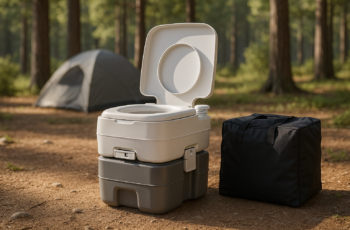
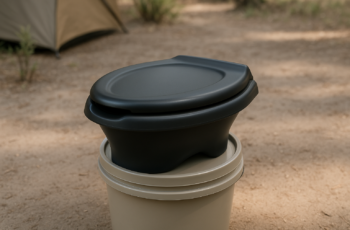
BOXIO Portable Toilet: Quick Overview
Finding a private toilet for a van, roof tent, boat cabin, hunting trip, or car-camping setup is difficult when every inch of storage matters. The BOXIO portable toilet addresses that problem with a compact, waterless urine-separating design intended to replace a chemical toilet in suitable outdoor situations. The listed price is $199.9, and the product is shown as In Stock at the time of this review.
The central appeal is independence. You don’t need flushing water, chemical additives, or routine access to a disposal station, although you still need a responsible way to empty the separate liquid container and bagged solids. That makes the BOXIO portable toilet interesting for short trips and backup use, rather than as a high-capacity RV bathroom.
If you want a reusable toilet that can be stored in a small vehicle or brought out only when needed, the BOXIO portable toilet is worth considering. If your priority is a conventional flush, minimal handling, or enough capacity for a large group, this mini dry-toilet format is probably the wrong fit.
For shoppers, the buying decision comes down to maintenance versus independence: are you willing to handle separated waste in exchange for saving water and space?

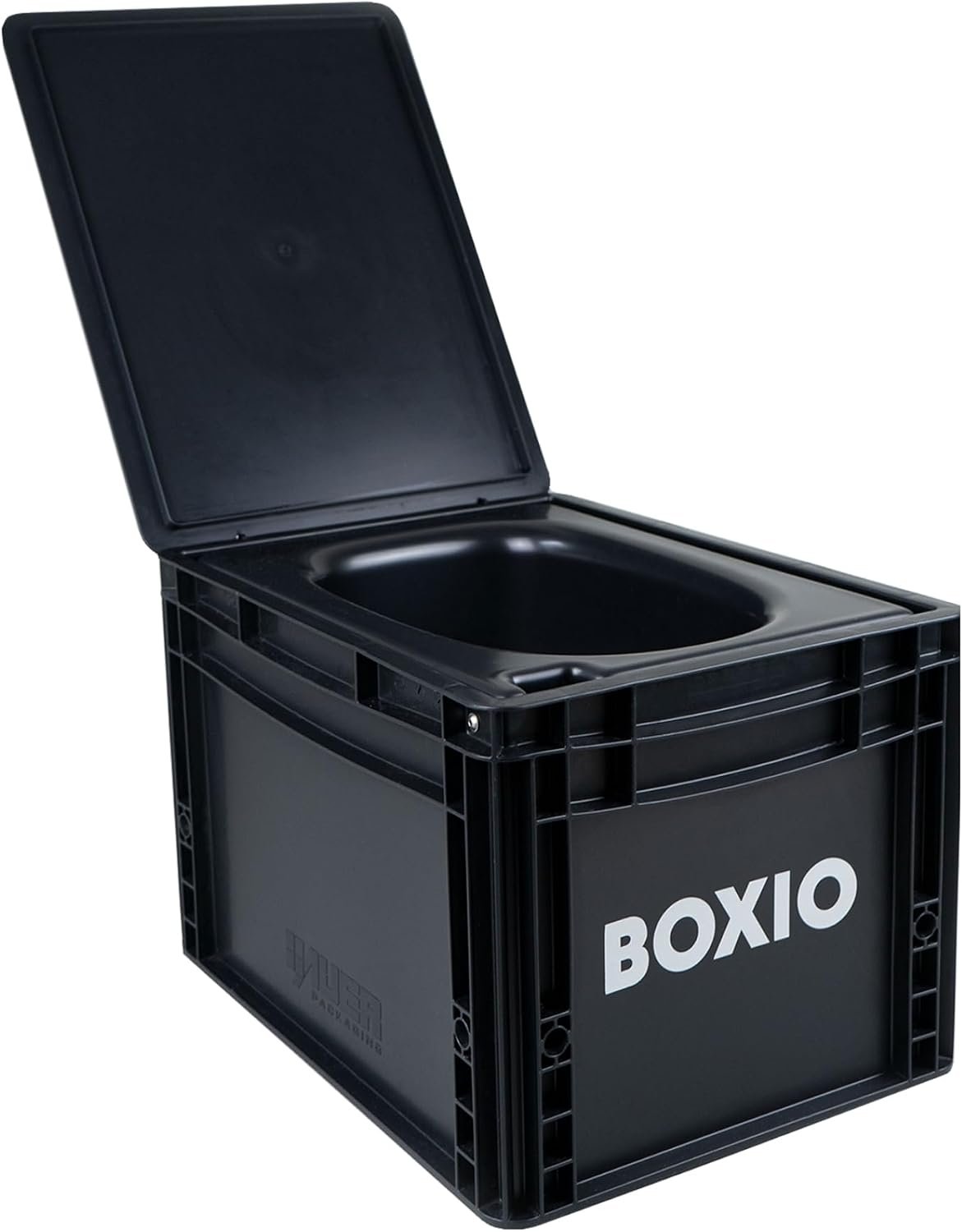
BOXIO Toilet – Portable Toilet, Camping Toilet, composting Toilet for car Camping, Boat or Camping. Mini Camping Toilet: 14,7" x 11,8" x 11,0" Made in Germany.
$199.9
In Stock
BOXIO Toilet Specifications and What Comes in the Setup
The BOXIO Toilet is listed at 14.7 x 11.8 x 11.0 inches. Those measurements put it firmly in the mini-toilet category, designed for compact storage and confined interiors rather than the proportions of a household toilet. Its exterior is black, and the listing presents it as a robust dry toilet made in Germany.
The urine canister is stated to hold 5 liters, with an estimated capacity of approximately 8–10 toilet visits. Treat that as a planning estimate, not a guaranteed count: frequency, user size, liquid volume, and whether more than one person uses it will change when emptying becomes necessary.
Two listed figures need caution. The description says it “weighs only 6.2” and “can hold 330,” but the units appear incomplete or malformed. Because the source doesn’t clearly identify whether those numbers refer to pounds, another unit, or a specific load test, you shouldn’t treat them as verified pounds or a confirmed weight rating.
The description mentions PLUG, hemp litter, and biodegradable waste bags as accessories that can turn the toilet into a fuller kit. Don’t assume all three are included: check the selected listing’s package contents, options, and current product details before paying.
How the BOXIO Portable Toilet Works
The BOXIO portable toilet separates liquid from solids at the point of use. Urine is directed into the separate 5-liter canister, while solid waste is collected in a lined solids area. This differs from a chemical portable toilet, where mixed waste normally sits together in a holding tank and the system relies on chemical treatment and later disposal.
The PLUG, hemp litter, and biodegradable bags each support a different part of the process. A plug helps manage the liquid path, hemp litter can cover solids and absorb some moisture, and a bag makes removal more controlled. The term “composting toilet” needs a qualification here: this small portable unit separates and stores waste; it does not instantly compost material inside the toilet.
Before your first trip, use this sequence:
- Fit the solids waste bag securely.
- Add the recommended hemp litter or another suitable covering material.
- Seat the urine canister correctly and check the separation opening.
- Close the lid and test the seals and fit before loading the toilet into your vehicle.
Place the unit on a stable, level surface with sensible ventilation around its storage area. That matters particularly inside a vehicle or boat, where a tipped or poorly seated component can turn a manageable cleanup into a much bigger one.
Odor Control, Hygiene, and Emptying
The product description says its optimized canister, PLUG, and hemp produce virtually no odors. That is a product claim, not an independent laboratory result. In actual use, odor control will depend on correct assembly, clean separation, enough covering material, and emptying the containers before they become overfilled.
Keeping urine away from solids can reduce wetness and odor compared with a basic bucket-style camping toilet, but it doesn’t remove handling altogether. You still need to manage the liquid container and sealed solids bag, wash your hands, and clean contact surfaces. Waterless operation reduces the need to carry flush water and chemical additives; it doesn’t make hygiene optional.
A practical cleaning routine is straightforward:
- Empty the urine canister before it reaches its limit.
- Seal and remove the solids bag without compressing or overfilling it.
- Wipe the seat, separation area, lid contact points, and exposed surfaces with a suitable mild cleaner.
- Let the components dry before putting everything back together.
Incorrect positioning, a blocked urine path, excess moisture, an overfilled bag, or diarrhea can challenge the system. In those circumstances, use extra absorbent material and a separate emergency plan rather than assuming the toilet will handle every waste type equally well. No independent odor measurements were supplied.

Using the BOXIO Toilet for Car Camping, Vans, Boats, and Tents
The BOXIO portable toilet’s mini format is useful where a full-size toilet would consume valuable living or storage space. You can keep it in a car until needed, place it inside a small camper, or use it in a roof tent, boat cabin, or private tent area. The low-profile shape also makes it easier to bring out only when required, but you still need a discreet, level place to use it.
Each setting creates a different practical concern. Car campers need discreet storage and spill prevention; van users need dependable odor management in an enclosed cabin; boat owners should secure the unit against movement and rough water; tent campers need a dry, private area that protects the components from rain and mud.
Before leaving, work through this placement checklist:
- Measure the intended storage bay and check that the toilet can be removed without rearranging the whole vehicle.
- Leave clearance for removing the liquid container and solids bag.
- Keep litter, bags, gloves, and cleaning supplies together.
- Secure the toilet during driving, launching, or rough water.
A single user may achieve the claimed 8–10 visits, but multiple users will fill the liquid container sooner. Conduct a trial run at home before relying on it for a multi-day trip; you’ll learn where to place supplies and how often your particular routine requires emptying.
What Customers Are Saying About the BOXIO Toilet
The supplied product information does not provide an Amazon star rating, total review count, or verbatim customer comments. That means a responsible review cannot invent a numerical score or claim that buyers praise or criticize a particular feature. The BOXIO portable toilet review should be updated with exact rating and review-count figures if they are visible on the live listing in 2026.
When you inspect current verified-buyer feedback, look for repeated comments about odor control, separating liquid and solids, sturdiness, sitting comfort, bag fit, canister leaks, cleaning effort, and whether the stated capacity matches real trips. A single complaint can reflect an unusual installation; several independent reports of leaks, cracked parts, difficult assembly, or confusing accessory inclusion deserve more weight.
Sort reviews by most recent, then read both high- and low-rated feedback. Give extra attention to reviewers using the toilet in vans, boats, tents, or cars, since their conditions are closer to the intended use than a brief household trial.
Also separate performance complaints from shipping or packaging complaints. A damaged parcel may say little about everyday toilet function, while repeated reports of poor seals or persistent odor are directly relevant to the buying decision. Until listing-specific figures are available, the absence of supplied review metrics is itself a reason to verify the live page before checkout.
BOXIO Toilet Compared With Other Camping Toilets
The BOXIO Toilet takes a compact, waterless, urine-separating approach. Compared with the OGO NOMAD Portable Composting Toilet, it is best assessed by intended setting, portability, separation method, capacity, electrical requirements, and total price rather than by assuming one is universally better. The current OGO NOMAD listing should be checked for exact capacity, dimensions, accessories, and whether any powered ventilation or other electrical requirement applies; those specifications aren’t verified here.
The Kohree Portable RV Toilet, Large Camping Toilet Porta Potty, 5.8 Gallon represents a different trade-off. Its traditional detachable holding tank is designed around mixed waste and a larger stated tank size, while the BOXIO Toilet avoids flushing water and chemicals but asks you to manage separated liquid and solids. Choose based on whether familiar emptying and higher tank capacity matter more than dry operation.
For a more permanent installation, Nature’s Head Self Contained Composting Toilet with Close Quarters Spider Handle Design is the larger alternative to investigate for an RV, cabin, or off-grid build. The BOXIO portable toilet is the more space-conscious option for occasional travel, emergency use, and tight interiors.
Before choosing, compare external size, liquid and solids capacity, emptying method, odor-control accessories, cleaning demands, electrical needs, and whether the design suits one person or a group. Trip length and your tolerance for handling waste matter just as much as the product name.

Is the BOXIO Portable Toilet Good Value at $199.9?
At $199.9, the BOXIO Toilet sits in a price range where compact construction and independent operation need to justify the purchase. Its value comes from reusability, no flushing water, no chemical additives, and Made in Germany positioning—not from high capacity or full household comfort.
For frequent car campers, van users, boat owners, and people preparing for off-grid or emergency situations, that independence can be practical. You may avoid buying disposable emergency solutions, relying on campsite facilities, or planning every trip around a chemical-toilet disposal station. The benefit is greatest when you use the toilet repeatedly over time.
Factor in the kit cost before deciding. PLUG, hemp litter, and biodegradable waste bags are identified as accessories in the description, so the final setup may cost more if your selected package contains only the toilet. Confirm the exact bundle rather than comparing the base price with a competitor’s fully equipped package.
The price is less convincing for occasional campers who need only a basic emergency potty, large families needing greater capacity, or anyone expecting flush-toilet comfort with minimal handling. Before purchase, confirm package contents, verify the current price and In Stock status, review the unclear weight and load wording, and check recent buyer comments specifically for leaks and odor.
Who Should Buy the BOXIO Toilet?
The strongest audience for the BOXIO portable toilet is the space-conscious solo camper or couple. Vanlifers, roof-tent users, boat owners, hunters, anglers, and car campers can all benefit when they need a waterless toilet that doesn’t depend on chemical supplies or a nearby facility.
The stated 8–10 visits from the 5-liter urine canister make the design more suitable for short trips, overnight stops, and emergency backup than for extended group camping. It can also help when campground facilities are closed, distant, crowded, or unavailable, provided you have planned how to empty and store the waste responsibly.
Consider another design if you have a large family, need a high-capacity RV toilet, cannot handle regular emptying, or want a fully composting long-term system rather than separated waste collection. Larger self-contained systems may be more appropriate for fixed installations, although they usually require more space and may involve different maintenance demands.
Comfort deserves realistic expectations. Mini dimensions prioritize portability and storage, so you shouldn’t assume the seat experience will match a household toilet. Choose this product when compactness, chemical-free operation, and independent use matter more to you than maximum capacity, familiar flushing, or hands-off disposal.
BOXIO Toilet Setup and Maintenance Checklist
Prepare the BOXIO portable toilet before your first trip rather than opening it for the first time at a campsite. Unpack and inspect every component, install the waste bag, add covering material, fit the urine canister, secure the lid, and place the unit on a stable surface. Check that the bag cannot slip into the separation area and that the canister sits correctly.
For a weekend, pack spare biodegradable bags, enough hemp litter, disposable gloves, cleaning cloths, hand sanitizer, and a leak-resistant container or dedicated storage method for unused accessories. Keeping those supplies together prevents the toilet from becoming unusable because one small consumable was left at home.
Empty according to the actual fill level, not a fixed visit count. The advertised capacity is an estimate, and your result will vary with user frequency and conditions. Before driving, empty both waste sections, keep the canister upright, secure the toilet so it cannot slide, and place used materials in sealed bags.
After each trip, inspect for loose seals, restricted liquid flow, bag slippage, residue, and odor that remains after cleaning. Dry the parts fully before storage, keep accessories with the unit, and correct small fit or positioning problems before the next journey. This repeatable routine is what makes a compact dry toilet dependable over time.
Pros and Cons
Pros
- Compact, waterless design for car camping, vans, boats, tents, and emergency use.
- Urine separation can help keep solids drier than a basic bucket-style camping toilet.
- The listed $199.9 price includes a reusable toilet positioned as a chemical-free alternative to disposable or chemical systems.
- Made in Germany positioning and a black exterior designed for straightforward cleaning.
- Does not depend on flushing water or a campsite disposal station.
Cons
- The 5-liter urine canister is better suited to short trips or limited users than extended group camping.
- The listed weight and load figures are incomplete or malformed, so they cannot be treated as verified specifications.
- PLUG, hemp litter, and biodegradable waste bags may be accessories rather than included items; confirm the selected package.
- It requires regular emptying, cleaning, and careful positioning rather than offering flush-toilet convenience.
- The mini format may feel less comfortable than a full-size household or RV toilet.
Final Verdict
Key Takeaways
- The BOXIO Toilet is a compact, waterless urine-separating toilet for short trips, backup use, and confined vehicle or boat interiors.
- Its 5-liter urine canister is advertised for approximately 8–10 visits, but real capacity depends on the user and trip conditions.
- The $199.9 base price may not include PLUG, hemp litter, or biodegradable waste bags, so verify the selected package.
- Odor control depends on correct assembly, separation, covering material, timely emptying, and routine cleaning.
- It is a better fit for solo campers and couples than for large groups or buyers seeking conventional flush-toilet convenience.
Frequently Asked Questions
What are the drawbacks of a composting toilet?
The main drawbacks are limited capacity, regular waste handling, and the need for correct separation and covering material. A compact unit also won’t provide the same comfort or convenience as a household flush toilet, and “composting” does not happen immediately inside the small container.
What is the best off-grid composting toilet?
The best off-grid composting toilet depends on your space, trip length, capacity needs, and tolerance for emptying waste. The BOXIO Toilet suits compact, waterless travel, while larger systems such as Nature’s Head are better suited to fixed RV or off-grid installations.
What if you have diarrhea in a composting toilet?
Diarrhea can introduce excess liquid and make separation, odor control, and cleanup more difficult. Use additional absorbent covering material, follow the product’s cleaning routine, and keep a separate emergency plan rather than assuming a small urine-separating toilet will handle every situation equally.
What do you do with toilet paper when using a composting toilet?
Follow the product instructions and local disposal rules for toilet paper. Keeping paper in a separate lined bag can help preserve solids capacity and reduce the chance of blockage, particularly in a compact urine-separating unit.