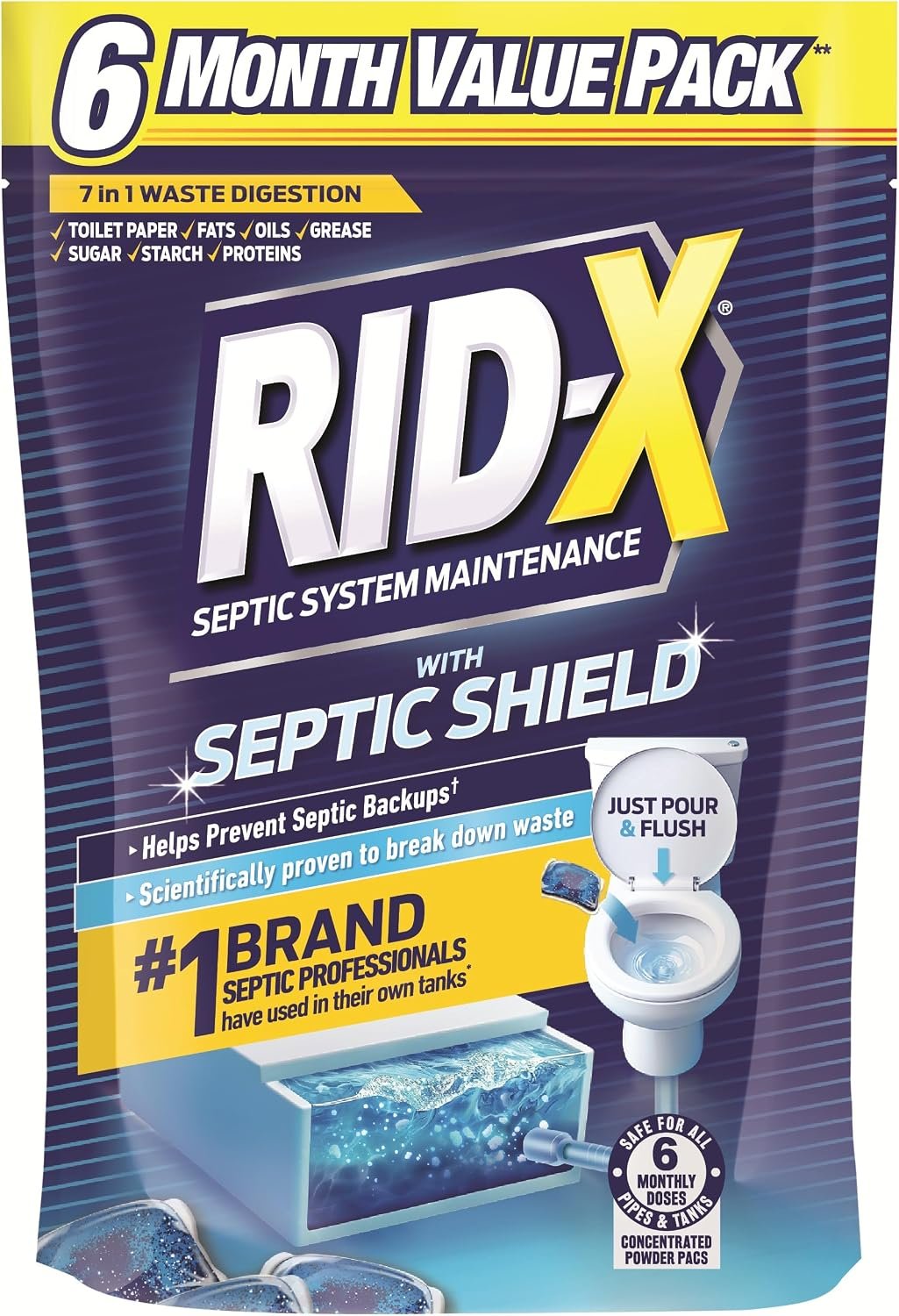
RID-X Septic Tank Treatment Pods at a Glance
Can a simple monthly flushable pod really help you maintain a septic tank, or is it just another household additive? The RID-X septic tank treatment pods offer a six-month supply for $25.78, which works out to about $4.30 per scheduled treatment. The listing shows the product as In Stock in 2026.
For a functioning septic system with a tank up to 1,500 gallons, this is best viewed as a convenient routine-maintenance product rather than a repair treatment. The RID-X septic tank treatment uses a claimed dual-action enzyme formula intended to break down organic waste and support odor control. Its premeasured pod avoids measuring powders or pouring liquids directly into the toilet.
The product is described as flushable, made with 100% natural ingredients, and suitable for aerobic and anaerobic systems, standard plumbing, RVs, and boats. Those are manufacturer claims, not a promise that every system will respond identically. My practical view is straightforward: the RID-X septic tank treatment is worth considering for consistent maintenance, but it cannot replace pumping, inspections, outlet-filter cleaning, or professional repairs.
This image is property of Amazon.com.

Product Overview: What You Get for $25.78
At the listed $25.78 price, you receive six monthly treatment pods. Dividing the package price by six gives an approximate ongoing cost of $4.30 per month, before delivery fees, discounts, or future price changes. The listing currently shows the package as in stock, although you should confirm the live price and availability immediately before ordering.
Using the RID-X septic tank treatment is designed to be simple: use one pod monthly for a septic tank up to 1,500 gallons, drop it into the toilet, and flush. There is no stated need to measure a dose, mix a solution, open the tank, or handle loose treatment material. That format may suit you if maintenance tasks tend to be forgotten when they involve extra equipment or preparation.
The manufacturer says the enzymes target toilet paper, fats, oils, grease, sugar, starches, and proteins. In practical terms, the RID-X septic tank treatment is intended to support the breakdown of organic material and help limit buildup. It doesn’t guarantee a particular pumping interval, odor level, or backup-prevention result because household water use, waste loading, tank condition, and drain-field health still matter.
Think of the product as a scheduled additive, not a measured diagnostic tool. A pod may be easy to use, but it can’t tell you whether your tank is full or whether an outlet line is restricted.
RID-X Septic Tank Treatment Features Explained
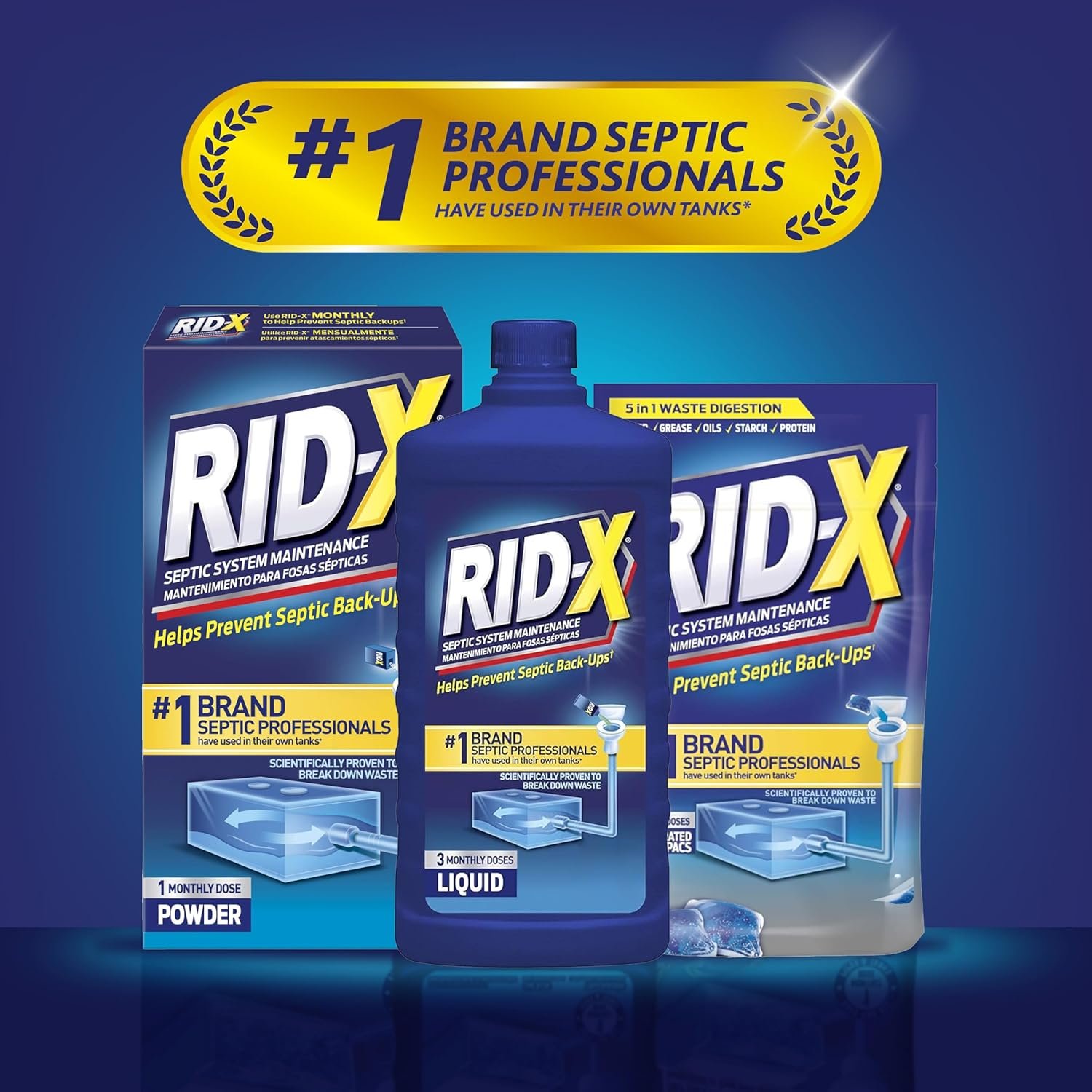
The central feature of the RID-X septic tank treatment is its claimed dual-action enzyme formula. Biological additives of this type are intended to help digest organic waste in the tank, where naturally occurring biological activity already plays a major role. The listing also describes the enzymes as fast-acting and says they begin breaking down waste immediately; that wording should not be read as proof that a pod will clear an existing blockage.
For everyday use, the pod format is more meaningful than the marketing language. The RID-X septic tank treatment arrives in a premeasured, flushable form, so you don’t need to pour liquid, scoop powder, or estimate a dose. If you dislike opening a tank or handling additives, the monthly routine is about as low-contact as this type of product gets.
The listing calls the ingredients 100% natural. Because that description doesn’t provide a full ingredient panel in the supplied product information, check the package label for the exact formulation, storage requirements, warnings, and any restrictions before use. “Natural” also doesn’t mean that the product can solve mechanical or structural problems.
The claimed compatibility includes toilets, pipes, RVs, boats, and both aerobic and anaerobic septic systems. Still, the RID-X septic tank treatment cannot repair a damaged tank, remove root intrusion, clear a blocked outlet filter, restore a saturated drain field, or compensate for overdue pumping. Those conditions require inspection and appropriate service.
How to Use the Monthly Flushable Pods Correctly
Using the RID-X septic tank treatment correctly is mostly a scheduling exercise. The intended routine is one pod each month, not repeated doses when you notice a slow drain. Follow this sequence:
- Choose a recurring monthly date that fits your household calendar.
- Drop one intact pod into the toilet bowl.
- Flush with sufficient water according to the package directions.
- Record the next treatment date in a phone reminder or septic-maintenance log.
Don’t open, cut, crush, or unnecessarily handle the dissolvable pod. If the package directions differ from the online listing, follow the package label. Keep the monthly reminder alongside—not instead of—your inspection, pump-out, and outlet-filter schedule.
The RID-X septic tank treatment should not be your emergency response when toilets are slow, drains gurgle, sewage odors appear indoors, or wastewater backs up. Those symptoms can indicate a restriction or failing component that enzymes won’t physically remove. Before relying on the dosage, confirm that your tank is no larger than the stated 1,500-gallon limit.
You can also support septic care by limiting grease disposal, never flushing wipes, and choosing cleaning products identified as septic-safe. These habits reduce the organic and non-organic load entering the system in the first place.
This image is property of Amazon.com.

What Customers Are Saying About RID-X Pods
The supplied product information does not include a star rating, review count, or a verified set of customer comments, so it would be misleading to present a numerical customer score or claim that a majority of buyers experienced a specific result. That limitation matters with septic additives: many shoppers cannot directly observe tank biology, sludge levels, or drain-field performance between pump-outs.
When you inspect current reviews for the RID-X septic tank treatment, look for useful detail rather than short statements such as “works great.” The most informative comments identify the tank size, household load, length of use, previous pumping date, and whether the plumbing was already functioning normally. A buyer who says the pod is easy to dose is reporting convenience; that isn’t the same as proving improved tank performance.
For the RID-X septic tank treatment, pay attention to recurring comments about clean handling, simple monthly reminders, pod dissolution, package condition, delivery, odor changes, and whether users expected the product to prevent a real backup. Mixed feedback can reflect different tank conditions rather than a simple product failure. It can also reveal practical issues, such as a pod arriving damaged or not dissolving as expected.
Verified-purchase feedback is more useful when it explains what happened over a defined period. Even then, customer experience cannot establish that the RID-X septic tank treatment replaces pumping, inspection, or a blocked-system repair. Treat review patterns as context for convenience and satisfaction, not as a substitute for a service record.
Does RID-X Prevent Septic Backups and Odors?
The short answer is no product in this category should be treated as a guarantee against every backup. The RID-X septic tank treatment is intended to support organic waste breakdown, while a physical blockage caused by compacted solids, roots, a damaged line, or an obstructed effluent filter requires a different solution.
The listing names toilet paper, grease, oils, fats, sugars, starches, and proteins as treatment targets. Those materials can enter normal household wastewater, but the presence of an enzyme additive doesn’t mean all solids disappear or that a tank can safely go without scheduled pumping. The RID-X septic tank treatment may fit a preventive routine, but it isn’t a drain opener or a method for restoring a failing drain field.
Odor expectations also need to stay realistic. Reduced organic buildup might help with some unpleasant smells, yet persistent indoor sewage odor can point to a plumbing trap, venting issue, tank problem, or drain-field trouble. The RID-X septic tank treatment shouldn’t be used to mask a warning sign.
Contact a septic professional if you see sewage surfacing, several slow drains at once, repeated backups, or unusually wet areas over the drain field. Prevention is one part of responsible care; it isn’t insurance against every failure. Your system’s design, loading, pumping history, and inspection results remain more important than any single monthly additive.
Safety and Compatibility Across Septic Systems
The listing describes the RID-X septic tank treatment as safe for all septic systems and plumbing, including aerobic and anaerobic systems. It also names toilets, pipes, RVs, and boats as compatible uses. Those broad claims may cover common installations, but unusual setups should be confirmed with the installer, vessel manufacturer, RV documentation, or septic-service professional.
RVs, boats, holding tanks, portable systems, and marine sanitation systems can have maintenance requirements that differ from a residential buried septic tank. A product’s stated compatibility doesn’t automatically answer questions about tank ventilation, waste-storage duration, sanitation rules, or discharge arrangements. Check the system instructions before adding any treatment.
Even if the RID-X septic tank treatment is described as safe for toilets and pipes, use only the labeled monthly dose. More product isn’t necessarily more effective, and increasing the dose may take you outside the tested instructions. Store the pods in their original packaging, keep them away from children and pets, and follow every package safety direction.
Read the full label before combining the RID-X septic tank treatment with other septic additives or strong chemical drain products. If you have already used a chemical cleaner, ask a qualified professional or follow the label guidance before adding another treatment. Compatibility claims should never override specific instructions for your installation.
This image is property of Amazon.com.

RID-X Septic Tank Treatment Compared With Alternatives
The RID-X septic tank treatment competes with products such as GreenPig Live Septic Tank Treatment and Roebic K-37-Q Septic Tank Treatment. The practical comparison is less about finding one universal winner and more about matching format, frequency, stated ingredients, system guidance, and maintenance expectations to your routine. The supplied data does not provide confirmed prices or full dosing details for either alternative.
| Product | Supply duration | Format | Maintenance use | Tank guidance | Listed price |
|---|---|---|---|---|---|
| RID-X pods | 6 months | Monthly flushable pod | Routine waste-breakdown support | Up to 1,500 gallons | $25.78 |
| GreenPig Live | Verify current listing | Verify current listing | Septic maintenance | Verify label | Not supplied |
| Roebic K-37-Q | Verify current listing | Verify current listing | Waste-management maintenance | Verify label | Not supplied |
GreenPig Live may appeal if you prefer its stated biological-treatment positioning, while Roebic K-37-Q offers a recognizable competing-brand option. For each alternative, check whether the listing specifies bacteria, enzymes, or another stated formulation, then confirm the treatment frequency and tank-size limit. Don’t infer equivalence from brand familiarity alone.
To compare the RID-X septic tank treatment fairly, use this process:
- Read the active or stated ingredients.
- Record the treatment frequency and supply length.
- Check tank-size guidance and safety directions.
- Review detailed customer patterns rather than isolated ratings.
- Calculate total cost per month, not just package price.
A septic professional may recommend a schedule based on tank design and household load instead of relying on additives. That advice should carry more weight where the system has a history of backups or unusual equipment.
Who Should Buy These Septic Treatment Pods?
The best match for the RID-X septic tank treatment is a homeowner with a functioning septic system who wants a low-mess monthly habit for a tank up to 1,500 gallons. You may appreciate the premeasured format if you dislike handling powders or liquids, and the six-pod supply reduces the need to reorder after every treatment.
The product may also suit households that prefer a familiar septic-treatment brand or want a clear reminder-based routine. The listing names RV and boat use as additional applications, but you should confirm that your particular holding or sanitation system permits the treatment. A familiar brand can make a routine easier to remember, but it doesn’t change the underlying maintenance needs of the system.
The RID-X septic tank treatment is a poor fit for active backups, sewage leaks, overdue pump-outs, unknown tank capacity, damaged drain fields, or unresolved recommendations from a septic professional. In those situations, another pod could delay the diagnosis you actually need.
Use this decision test before purchasing:
- Confirm your system type and tank capacity.
- Review the pumping, inspection, and outlet-filter history.
- Check that the monthly routine fits your household habits.
- Calculate the recurring cost and compare it with alternatives.
- Decide whether convenience justifies the price for preventive care.
If the system is healthy and you value consistency, the RID-X septic tank treatment makes more sense than it would as a promised backup cure.
Is RID-X Septic Tank Treatment Good Value?
At $25.78 for six monthly pods, the RID-X septic tank treatment costs approximately $4.30 per scheduled treatment before delivery fees, discounts, or price changes. That is a reasonable convenience price if you want premeasured dosing and are likely to follow a recurring maintenance reminder. You should still verify the current listing price because retail pricing can change.
What are you paying for? Primarily, the six-month format, a clean flushable delivery method, a recognizable brand, and a simple monthly schedule. The RID-X septic tank treatment removes measuring and mixing from the task, which may be valuable if convenience is what keeps you consistent.
The weaker part of the value case is performance expectation. A $25.78 additive cannot substitute for professional diagnosis, routine pumping, outlet-filter checks, or drain-field maintenance. If you are buying the RID-X septic tank treatment because a toilet is already backing up, the product is unlikely to represent good value; a service call and inspection are the more appropriate next step.
Compare competitors by dividing each package’s verified current price by the number of stated monthly treatments, then check whether the dosage applies to your tank size. The strongest reason to choose these pods is consistency with minimal mess. My recommendation is to consider them when your system is operating normally, your tank fits the guidance, and you are willing to maintain the rest of the septic schedule. Don’t buy them expecting protection from every backup or repair bill.

This image is property of Amazon.com.
Pros and Cons
Pros
- Premeasured monthly pods require no mixing or measuring.
- Six-month supply supports a consistent maintenance routine.
- The listing states compatibility with aerobic and anaerobic septic systems, toilets, pipes, RVs, and boats.
- The claimed enzyme formula targets common organic materials including toilet paper, fats, oils, grease, sugars, starches, and proteins.
- The listed $25.78 price works out to approximately $4.30 per scheduled treatment.
Cons
- The product cannot replace pumping, inspections, outlet-filter cleaning, or professional repairs.
- The supplied product information does not include a verified star rating, review count, or detailed customer-review record.
- The 100% natural-ingredient claim is not accompanied by a full ingredient panel in the supplied listing data.
- It is not an appropriate emergency response for an existing backup, sewage leak, or blocked line.
- Results may be difficult for homeowners to measure directly because tank biology and sludge levels are not visible during normal use.
Final Verdict
Key Takeaways
- The six-month supply costs $25.78, or approximately $4.30 per monthly treatment.
- The flushable pod format provides premeasured, low-mess routine maintenance for tanks up to 1,500 gallons.
- The enzyme claims support organic waste breakdown but do not establish that the product clears blockages or prevents every backup.
- Use the pods alongside pumping, inspections, outlet-filter checks, and sensible household septic habits.
- This is a better fit for a functioning system than for an active backup, sewage leak, or overdue maintenance problem.
Frequently Asked Questions
Is an effluent filter necessary for a septic system?
An effluent filter is commonly used to help keep solids from leaving the septic tank and reaching the drain field, but the exact requirement depends on the tank design, local rules, and installation. Ask a septic professional whether your system has one and how it should be maintained.
What is the best effluent filter for a septic tank?
The best filter is the correctly sized, compatible model specified for your tank and installation. Compare flow capacity, access, cleaning requirements, replacement availability, and local approval rather than choosing by brand alone.
What is an effluent filter on a septic tank?
An effluent filter is a screening device installed at the tank outlet. It helps limit the movement of larger solids into the drain field while allowing liquid effluent to pass through.
How often do you need to clean an effluent filter?
Cleaning frequency depends on household use, tank design, and the amount of solids retained. Follow the installation or service professional’s schedule, and have the filter checked during routine septic maintenance or sooner if slow drains and backups appear.