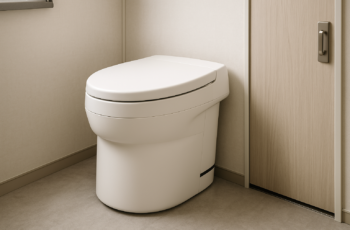
Thinktank Composting Toilet, White: Quick Overview
Can a $1179 composting toilet make off-grid sanitation cleaner, less exposed, and easier to live with than a conventional portable toilet? The Thinktank Composting Toilet makes a strong case if your priorities are privacy, odour control, and a less unpleasant cleaning routine rather than the lowest upfront cost. It is currently shown as in stock, and this review assesses it for purchasing decisions.
The product is an in-stock, urine-diverting composting toilet designed especially for women, with a layout intended to avoid aiming during use. It also claims to let men use it standing, which is unusual for a urine-diverting model. The central appeal of the Thinktank Composting Toilet is therefore its user interface: separate urine and solid waste, concealed waste, bag containment, and ventilation designed around odour control.
The supplied listing does not provide an Amazon star rating or review count. It also does not state dimensions, power requirements, waste capacity, warranty length, or included accessories, so those details should not be guessed. You are paying for airtight construction, separate air intake and exhaust, claimed massive airflow, a patented trap door, and a no-bowl design, but you still need to verify the installation specification.
The rest of this review examines daily use, cleaning, odour performance, customer evidence, competing toilets, and ownership value. In short, the Thinktank Composting Toilet looks most compelling for a permanent or semi-permanent installation where conventional plumbing is difficult and direct exposure to waste is a serious concern.

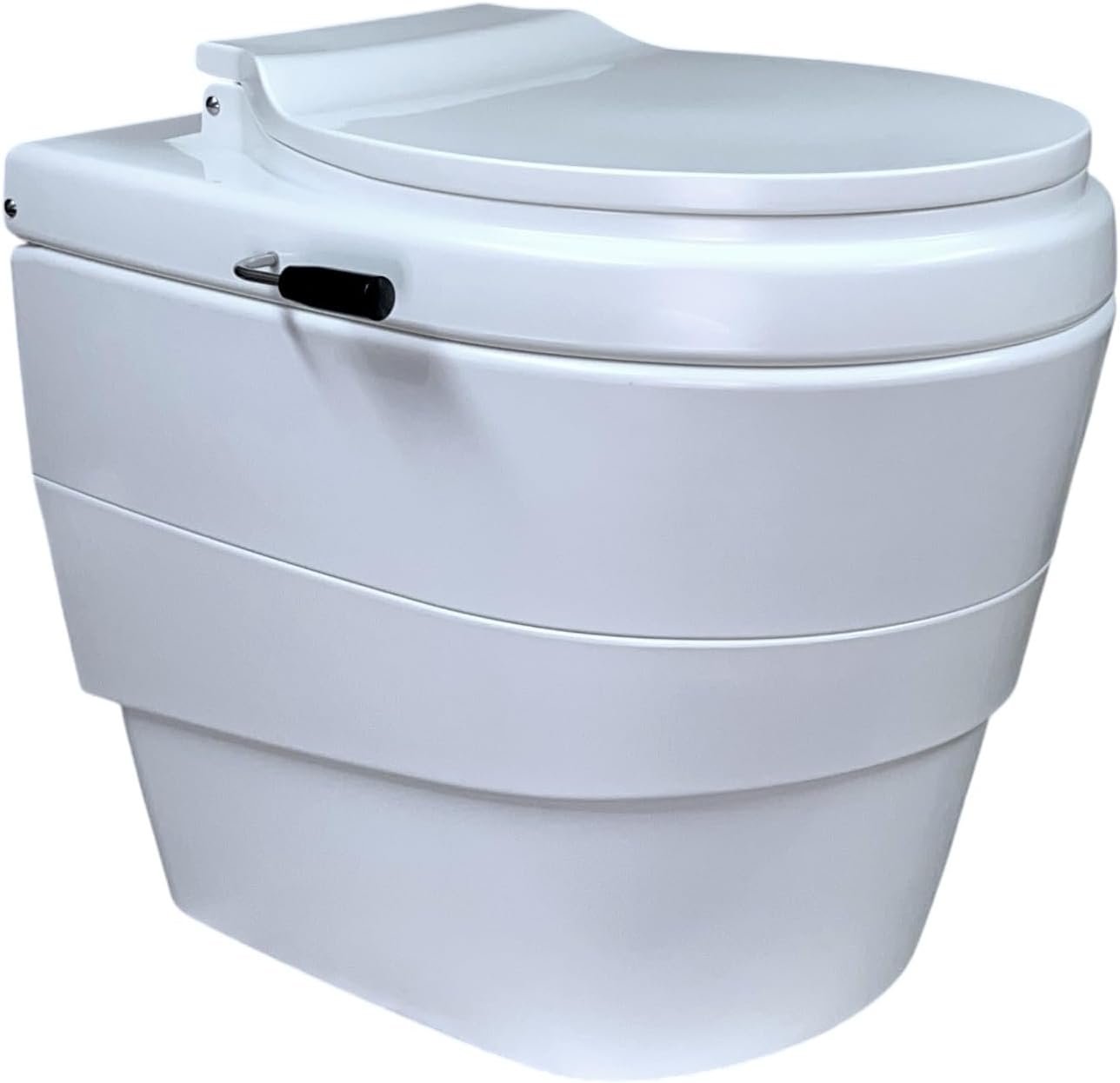
Thinktank Composting Toilet Features and Design
The core of the Thinktank Composting Toilet is urine diversion. Liquid is directed away from solid waste rather than being left to soak into the same container, which can help reduce moisture, saturation, and the conditions that commonly contribute to unpleasant smells. Before ordering, confirm whether your installation will drain urine away or collect it in a separate container; the supplied information does not explain that arrangement.
An airtight body is intended to limit uncontrolled air movement. In practical terms, the ventilation system should draw air through the toilet and guide odours toward the exhaust route instead of allowing them to escape freely into the room. That is a sensible design principle, but the listing’s promise of no loss of heated or cooled air should be treated as a product claim rather than independently measured efficiency.
The separate intake and exhaust pipes are particularly relevant in a cabin, van, or tiny home. A dedicated intake is intended to supply replacement air while the exhaust removes air from the waste area, reducing the need to pull conditioned room air through the toilet. You should still request the fan specification, electrical requirements, pipe diameter, maximum vent length, bends permitted, and any restrictions on vertical or horizontal routing.
The product also claims massive airflow and zero odour. Strong airflow may support odour control, but performance depends on an unobstructed route and a properly installed system. Waste is contained in a bag, potentially reducing contact during removal, while the patented trap door hides the waste from view and helps explain the product’s emphasis on privacy rather than an exposed composting chamber.
Bag type, bag capacity, replacement cost, disposal rules, and whether special liners are required are not supplied. Confirm those points before purchase, because an inexpensive-looking bag system can become costly or inconvenient if compatible liners are difficult to source.
How the Thinktank Composting Toilet Works in Daily Use
In ordinary use, you sit or stand as appropriate, use the urine-diverting area, and allow solid waste to pass through the concealed trap door. The ventilation system is then intended to move air through the toilet and out through the exhaust. The Thinktank Composting Toilet has no conventional exposed bowl, so its daily routine is based on directing waste rather than leaving it visible in a basin.
The women-focused design may be significant for seated users. The description says users do not need to aim, which could make use less stressful and reduce the chance of waste landing on a user-facing surface. Comfort will still depend on body shape, seat position, room layout, and installation height, so you should not assume every user will find the geometry equally comfortable.
Standing use for men is a more distinctive feature. Many urine-diverting toilets are designed around seated use, whereas this model claims to support men standing while retaining urine separation. That could matter in a shared cabin, workshop, van, boat, or remote property where different users have different habits.
A sensible cleaning workflow would be to wipe the user-facing surfaces, check the urine-diverting path, replace the waste bag when required, and inspect the trap-door area according to the manufacturer’s instructions. The no-bowl construction is presented as a cleanliness benefit because there is less exposed surface for waste to smear, but you should verify which cleaning materials are safe and how often seals and pathways need attention.
- Confirm where the intake and exhaust pipes will run.
- Identify the point where exhaust air will terminate outside.
- Leave clear access to the waste bag and trap-door area.
- Check whether the ventilation system needs electricity and what happens during an outage.
The supplied information does not say whether electricity is required, how airflow is powered, or whether the toilet works during a power interruption. Those are purchase-critical questions, not minor details.
Odour Control, Privacy, and Cleanliness
The strongest promise from the Thinktank Composting Toilet is that massive airflow and airtight construction ensure zero odour. That may be the feature that attracts most buyers, but “zero odour” is a stated product claim, not an independently verified performance result in the information provided. A ventilation-dependent toilet can behave very differently when installed correctly in one building and poorly in another.
Real-world odour control can be affected by several factors:
- Blocked, undersized, or badly routed exhaust pipework.
- Incorrect connection of the intake and exhaust.
- Insufficient power where a fan or powered airflow system is used.
- Urine failing to drain or separate cleanly.
- An overfilled or damp waste bag.
- Room temperature, ventilation, and the number of daily users.
The patented trap door addresses a different problem: visual and physical exposure. Waste is hidden from users, which may make the toilet more acceptable in a family cabin or indoor living space where an open composting chamber feels unpleasant. Bag containment adds another layer of separation, although you should still expect to handle a full liner during replacement.
The no-bowl design is best understood as a practical hygiene feature, not proof that cleaning is unnecessary. There may still be splash around the urine path, residue on seals, and deposits near the trap door. Keep suitable cleaning supplies nearby and follow the manufacturer’s maintenance schedule rather than relying only on the odour claim.
If odour appears, work through the problem in order: check for an obstructed exhaust, confirm that both pipes are connected correctly, inspect the urine-diversion route, replace an overfilled bag, and contact the manufacturer if airflow remains weak. Do not assume an odour-free result in a sealed room, poorly vented cabin, or location exposed to extreme temperatures.

What Customers Are Saying About the Thinktank Composting Toilet
There is no supplied customer-review record for the Thinktank Composting Toilet that can be verified here. The product data provides neither a star rating nor a review count, so it would be misleading to write that buyers rate it highly or to invent recurring customer themes. The evidence available at publication time is therefore the documented design and its stated claims, not a broad body of verified owner experience.
That limitation matters because several of the most important buying questions are practical. You need first-hand reports from installations in RVs, vans, cabins, boats, tiny homes, or permanent off-grid buildings to judge how the ventilation behaves in different environments. A claim of zero odour is not equivalent to multiple verified buyers reporting odour-free operation after months of use.
When a meaningful review history becomes available, assess it by looking for concrete details rather than short praise. Useful reports would explain whether women found the seated design comfortable, whether men could stand without affecting urine separation, how often bags needed changing, and whether cleaning really was easier than with a conventional bowl.
Negative reviews deserve equal weight. Look specifically for reports of difficult vent routing, missing parts, unclear instructions, fan noise, leaks, difficult bag replacement, weak airflow, unexpected maintenance, or poor support after purchase. A small sample can reveal a genuine design strength, but it cannot establish long-term durability or universal odour control.
For now, treat the women-focused layout, standing compatibility, concealed trap door, and ventilation system as promising design choices rather than customer-proven outcomes. Ask the seller for installation documentation and current owner references if those details are decisive for your project.
Thinktank Composting Toilet Compared With Amazon Alternatives
The right comparison depends on whether you need portability, a traditional self-contained composting format, or a fixed installation. The Thinktank Composting Toilet is positioned around urine diversion, concealed bagged waste, separate intake and exhaust pipes, and standing use for men. By contrast, the OGO NOMAD Portable Composting Toilet is positioned for RVs, vans, camping, and boats, making portability a more central consideration.
Nature’s Head Self Contained Composting Toilet with Close Quarters Spider Handle Design represents another approach: a self-contained unit associated with a solids-mixing handle and a dedicated ventilation arrangement. You should compare its handle operation, footprint, maintenance routine, and whether standing use is supported rather than assuming it offers the same user experience. Separett Villa is a further fixed-installation alternative, positioned around urine separation, high capacity, and no additives or mixing; verify its current specifications and installation requirements separately.
Current competitor prices and several detailed specifications were not supplied, so they are marked unavailable rather than estimated.
| Model | Listed price | Waste handling | Urine diversion | Ventilation | Standing use | Portability | Best fit |
|---|---|---|---|---|---|---|---|
| Thinktank Composting Toilet, White | $1179 | Bag; concealed trap door | Yes | Separate intake and exhaust claimed | Claimed for men | Not confirmed | Privacy-focused fixed or planned installation |
| OGO NOMAD | Unavailable | Verify current design | Verify current specification | Verify current specification | Unavailable | Portable positioning | RV, van, camping, or boat users |
| Nature’s Head Close Quarters | Unavailable | Self-contained solids mixing | Verify current specification | Verify current specification | Verify current specification | Self-contained format | Traditional composting-toilet buyers |
| Separett Villa | Unavailable | Verify current configuration | Yes | Verify current specification | Unavailable | Fixed-installation positioning | Higher-capacity homestead or cottage use |
Choose the Thinktank when maximum privacy around waste and flexible use are central. Choose OGO NOMAD when moving the toilet matters most, Nature’s Head when you prefer a self-contained mixing format, or Separett Villa when a larger fixed system better matches your building.
Who Should Buy the Thinktank Composting Toilet?
The best audience for the Thinktank Composting Toilet is someone building or upgrading an off-grid cabin, tiny home, RV, boat, van, workshop, or other site where sewer or septic plumbing is costly or impractical. Its design is especially relevant when the toilet will be used indoors and several people need a more private alternative to an exposed composting chamber.
Women may find the no-aim urine-diverting arrangement particularly appealing, while households with multiple users may value the concealed waste path. Men who prefer standing use form a separate audience because the product claims to support that behaviour without abandoning urine diversion. The combination is unusual enough to justify closer consideration if different users have conflicting preferences.
Cleanliness-focused buyers will be drawn to the bag-contained waste, no-bowl construction, and patented trap door. These features reduce direct exposure, but they do not eliminate cleaning, bag replacement, urine-path checks, or disposal. You are buying a less unpleasant routine, not a maintenance-free appliance.
This model may be a poor fit if you want a cheap temporary camping toilet, cannot route intake and exhaust pipes, cannot manage waste bags, or need the unit to operate without first confirming power requirements. Portability is also not established by the supplied information, so do not assume it can be moved like a basic campsite toilet.
Before ordering, work through this checklist:
- Confirm the available installation space and access for cleaning.
- Plan the intake and exhaust routes, including the outdoor termination point.
- Verify power requirements and outage behaviour.
- Check local rules for urine, bagged solids, and toilet-paper disposal.
- Confirm replacement-bag availability and ongoing consumable costs.
That preparation will tell you whether the product’s cleaner user experience offsets the added installation planning.

Is the Thinktank Composting Toilet Worth $1179?
At the listed $1179 price, the Thinktank Composting Toilet is not a bargain portable toilet. It is currently shown as in stock, and its value depends on what you are trying to avoid: a septic connection, sewer work, difficult plumbing, or an open waste chamber that makes indoor use uncomfortable.
You are paying for a women-focused user interface, claimed standing compatibility for men, airtight construction, separate ventilation paths, concealed waste, bag containment, and a layout intended to limit odour and cleaning mess. Those features have real practical value in a shared cabin or tiny home, particularly when privacy is more important than a minimal purchase price.
However, the initial price is only part of ownership cost. Add the purchase price to ventilation and installation materials, replacement bags, electricity if the airflow system requires it, and waste-disposal costs over the period you expect to use the toilet. The listing does not confirm capacity, energy use, warranty, fan details, vent limits, or included installation hardware, so your calculation should include a contingency for those unknowns.
For occasional camping, a basic portable model may satisfy the need at much lower cost, assuming you can accept more exposed waste and a different cleaning routine. For a permanent off-grid project, avoiding conventional plumbing may make $1179 reasonable, especially if installation flexibility and indoor acceptability prevent more expensive building work.
The balanced position is clear: the Thinktank is worth serious consideration when low waste exposure, urine diversion, privacy, and flexible use matter. Before committing, verify the technical information the listing omits and price the full installation rather than judging value from the toilet body alone.
Pros and Cons
Pros
- Women-focused urine-diverting design that does not require users to aim.
- Standing use for men is a notable differentiator among urine-diverting toilets.
- Airtight construction, separate intake and exhaust paths, concealed waste, and bag containment are all aimed at reducing odour and visual exposure.
- The no-bowl layout and patented trap door may make routine cleaning less unpleasant.
Cons
- The $1179 purchase price is high for occasional camping or temporary use.
- The supplied information does not confirm dimensions, capacity, power requirements, warranty, fan specifications, vent limits, or included accessories.
- You must still manage waste bags, cleaning, urine drainage or collection, and ventilation maintenance.
- Odour-free performance is a product claim, not an independently verified result in the supplied information.
Final Verdict
Key Takeaways
- The $1179 Thinktank Composting Toilet is aimed at privacy-conscious off-grid users rather than occasional campers seeking the cheapest option.
- Its strongest differentiators are the women-focused no-aim design, claimed standing use for men, concealed trap door, bagged waste, and separate ventilation paths.
- Zero-odour performance is a product claim; installation quality, airflow, urine separation, bag management, and power may determine the real result.
- No star rating, review count, dimensions, capacity, power specification, warranty, or included-accessory list was supplied, so verify these before purchase.
- Compare the total installed cost with portable, self-contained, and fixed urine-separating alternatives.
Frequently Asked Questions
What are the drawbacks of a composting toilet?
The main drawbacks are the upfront $1179 price, ongoing waste-bag handling, the need to plan ventilation carefully, and uncertainty about power, capacity, warranty, and included installation parts. It still requires routine cleaning and disposal, so it does not remove every sanitation task.
What is the best off-grid composting toilet?
The best choice depends on your installation. The Thinktank suits buyers who prioritise privacy, urine diversion, concealed waste, and standing use for men, while the OGO NOMAD is more appealing when portability matters and Nature’s Head suits shoppers seeking a traditional self-contained composting format.
What if you have diarrhea in a composting toilet?
Follow the manufacturer’s guidance and avoid treating diarrhea as a normal solids-composting situation. Keep the affected area clean, replace contaminated or wet bag material promptly, and check how the manufacturer recommends handling liquids and cleaning products.
What do you do with toilet paper when using a composting toilet?
Follow the manufacturer’s disposal instructions. Depending on the design and local rules, toilet paper may go into the waste bag or into a separate sealed bin; using a small amount of suitable paper can help manage bag capacity and moisture.